






Global Cardiac POC Testing Devices Market Driven by Increasing Demand for Troponin Tests
|
By HospiMedica International staff writers Posted on 01 Feb 2022 |


|

The global market for cardiac point of care (POC) testing devices is projected to grow at a CAGR of 5.8% from an estimated USD 1.2 billion in 2020 to USD 1.7 billion by 2026, driven primarily by the fast-growing POC cardiac markers test segment.
These are the latest findings of Research and Markets (Dublin, Ireland), the world’s largest market research store.
The increasing adoption of sensitivity and premium-priced POC Troponin tests is contributing to the growth of the global market. The increasing shift towards value-based and efficient healthcare service delivery against the backdrop of stringent budgets is boosting the growth prospects for the POC cardiac testing market. Moreover, the majority of medical professionals are opting for POC cardiac testing to quickly monitor the condition of patients experiencing chest pain or other heart ailment symptoms in emergency care environments. The global phenomenon of a burgeoning aging populace is driving the demand for POC test kits for use in home healthcare and old age homes. Growing patient awareness and increasing availability of over the counter POC tests is a major factor propelling the POC tests market. At a time when the global healthcare industry is transitioning from disease treatment to disease prevention through increased involvement with patients, POC diagnostic kits are playing an instrumental role in reducing the risk of occurrence and the intensity of prevailing diseases by facilitating prompt diagnosis and earlier clinical intervention.
The cardiac markers test segment currently accounts for a share of 29.7% of the global cardiac POC testing devices market and is projected to grow at a 6.1% CAGR to reach US 1.3 billion by 2026 while the analyzers segment is expected to record a CAGR of 5.1% CAGR over the forecast period. Blood cardiac biomarkers-based evaluation of cardiac abnormalities is becoming more and more accurate, which is a major factor driving the growing popularity of cardiac biomarkers. Increasing consumer awareness, coupled with the growing adoption of cardiac kits, is set to drive the growth of the cardio biomarker market in the medium term.
Geographically, the US currently accounts for a share of 37.36% of the global cardiac POC testing devices market and is estimated to surpass USD 0.5 billion in 2021, driven by the rising prevalence of cardiovascular diseases, higher levels of physician and patient awareness, favorable government policies, and increased usage of cardiac tests. China’s cardiac POC testing devices market is expected to record a CAGR of 7.4% through the forecast period to surpass USD 0.2 billion in 2026. Japan and Canada are projected to grow at a CAGR of 4.6% and 5.9%, respectively over the analysis period. Within Europe, Germany is forecasted to grow at approximately 4.8% CAGR while the Rest of European market is expected to surpass USD 0.2 billion by 2026. The Asia Pacific cardiac POC testing devices market is also growing steadily on account of increasing awareness about cardiac diagnosis and treatment as well as rising healthcare expenditure in the region.
Related Links:
Research and Markets






Latest Business News
- GE HealthCare Leads Major European Initiative to Advance Cardio-Oncology Care
- Medtronic and GE HealthCare Broaden Alliance Across Monitoring and Care Solutions
- Quantum Surgical Acquires NeuWave from Johnson & Johnson
- Medtronic to Acquire Coronary Artery Medtech Company CathWorks
- Medtronic and Mindray Expand Strategic Partnership to Ambulatory Surgery Centers in the U.S.
- FDA Clearance Expands Robotic Options for Minimally Invasive Heart Surgery
- WHX in Dubai (formerly Arab Health) to debut specialised Biotech & Life Sciences Zone as sector growth accelerates globally
- WHX in Dubai (formerly Arab Health) to bring together key UAE government entities during the groundbreaking 2026 edition
- Interoperability Push Fuels Surge in Healthcare IT Market
- Philips and Masimo Partner to Advance Patient Monitoring Measurement Technologies
- B. Braun Acquires Digital Microsurgery Company True Digital Surgery
- CMEF 2025 to Promote Holistic and High-Quality Development of Medical and Health Industry
- Bayer and Broad Institute Extend Research Collaboration to Develop New Cardiovascular Therapies
- Medtronic Partners with Corsano to Expand Acute Care & Monitoring Portfolio in Europe
- Expanded Collaboration to Transform OR Technology Through AI and Automation
- Becton Dickinson to Spin Out Biosciences and Diagnostic Solutions Business
Channels
Artificial Intelligence
view channel
AI Analysis of Pericardial Fat Refines Long-Term Heart Disease Risk
Accurately identifying long-term cardiovascular disease risk in asymptomatic adults remains challenging for clinicians. Missed or underestimated risk delays preventive therapy and increases the chance... Read more
Machine Learning Approach Enhances Liver Cancer Risk Stratification
Hepatocellular carcinoma, the most common form of primary liver cancer, is often detected late despite targeted surveillance programs. Current screening guidelines emphasize patients with known cirrhosis,... Read more

Critical Care
view channel
Noninvasive Monitoring Device Enables Earlier Intervention in Heart Failure
Hospitalizations for heart failure with preserved ejection fraction (HFpEF) remain common because lung congestion often worsens before symptoms prompt treatment changes. Missed early decompensation... Read more
Automated IV Labeling Solution Improves Infusion Safety and Efficiency
Medication administration in high-acuity settings is often complicated by multiple concurrent infusions, making accurate line identification essential. In a 10-hospital intensive care unit study, 60% of... Read more

Surgical Techniques
view channel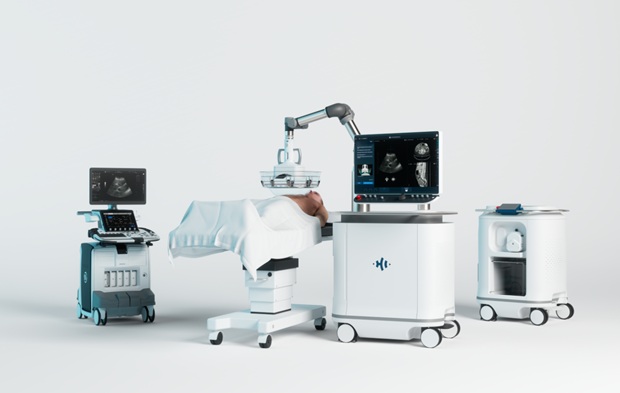
Ultrasound Technology Aims to Replace Invasive BPH Procedures
Benign prostatic hyperplasia (BPH) is a frequent cause of lower urinary tract symptoms in aging men and often requires invasive procedures or prolonged recovery. With prevalence expected to rise as populations... Read more
Continuous Monitoring with Wearables Enhances Postoperative Patient Safety
Postoperative hypoxemia on general surgical wards is common and often missed by intermittent vital sign checks. Undetected low oxygen levels can delay recovery and raise the risk of complications that... Read more
Patient Care
view channel
Wearable Sleep Data Predict Adherence to Pulmonary Rehabilitation
Chronic obstructive pulmonary disease (COPD) is a long-term lung disorder that makes breathing difficult and often disturbs sleep, reducing energy for daily activities. Limited engagement in pulmonary... Read more
Revolutionary Automatic IV-Line Flushing Device to Enhance Infusion Care
More than 80% of in-hospital patients receive intravenous (IV) therapy. Every dose of IV medicine delivered in a small volume (<250 mL) infusion bag should be followed by subsequent flushing to ensure... Read more

Health IT
view channel
EMR-Based Tool Predicts Graft Failure After Kidney Transplant
Kidney transplantation offers patients with end-stage kidney disease longer survival and better quality of life than dialysis, yet graft failure remains a major challenge. Although a successful transplant... Read more
Printable Molecule-Selective Nanoparticles Enable Mass Production of Wearable Biosensors
The future of medicine is likely to focus on the personalization of healthcare—understanding exactly what an individual requires and delivering the appropriate combination of nutrients, metabolites, and... Read more


Business
view channel
GE HealthCare Leads Major European Initiative to Advance Cardio-Oncology Care
Cardiovascular complications are increasingly recognized among people undergoing or recovering from cancer treatment, driven by pre‑existing disease and the cardiotoxic effects of chemotherapy, radiotherapy,... Read more

