






AI-Guided Handheld Surgical Robot Can Stem Fatal Blood Loss
|
By HospiMedica International staff writers Posted on 21 Mar 2022 |


|
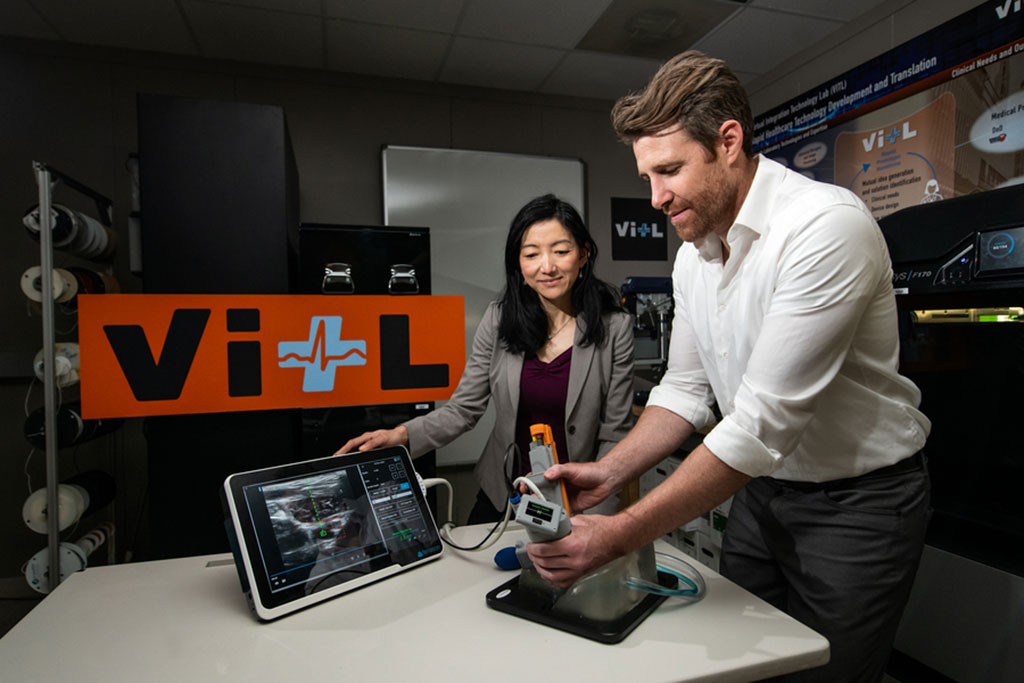
After a traumatic accident, there is a small window of time when medical professionals can apply lifesaving treatment to victims with severe internal bleeding. Delivering this type of care is complex, and key interventions require inserting a needle and catheter into a central blood vessel, through which fluids, medications, or other aids can be given. Researchers have developed a lifesaving technology that helps a range of users deliver complex medical interventions at the point of injury.
A team of researchers at the Massachusetts Institute of Technology (MIT, Cambridge, MA, USA) and physicians at Massachusetts General Hospital (MGH, Boston, MA, USA) have developed a solution to this problem. The Artificial Intelligence–Guided Ultrasound Intervention Device (AI-GUIDE) is a handheld platform technology that has the potential to help personnel with simple training to quickly install a catheter into a common femoral vessel, enabling rapid treatment at the point of injury.
AI-GUIDE is a platform device made of custom-built algorithms and integrated robotics that could pair with most commercial portable ultrasound devices. To operate AI-GUIDE, a user first places it on the patient’s body, near where the thigh meets the abdomen. A simple targeting display guides the user to the correct location and then instructs them to pull a trigger, which precisely inserts the needle into the vessel. The device verifies that the needle has penetrated the blood vessel, and then prompts the user to advance an integrated guidewire, a thin wire inserted into the body to guide a larger instrument, such as a catheter, into a vessel. The user then manually advances a catheter. Once the catheter is securely in the blood vessel, the device withdraws the needle and the user can remove the device. With the catheter safely inside the vessel, responders can then deliver fluid, medicine, or other interventions.
The MIT researchers developed the AI in the device by leveraging technology used for real-time object detection in images. These algorithms trained on a large dataset of ultrasound scans interpret the visual data coming in from the ultrasound that is paired with AI-GUIDE and then indicate the correct blood vessel location to the user on the display. For the user, the device may seem as easy to use as pressing a button to advance a needle, but to ensure rapid and reliable success, a lot is happening behind the scenes. For example, when a patient has lost a large volume of blood and becomes hypotensive, veins that would typically be round and full of blood become flat. When the needle tip reaches the center of the vein, the wall of the vein is likely to “tent” inward, rather than being punctured by the needle. As a result, though the needle was injected to the proper location, it fails to enter the vessel. To ensure that the needle reliably punctures the vessel, the team engineered the device to be able to check its own work.
AI-GUIDE has shown very high injection success rates, even in hypotensive scenarios where veins are likely to tent. Users with medical experience ranging from zero to greater than 15 years tested AI-GUIDE on an artificial model of human tissue and blood vessels and one expert user tested it on a series of live, sedated pigs. The team reported that after only two minutes of verbal training, all users of the device on the artificial human tissue were successful in placing a needle, with all but one completing the task in less than one minute. The expert user was also successful in quickly placing both the needle and the integrated guidewire and catheter in about a minute. The needle insertion speed and accuracy were comparable to that of experienced clinicians operating in hospital environments on human patients. AI-GUIDE’s design makes it stable and easy to use, directly translates to low training requirements and effective performance. Right now, the team is continuing to test the device and work on fully automating every step of its operation. In particular, they want to automate the guidewire and catheter insertion steps to further reduce risk of user error or potential for infection.
“AI-GUIDE has the potential to be faster, more precise, safer, and require less training than current manual image-guided needle placement procedures,” said Theodore Pierce, a radiologist and collaborator from MGH. “The modular design also permits easy adaptation to a variety of clinical scenarios beyond vascular access, including minimally invasive surgery, image-guided biopsy, and imaging-directed cancer therapy.”
“We see the AI-GUIDE platform technology becoming ubiquitous throughout the health-care system, enabling faster and more accurate treatment by users with a broad range of expertise, for both pre-hospital emergency interventions and routine image-guided procedures,” said Matt Johnson, a research team member from the MIT laboratory’s Human Health and Performance Systems Group.





Latest Surgical Techniques News
- Ultrasound Technology Aims to Replace Invasive BPH Procedures
- Continuous Monitoring with Wearables Enhances Postoperative Patient Safety
- New Approach Enables Customized Muscle Tissue Without Biomaterial Scaffolds
- Robot-Assisted Brain Angiography Improves Procedural Outcomes
- Brain Mapping Technology Enhances Precision in Brain Tumor Resection
- Handheld Robotic System Expands Options for Total Knee Surgery
- VR Experience Reduces Patient Anxiety Before Kidney Stone Procedure
- Injectable Mini Livers Offer Hope for Patients Awaiting Transplant
- Pulsed Field Ablation Technology Cleared in Europe for Persistent AFib
- AI-Powered Imaging Brings Real-Time Margin Clarity to Breast Cancer Surgery
- Minimally Invasive Device Safely Treats Challenging Brain Aneurysms
- Surgical Robot Makes Complex Liver Tumor Surgery Safer and Less Invasive
- Neurostimulation Implant Reduces Seizure Burden in Drug-Resistant Epilepsy
- Minimally Invasive Procedure Effectively Treats Small Kidney Cancers
- Fluorescence Probe Paired with Engineered Enzymes Lights Up Tumors for Easier Surgical Removal
- Novel Hydrogel Could Become Bone Implant of the Future
Channels
Artificial Intelligence
view channel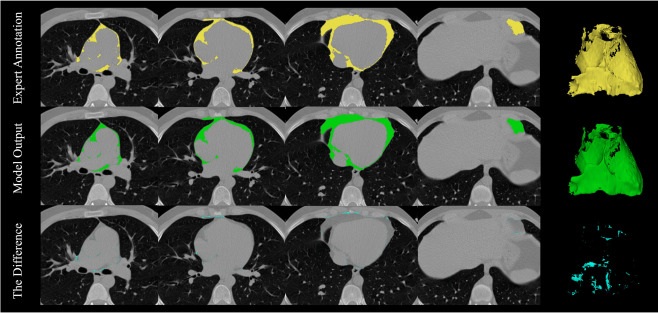
AI Analysis of Pericardial Fat Refines Long-Term Heart Disease Risk
Accurately identifying long-term cardiovascular disease risk in asymptomatic adults remains challenging for clinicians. Missed or underestimated risk delays preventive therapy and increases the chance... Read more
Machine Learning Approach Enhances Liver Cancer Risk Stratification
Hepatocellular carcinoma, the most common form of primary liver cancer, is often detected late despite targeted surveillance programs. Current screening guidelines emphasize patients with known cirrhosis,... Read more

Critical Care
view channel
Noninvasive Monitoring Device Enables Earlier Intervention in Heart Failure
Hospitalizations for heart failure with preserved ejection fraction (HFpEF) remain common because lung congestion often worsens before symptoms prompt treatment changes. Missed early decompensation... Read more
Automated IV Labeling Solution Improves Infusion Safety and Efficiency
Medication administration in high-acuity settings is often complicated by multiple concurrent infusions, making accurate line identification essential. In a 10-hospital intensive care unit study, 60% of... Read more

Patient Care
view channel
Wearable Sleep Data Predict Adherence to Pulmonary Rehabilitation
Chronic obstructive pulmonary disease (COPD) is a long-term lung disorder that makes breathing difficult and often disturbs sleep, reducing energy for daily activities. Limited engagement in pulmonary... Read more
Revolutionary Automatic IV-Line Flushing Device to Enhance Infusion Care
More than 80% of in-hospital patients receive intravenous (IV) therapy. Every dose of IV medicine delivered in a small volume (<250 mL) infusion bag should be followed by subsequent flushing to ensure... Read more

Health IT
view channel
EMR-Based Tool Predicts Graft Failure After Kidney Transplant
Kidney transplantation offers patients with end-stage kidney disease longer survival and better quality of life than dialysis, yet graft failure remains a major challenge. Although a successful transplant... Read more
Printable Molecule-Selective Nanoparticles Enable Mass Production of Wearable Biosensors
The future of medicine is likely to focus on the personalization of healthcare—understanding exactly what an individual requires and delivering the appropriate combination of nutrients, metabolites, and... Read more


Business
view channel
GE HealthCare Leads Major European Initiative to Advance Cardio-Oncology Care
Cardiovascular complications are increasingly recognized among people undergoing or recovering from cancer treatment, driven by pre‑existing disease and the cardiotoxic effects of chemotherapy, radiotherapy,... Read more

