AI Predicts Spinal Fractures in Cancer Patients Using CT/MRI Scans
|
By HospiMedica International staff writers Posted on 06 May 2022 |


|
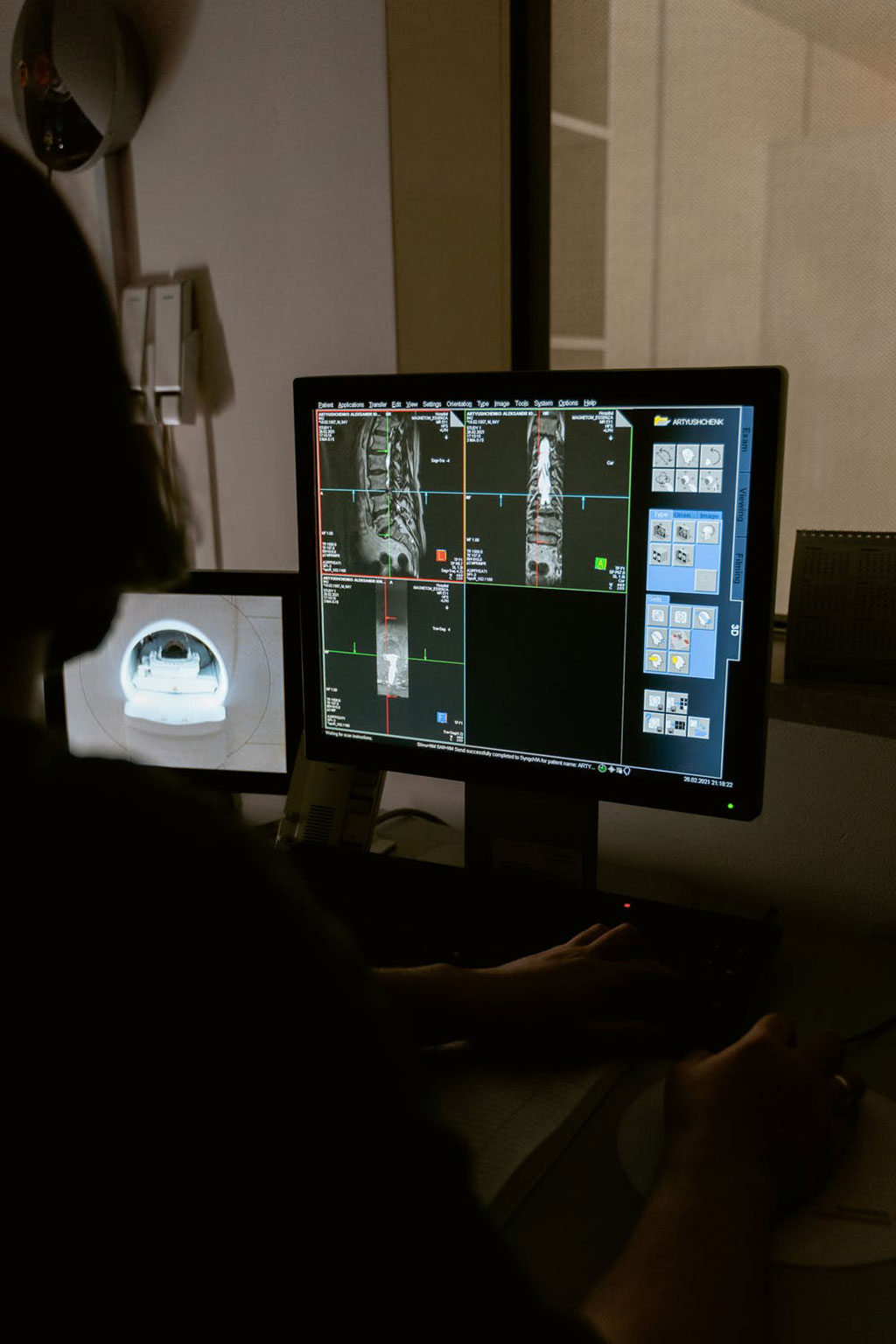
One of the biggest clinical concerns that cancer patients face is the risk of spinal fractures due to spinal metastasis - when disease spreads from other places in the body to the spine - which can lead to severe pain and spinal instability. As medicine continues to embrace machine learning, a new study suggests how scientists may use artificial intelligence (AI) to predict how cancer may affect the probability of fractures along the spinal column.
While many of the changes the body undergoes when exposed to cancerous lesions are still a mystery, with the power of computational modeling, scientists can get a better idea of what’s happening to the spine. The study by researchers at The Ohio State University (Columbus, OH, USA) demonstrated how the researchers trained an AI-assisted framework called ReconGAN to create a digital twin, or a virtual reconstruction of a patient’s vertebra. Unlike 3D printing, where a virtual model is turned into a physical object, the concept of a digital twin involves building a computer simulation of its real-life counterpart without creating it physically. Such a simulation can be used to predict an object or system’s future performance - in this case, how much stress the vertebra can take before cracking under pressure.
By training ReconGAN on MRI and micro-CT images obtained by taking slice-by-slice pictures of vertebrae acquired from a cadaver, researchers were able to generate realistic micro-structural models of the spine. Using their simulation, the team was also able to virtually enlarge the model, a capability the study says is imperative to understanding and incorporating changes into the entirety of a vertebra’s geometric shape. In this case, the researchers used CT/MRI scans from a 51-year-old female lung cancer patient whose cancer had metastasized to simulate what might happen if cancer weakened some of the vertebrae and how that would affect how much stress the bones could take before fracturing.
The model predicted how much strength parts of the vertebra would lose as a result of the tumors, as well as other changes that could be expected as the cancer progressed. Some of their predictions were confirmed by clinical observations in cancer patients. For a field like orthopedics, using a non-invasive tool like the digital twin can help surgeons understand new therapies, simulate different surgical scenarios and envision how the bone will change over time, either due to bone weakness or to the effects of radiation. The digital twin can also be modified to patient-specific needs, according to the researchers. But this was just a feasibility study and much more work is needed, say the researchers. ReconGAN was trained on data from only one cadaveric sample, and more data is needed for AI to be perfected.
“Spinal fracture increases the risk of patient death by about 15%,” said Soheil Soghrati, co-author of the study and associate professor of mechanical and aerospace engineering at The Ohio State University. “By predicting the outcome of these fractures, our research offers medical experts the opportunity to design better treatment strategies, and help patients make better-informed decisions. What really makes the work in a distinct way is how detailed we were able to model the geometry of the vertebra. We can virtually evolve the same bone from one stage to another.”
“The ultimate goal is to develop a digital twin of everything a surgeon may operate on,” added Soghrati. “Right now, they’re only used for very, very challenging surgeries, but we want to help run those simulations and tune those parameters even more.”
Related Links:
The Ohio State University







Latest Critical Care News
- Magnetically Guided Microrobots to Enable Targeted Drug Delivery

- Smart Nanomaterials Detect and Treat Traumatic Brain Injuries Simultaneously
- Earlier Blood Transfusion Could Reduce Heart Failure and Arrhythmia in Heart Disease Patients
- 'Smart' Shirt Detects Epileptic Seizures in Real Time
- Skin Patch Measures Effectiveness of Flu/COVID Vaccines in 10 Minutes
- Complete Revascularization Reduces Risk of Death from Cardiovascular Causes
- Tiny Fish-Inspired Robots Navigate Through Body to Deliver Targeted Drug Therapy
- Coronary Artery Stenosis Could Protect Patients from Pulmonary Embolism Effects
- Sweat-Powered Sticker Turns Drinking Cup into Health Sensor
- Skin-Mounted 3D Microfluidic Device Analyzes Sweat for Real-Time Health Assessment
- New Therapeutic Brain Implants to Eliminate Need for Surgery
- Stem Cell Patch Gently Heals Damaged Hearts Without Open-Heart Surgery
- Biomaterial Vaccines to Make Implanted Orthopedic Devices Safer
- Deep Learning Model Predicts Sepsis Patients Likely to Benefit from Steroid Treatment
- Programmable Drug-Delivery Patch Promotes Healing and Regrowth After Heart Attack
- Breakthrough Ultrasound Technology Measures Blood Viscosity in Real Time
Channels

Critical Care
view channel
Magnetically Guided Microrobots to Enable Targeted Drug Delivery
Stroke affects 12 million people globally each year, often causing death or lasting disability. Current treatment relies on systemic administration of clot-dissolving drugs, which circulate throughout... Read more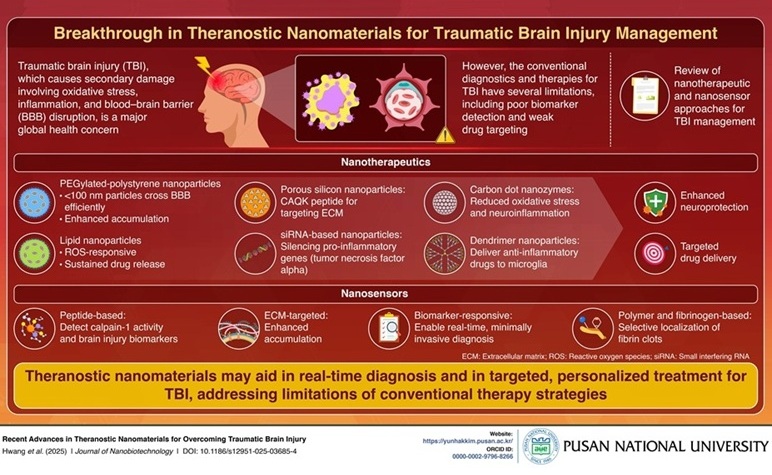
Smart Nanomaterials Detect and Treat Traumatic Brain Injuries Simultaneously
Traumatic brain injury (TBI) continues to leave millions with long-term disabilities every year. After a sudden impact from a fall, collision, or accident, the brain undergoes inflammation, oxidative stress,... Read more
Earlier Blood Transfusion Could Reduce Heart Failure and Arrhythmia in Heart Disease Patients
Blood loss during or after surgery can place significant stress on people with heart disease, increasing the risk of dangerous complications. Transfusions are often delayed until hemoglobin levels fall... Read more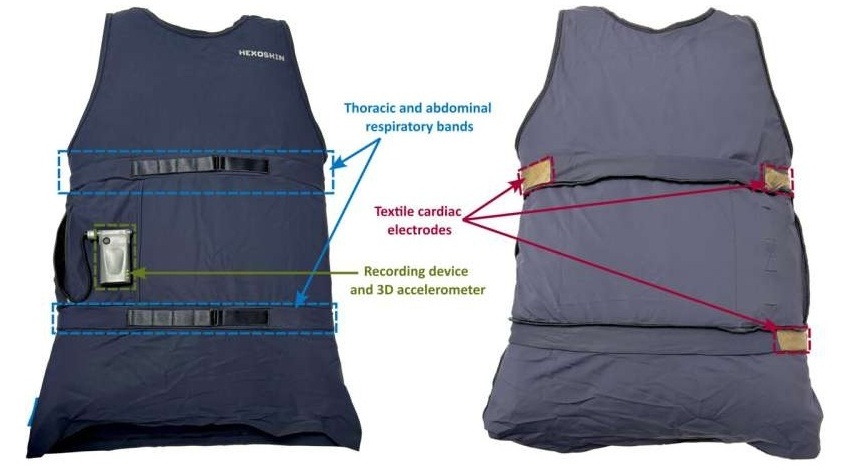
Surgical Techniques
view channel
New Study Findings Could Halve Number of Stent Procedures
When a coronary artery becomes acutely blocked during a heart attack, opening it immediately is essential to prevent irreversible damage. However, many patients also have other narrowed vessels that appear... Read more
Breakthrough Surgical Device Redefines Hip Arthroscopy
Hip arthroscopy has surged in popularity, yet surgeons still face major mechanical constraints when navigating deep joint spaces through traditional cannulas. Limited tool mobility and the need for an... Read more
Patient Care
view channel
Revolutionary Automatic IV-Line Flushing Device to Enhance Infusion Care
More than 80% of in-hospital patients receive intravenous (IV) therapy. Every dose of IV medicine delivered in a small volume (<250 mL) infusion bag should be followed by subsequent flushing to ensure... Read more
VR Training Tool Combats Contamination of Portable Medical Equipment
Healthcare-associated infections (HAIs) impact one in every 31 patients, cause nearly 100,000 deaths each year, and cost USD 28.4 billion in direct medical expenses. Notably, up to 75% of these infections... Read more
Portable Biosensor Platform to Reduce Hospital-Acquired Infections
Approximately 4 million patients in the European Union acquire healthcare-associated infections (HAIs) or nosocomial infections each year, with around 37,000 deaths directly resulting from these infections,... Read more
First-Of-Its-Kind Portable Germicidal Light Technology Disinfects High-Touch Clinical Surfaces in Seconds
Reducing healthcare-acquired infections (HAIs) remains a pressing issue within global healthcare systems. In the United States alone, 1.7 million patients contract HAIs annually, leading to approximately... Read moreHealth IT
view channel
Printable Molecule-Selective Nanoparticles Enable Mass Production of Wearable Biosensors
The future of medicine is likely to focus on the personalization of healthcare—understanding exactly what an individual requires and delivering the appropriate combination of nutrients, metabolites, and... Read more

Business
view channel
Philips and Masimo Partner to Advance Patient Monitoring Measurement Technologies
Royal Philips (Amsterdam, Netherlands) and Masimo (Irvine, California, USA) have renewed their multi-year strategic collaboration, combining Philips’ expertise in patient monitoring with Masimo’s noninvasive... Read more
B. Braun Acquires Digital Microsurgery Company True Digital Surgery
The high-end microsurgery market in neurosurgery, spine, and ENT is undergoing a significant transformation. Traditional analog microscopes are giving way to digital exoscopes, which provide improved visualization,... Read more
CMEF 2025 to Promote Holistic and High-Quality Development of Medical and Health Industry
The 92nd China International Medical Equipment Fair (CMEF 2025) Autumn Exhibition is scheduled to be held from September 26 to 29 at the China Import and Export Fair Complex (Canton Fair Complex) in Guangzhou.... Read more