






Artificial Intelligence May Support Endoscopic Diagnosis of Early Gastric Cancer
|
By HospiMedica International staff writers Posted on 19 May 2022 |


|
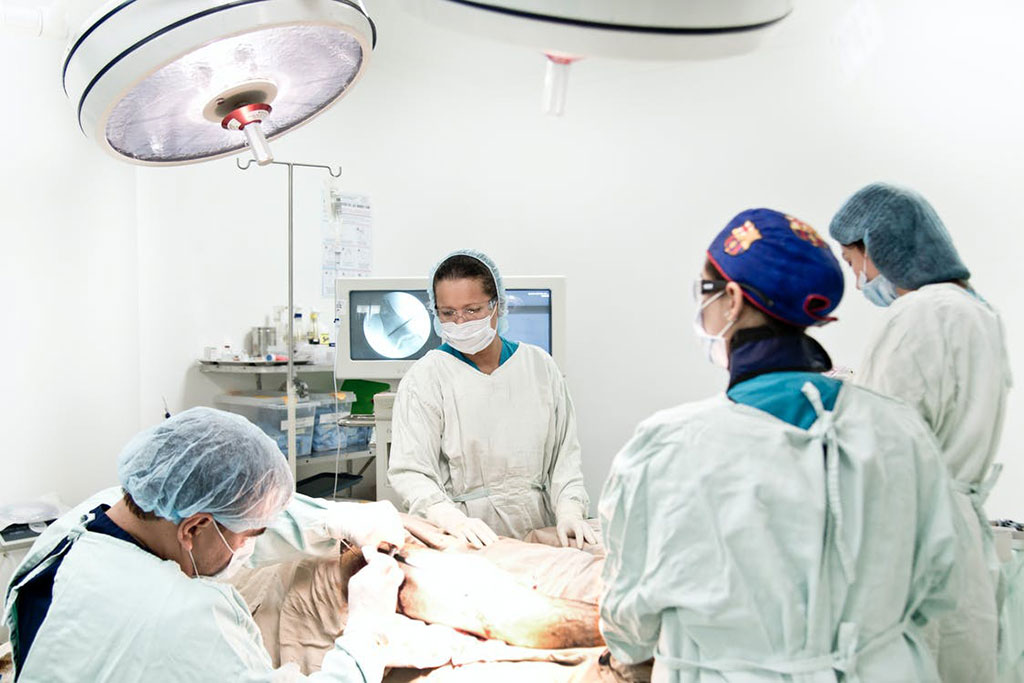
Gastric cancer (GC) is the fifth most common cancer worldwide and the third leading cause of cancer death. Endoscopy is the most powerful tool for detection and diagnosis of GC, but the accuracy of detection depends on the experience of the endoscopists and is complicated by various factors of the gastrointestinal (GI) tract. Artificial intelligence (AI) for GC diagnosis has been discussed in recent years. The role of AI in early GC is more important than in advanced GC since early GC is not easily identified in clinical practice. However, past syntheses appear to have limited focus on the populations with early GC. Now, the findings of a new study support the diagnostic accuracy of AI in the diagnosis of early GC from endoscopic images.
Researchers at Taipei Medical University (Taipei, Taiwan) conducted a systematic review from database inception to June 2020 of all studies assessing the performance of AI in the endoscopic diagnosis of early GC. Studies not concerning early GC were excluded. The outcome of interest was the diagnostic accuracy (comprising sensitivity, specificity, and accuracy) of AI systems. Study quality was assessed on the basis of the revised Quality Assessment of Diagnostic Accuracy Studies. Meta-analysis was primarily based on a bivariate mixed-effects model. A summary receiver operating curve and a hierarchical summary receiver operating curve were constructed, and the area under the curve was computed.
The researchers analyzed 12 retrospective case control studies (n=11,685) in which AI identified early GC from endoscopic images. The pooled sensitivity and specificity of AI for early GC diagnosis were 0.86 (95% CI 0.75-0.92) and 0.90 (95% CI 0.84-0.93), respectively. The area under the curve was 0.94. Sensitivity analysis of studies using support vector machines and narrow-band imaging demonstrated more consistent results. For early GC, this was the first synthesis study on the use of endoscopic images in AI in diagnosis. Based on the findings, the researchers concluded that AI may support the diagnosis of early GC. However, the collocation of imaging techniques and optimal algorithms remain unclear. Nevertheless, competing models of AI for the diagnosis of early GC are worthy of future investigation, according to the researchers.
Related Links:
Taipei Medical University





Latest AI News
- Machine Learning Approach Enhances Liver Cancer Risk Stratification
- New AI Approach Monitors Brain Health Using Passive Wearable Data
- AI Tool Maps Early Risk Patterns in Bloodstream Infections
- AI Model Identifies Rare Endocrine Disorder from Hand Images
- AI Tool Promises to Reduce Length of Hospital Stays and Free Up Beds
- Machine Learning Model Cuts Canceled Liver Transplants By 60%
Channels
Critical Care
view channel
Automated IV Labeling Solution Improves Infusion Safety and Efficiency
Medication administration in high-acuity settings is often complicated by multiple concurrent infusions, making accurate line identification essential. In a 10-hospital intensive care unit study, 60% of... Read more
First-Of-Its-Kind AI Tool Detects Pulmonary Hypertension from Standard ECGs
Pulmonary hypertension is a progressive, life‑threatening disease that is frequently missed early because symptoms such as dyspnea are nonspecific and diagnostic delays can exceed two years.... Read more
Surgical Techniques
view channel
Continuous Monitoring with Wearables Enhances Postoperative Patient Safety
Postoperative hypoxemia on general surgical wards is common and often missed by intermittent vital sign checks. Undetected low oxygen levels can delay recovery and raise the risk of complications that... Read more
New Approach Enables Customized Muscle Tissue Without Biomaterial Scaffolds
Volumetric muscle loss is a traumatic loss of skeletal muscle that often leads to permanent functional impairment and limited reconstructive options. Current experimental strategies struggle to deliver... Read more
Patient Care
view channel
Wearable Sleep Data Predict Adherence to Pulmonary Rehabilitation
Chronic obstructive pulmonary disease (COPD) is a long-term lung disorder that makes breathing difficult and often disturbs sleep, reducing energy for daily activities. Limited engagement in pulmonary... Read more
Revolutionary Automatic IV-Line Flushing Device to Enhance Infusion Care
More than 80% of in-hospital patients receive intravenous (IV) therapy. Every dose of IV medicine delivered in a small volume (<250 mL) infusion bag should be followed by subsequent flushing to ensure... Read more

Health IT
view channel
EMR-Based Tool Predicts Graft Failure After Kidney Transplant
Kidney transplantation offers patients with end-stage kidney disease longer survival and better quality of life than dialysis, yet graft failure remains a major challenge. Although a successful transplant... Read more
Printable Molecule-Selective Nanoparticles Enable Mass Production of Wearable Biosensors
The future of medicine is likely to focus on the personalization of healthcare—understanding exactly what an individual requires and delivering the appropriate combination of nutrients, metabolites, and... Read more


Business
view channel
GE HealthCare Leads Major European Initiative to Advance Cardio-Oncology Care
Cardiovascular complications are increasingly recognized among people undergoing or recovering from cancer treatment, driven by pre‑existing disease and the cardiotoxic effects of chemotherapy, radiotherapy,... Read more

