






Imaging Technology Illuminates Lung Cancer Tumors to Make Surgical Removal Easier
|
By HospiMedica International staff writers Posted on 28 Jun 2022 |


|
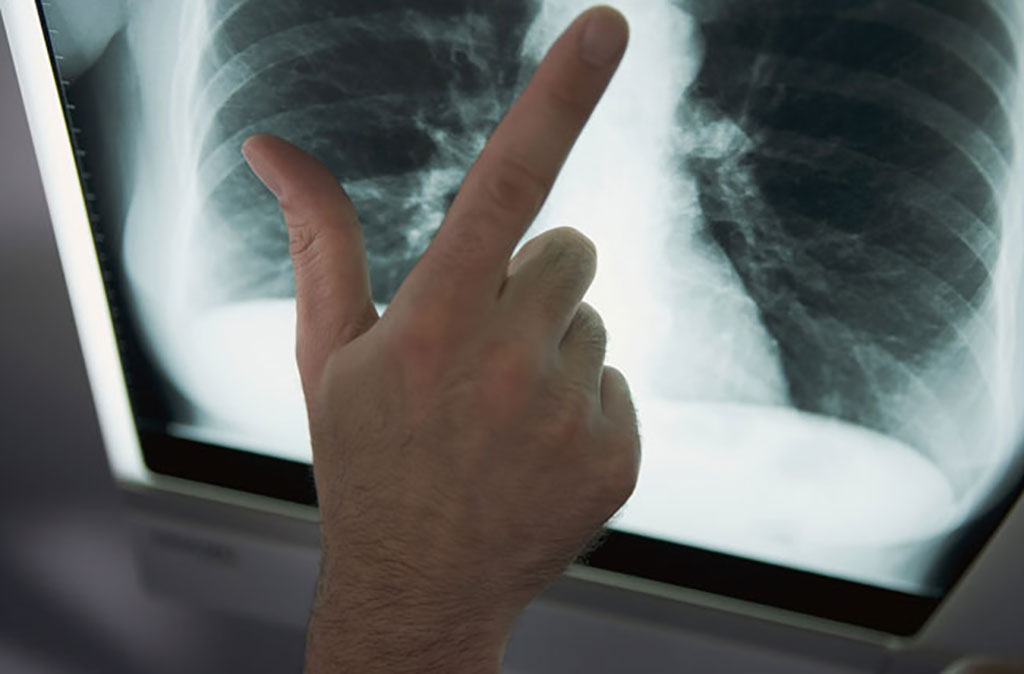
Non-small-cell lung cancers (NSCLC), often related to smoking, are the most common form of lung cancer and can be life threatening. Now, a study aims to further advance an intraoperative imaging technology that illuminates tumor tissue and can make it easier and safer for both clinicians and patients to remove tumors on or in the lungs. The technology, intraoperative molecular imaging (IMI), is based on fluorescent beacon molecules that target and bind themselves to tumor cells, essentially making them glow - and allowing doctors to more easily distinguish cancer from healthy tissue.
Researchers at Penn Medicine (Philadelphia, PA, USA) have received a five-year, USD 9 million research grant from the National Cancer Institute (NCI) to study and improve the IMI technology for NSCLC. The new grant-funded research project aims to develop improved beacon molecules for NSCLC and imaging equipment to go with it, then test them in clinical trials.
The fluorescent beacon molecules used in IMI are normally infused into the patient hours or days before surgery. They bind to cell-surface receptors, such as folate receptors, which are particularly abundant on cancer cells. The light the beacons emit is typically in the near-infared range, allowing for visualization detection of tumor cells up to about two centimeters below the tissue surface, depending on the tissue type. Tissue tagged with these fluorescing beacons can be imaged in real-time, during surgery, with relatively inexpensive and portable equipment.
Data from additional clinical trials have shown it also has the potential to help doctors detect tumors - for example, following a positive or ambiguous X-ray finding - during non-surgical inspections of patients’ lungs via bronchoscopy, when doctors use a scope to investigate the passages in a person’s lungs.
“This funding gives us a tremendous opportunity to further evaluate this important technology and with the goal being to improve outcomes for patients,” said grant principal investigator Sunil Singhal MD, the William Maul Measey Professor in Surgical Research and Chief of Thoracic Surgery, and director of the Center for Precision Surgery in the Abramson Cancer Center at Penn. “We aim to develop this technology even further and to study it in additional clinical trials to help improve surgical identification and removal of tumors.”
“Complete resection is the best outcome for patients, and the goal in this program is to improve the chances of achieving that without unnecessary tissue removal,” said Ronald DeMatteo MD, the John Rhea Barton Professor of Surgery and Chair of the Department of Surgery at Penn.
Related Links:
Penn Medicine





Latest Surgical Techniques News
- Ultrasound Technology Aims to Replace Invasive BPH Procedures
- Continuous Monitoring with Wearables Enhances Postoperative Patient Safety
- New Approach Enables Customized Muscle Tissue Without Biomaterial Scaffolds
- Robot-Assisted Brain Angiography Improves Procedural Outcomes
- Brain Mapping Technology Enhances Precision in Brain Tumor Resection
- Handheld Robotic System Expands Options for Total Knee Surgery
- VR Experience Reduces Patient Anxiety Before Kidney Stone Procedure
- Injectable Mini Livers Offer Hope for Patients Awaiting Transplant
- Pulsed Field Ablation Technology Cleared in Europe for Persistent AFib
- AI-Powered Imaging Brings Real-Time Margin Clarity to Breast Cancer Surgery
- Minimally Invasive Device Safely Treats Challenging Brain Aneurysms
- Surgical Robot Makes Complex Liver Tumor Surgery Safer and Less Invasive
- Neurostimulation Implant Reduces Seizure Burden in Drug-Resistant Epilepsy
- Minimally Invasive Procedure Effectively Treats Small Kidney Cancers
- Fluorescence Probe Paired with Engineered Enzymes Lights Up Tumors for Easier Surgical Removal
- Novel Hydrogel Could Become Bone Implant of the Future
Channels
Artificial Intelligence
view channel
AI Analysis of Pericardial Fat Refines Long-Term Heart Disease Risk
Accurately identifying long-term cardiovascular disease risk in asymptomatic adults remains challenging for clinicians. Missed or underestimated risk delays preventive therapy and increases the chance... Read more
Machine Learning Approach Enhances Liver Cancer Risk Stratification
Hepatocellular carcinoma, the most common form of primary liver cancer, is often detected late despite targeted surveillance programs. Current screening guidelines emphasize patients with known cirrhosis,... Read more

Surgical Techniques
view channel
Ultrasound Technology Aims to Replace Invasive BPH Procedures
Benign prostatic hyperplasia (BPH) is a frequent cause of lower urinary tract symptoms in aging men and often requires invasive procedures or prolonged recovery. With prevalence expected to rise as populations... Read more
Continuous Monitoring with Wearables Enhances Postoperative Patient Safety
Postoperative hypoxemia on general surgical wards is common and often missed by intermittent vital sign checks. Undetected low oxygen levels can delay recovery and raise the risk of complications that... Read more

Patient Care
view channel
Wearable Sleep Data Predict Adherence to Pulmonary Rehabilitation
Chronic obstructive pulmonary disease (COPD) is a long-term lung disorder that makes breathing difficult and often disturbs sleep, reducing energy for daily activities. Limited engagement in pulmonary... Read more
Revolutionary Automatic IV-Line Flushing Device to Enhance Infusion Care
More than 80% of in-hospital patients receive intravenous (IV) therapy. Every dose of IV medicine delivered in a small volume (<250 mL) infusion bag should be followed by subsequent flushing to ensure... Read more

Health IT
view channel
EMR-Based Tool Predicts Graft Failure After Kidney Transplant
Kidney transplantation offers patients with end-stage kidney disease longer survival and better quality of life than dialysis, yet graft failure remains a major challenge. Although a successful transplant... Read more
Printable Molecule-Selective Nanoparticles Enable Mass Production of Wearable Biosensors
The future of medicine is likely to focus on the personalization of healthcare—understanding exactly what an individual requires and delivering the appropriate combination of nutrients, metabolites, and... Read more


Business
view channel
GE HealthCare Leads Major European Initiative to Advance Cardio-Oncology Care
Cardiovascular complications are increasingly recognized among people undergoing or recovering from cancer treatment, driven by pre‑existing disease and the cardiotoxic effects of chemotherapy, radiotherapy,... Read more

