






Noninvasive Headset Device Measures Vital Parameters from Ear Canal
|
By HospiMedica International staff writers Posted on 30 Jun 2022 |


|
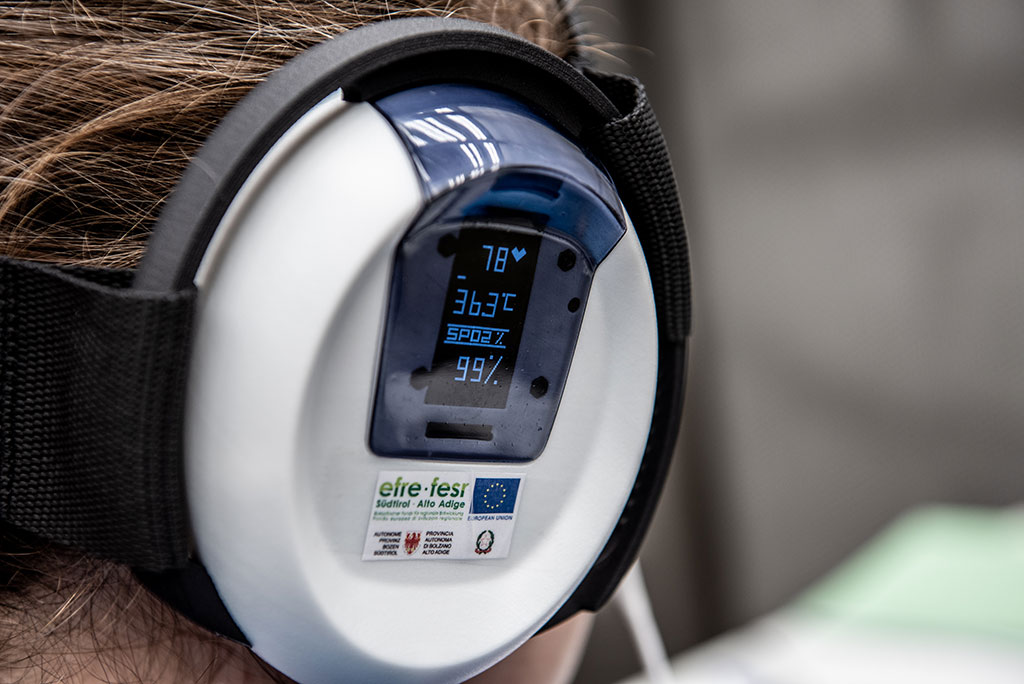
In emergency situations, such as when the victim is suspected to be hypothermic, knowing their core temperature as accurately as possible is essential for proper triage, but this information is not always easy to obtain – current thermometers are not accurate enough, especially in harsh environmental conditions, and the probes used in hospitals, for example the esophageal one, most often cannot be inserted in the field. Moreover, victims are often uncooperative, spaces uncomfortable and the equipment one can carry very limited, such as during a helicopter rescue or the scene of a car accident. Now, a patented space-saving, noninvasive and easy-to-use instrument that measures core temperature as well as oxygen saturation and heart rate from the ear canal could provide a solution to this problem.
Eurac Research (Bolzano, Italy) has conceived MedSENS – an instrument that looks like a headset for listening to music and uses sensors placed in the external ear canal to measure various vital parameters. MedSENS consists of a probe about the size of an ear-plug, which contains innovative measuring sensors; the rescuer pushes it into the victim’s ear, then covers it with an outer ear pad that insulates against heat and cold and incorporates a small screen that shows the measured values in real time. In addition to body temperature, MedSENS also measures heart rate and oxygen saturation and gives a complete picture of essential vital parameters. The data can then be sent wirelessly to any other device connected by rescue teams.
The instrument was tested for more than a year and underwent countless adjustments. Two rounds of experiments involving a total of 40 people took place in the terraXcube extreme environment simulator. During simulations of interventions between -10 and 20 °C, rescue workers had to apply the device; the ‘victims’ were monitored both through MedSENS and a traditional esophageal probe which had previously been inserted in the ambulatory.
“Our tests had a double purpose,” explained Alessandro Micarelli, an otolaryngologist and researcher at Eurac Research. “On the one hand, to test whether the use of the instrument was easy even, for example, with hands affected by the biting cold; on the other, to verify that MedSENS measurements were in agreement with those of the in-depth probes previously inserted.”
“Thanks to the experience of some of us in mountain rescue and emergency service, we knew we wanted a noninvasive and easy-to-use instrument that combined temperature measurement with oxygen saturation measurement,” said Michela Masè, a physicist and researcher at Eurac Research. “There are already devices on the market that can be inserted into the ear, but they are too sensitive to external temperature and therefore not reliable so that’s where we started from.”
Related Links:
Eurac Research





Latest Critical Care News
- Noninvasive Monitoring Device Enables Earlier Intervention in Heart Failure
- Automated IV Labeling Solution Improves Infusion Safety and Efficiency
- First-Of-Its-Kind AI Tool Detects Pulmonary Hypertension from Standard ECGs
- 4D Digital Twin Heart Model Improves CRT Outcomes
- AI Turns Glucose Data Into Actionable Insights for Diabetes Care
- Microscale Wireless Implant Tracks Brain Activity Over Time
- Smart Mask Delivers Continuous, Battery-Free Breath Monitoring
- Routine Blood Pressure Readings May Identify Risk of Future Cognitive Decline
- CGM-Based Algorithm Enhances Insulin Dose Adjustment in Type 2 Diabetes
- Fish Scale–Based Implants Offer New Approach to Corneal Repair
- Dual-Function Wound Patch Combines Infection Sensing and Treatment
- Smartwatch Signals and Blood Tests Team Up for Early Warning on Insulin Resistance
- Smart Fabric Technology Aims to Prevent Pressure Injuries in Hospital Care
- Standardized Treatment Algorithm Improves Blood Pressure Control
- Combined Infection Control Strategy Limits Drug-Resistant Outbreak in NICU
- AI Helps Predict Which Heart-Failure Patients Will Worsen Within a Year
Channels
Artificial Intelligence
view channel
AI Analysis of Pericardial Fat Refines Long-Term Heart Disease Risk
Accurately identifying long-term cardiovascular disease risk in asymptomatic adults remains challenging for clinicians. Missed or underestimated risk delays preventive therapy and increases the chance... Read more
Machine Learning Approach Enhances Liver Cancer Risk Stratification
Hepatocellular carcinoma, the most common form of primary liver cancer, is often detected late despite targeted surveillance programs. Current screening guidelines emphasize patients with known cirrhosis,... Read more

Surgical Techniques
view channel
Ultrasound Technology Aims to Replace Invasive BPH Procedures
Benign prostatic hyperplasia (BPH) is a frequent cause of lower urinary tract symptoms in aging men and often requires invasive procedures or prolonged recovery. With prevalence expected to rise as populations... Read more
Continuous Monitoring with Wearables Enhances Postoperative Patient Safety
Postoperative hypoxemia on general surgical wards is common and often missed by intermittent vital sign checks. Undetected low oxygen levels can delay recovery and raise the risk of complications that... Read more

Patient Care
view channel
Wearable Sleep Data Predict Adherence to Pulmonary Rehabilitation
Chronic obstructive pulmonary disease (COPD) is a long-term lung disorder that makes breathing difficult and often disturbs sleep, reducing energy for daily activities. Limited engagement in pulmonary... Read more
Revolutionary Automatic IV-Line Flushing Device to Enhance Infusion Care
More than 80% of in-hospital patients receive intravenous (IV) therapy. Every dose of IV medicine delivered in a small volume (<250 mL) infusion bag should be followed by subsequent flushing to ensure... Read more

Health IT
view channel
EMR-Based Tool Predicts Graft Failure After Kidney Transplant
Kidney transplantation offers patients with end-stage kidney disease longer survival and better quality of life than dialysis, yet graft failure remains a major challenge. Although a successful transplant... Read more
Printable Molecule-Selective Nanoparticles Enable Mass Production of Wearable Biosensors
The future of medicine is likely to focus on the personalization of healthcare—understanding exactly what an individual requires and delivering the appropriate combination of nutrients, metabolites, and... Read more


Business
view channel
GE HealthCare Leads Major European Initiative to Advance Cardio-Oncology Care
Cardiovascular complications are increasingly recognized among people undergoing or recovering from cancer treatment, driven by pre‑existing disease and the cardiotoxic effects of chemotherapy, radiotherapy,... Read more

