






Smart Inflammation Test Provides Different CRP Ranges in Minutes
|
By HospiMedica International staff writers Posted on 07 Jul 2022 |


|
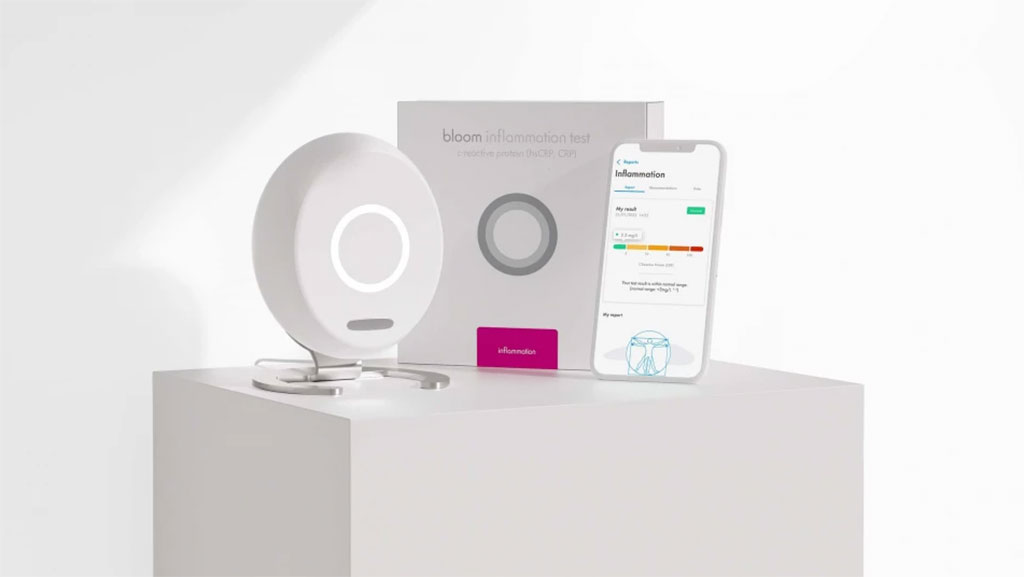
Inflammation is the immune system’s response to something damaging the body's tissues. C-reactive protein (CRP), a protein produced by the liver as part of the acute phase response to inflammation, is a well-established indicator of inflammation. An elevated CRP value reflects the presence and intensity of an inflammation and can be a sign of disease, even before a patient experiences any clinical symptoms. Elevated CRP can be caused by a range of different medical conditions including asthma, arthritis, COPD, diabetes, Crohn's disease, pneumonia, and more. Widely used in clinical practice by healthcare professionals, CRP is a sensitive indicator of inflammation, although it is not specific to the type of inflammation. Now, a novel CRP test allows doctors and pharmacists to rapidly measure and quantify inflammation in anyone 18 years old and above.
The Bloom Inflammation Test from Bloom Diagnostics (Zurich, Switzerland) designed to test for the quantitative measurement and presence of CRP using the Bloom system which is CE mark approved for the EU and Switzerland. The Bloom Inflammation Test is a single-use semi-automated testing kit for the quantitative measurement of CRP in the bloodstream to detect inflammation in the body. The test provides five different classifications depending on the CRP levels contained in the sample tested, ranging from normal all the way to a high-grade inflammation. It enables healthcare professionals to test for levels of CRP from a single drop of blood and receive accurate results in minutes.
The single-use kit for professional quantitative examination of CRP is designed for adults aged 18 years of age and over, excluding pregnant users. Pin-prick blood samples are captured in a test strip, which is then deployed into the Bloom Lab. Cloud-based algorithms and AI technology aggregate test results with other input information about health status alongside medical history, lifestyle, and individual symptoms. Fully encrypted feedback is delivered through a personalized report on the Bloom App after just 20 minutes. The Bloom Inflammation Test has received the green light for professional use and the company now plans to expand across Europe.
“Inflammation is a common symptom across many ailments, and we estimate that over half the adult population could benefit from more frequent testing,” said Tom Kupper, Co-founder and Chief Product Officer (CPO) at Bloom Diagnostics. “Inflammation correlates with diet, exercise and medical conditions, such as diabetes and arthritis. Introducing a simple and accessible tool to measure and quantify the body's inflammatory status can be incredibly impactful. We're very excited to finally launch the Bloom Inflammation Test.”
Related Links:
Bloom Diagnostics





Latest Microbiology News
Channels
Artificial Intelligence
view channel
Machine Learning Approach Enhances Liver Cancer Risk Stratification
Hepatocellular carcinoma, the most common form of primary liver cancer, is often detected late despite targeted surveillance programs. Current screening guidelines emphasize patients with known cirrhosis,... Read more
New AI Approach Monitors Brain Health Using Passive Wearable Data
Brain health spans cognitive and emotional functions and can fluctuate even in adults without diagnosed disease. Detecting early changes remains difficult in routine care and burdens specialty services... Read more

Critical Care
view channel
Noninvasive Monitoring Device Enables Earlier Intervention in Heart Failure
Hospitalizations for heart failure with preserved ejection fraction (HFpEF) remain common because lung congestion often worsens before symptoms prompt treatment changes. Missed early decompensation... Read more
Automated IV Labeling Solution Improves Infusion Safety and Efficiency
Medication administration in high-acuity settings is often complicated by multiple concurrent infusions, making accurate line identification essential. In a 10-hospital intensive care unit study, 60% of... Read more

Surgical Techniques
view channel
Continuous Monitoring with Wearables Enhances Postoperative Patient Safety
Postoperative hypoxemia on general surgical wards is common and often missed by intermittent vital sign checks. Undetected low oxygen levels can delay recovery and raise the risk of complications that... Read more
New Approach Enables Customized Muscle Tissue Without Biomaterial Scaffolds
Volumetric muscle loss is a traumatic loss of skeletal muscle that often leads to permanent functional impairment and limited reconstructive options. Current experimental strategies struggle to deliver... Read more

Patient Care
view channel
Wearable Sleep Data Predict Adherence to Pulmonary Rehabilitation
Chronic obstructive pulmonary disease (COPD) is a long-term lung disorder that makes breathing difficult and often disturbs sleep, reducing energy for daily activities. Limited engagement in pulmonary... Read more
Revolutionary Automatic IV-Line Flushing Device to Enhance Infusion Care
More than 80% of in-hospital patients receive intravenous (IV) therapy. Every dose of IV medicine delivered in a small volume (<250 mL) infusion bag should be followed by subsequent flushing to ensure... Read more

Health IT
view channel
EMR-Based Tool Predicts Graft Failure After Kidney Transplant
Kidney transplantation offers patients with end-stage kidney disease longer survival and better quality of life than dialysis, yet graft failure remains a major challenge. Although a successful transplant... Read more
Printable Molecule-Selective Nanoparticles Enable Mass Production of Wearable Biosensors
The future of medicine is likely to focus on the personalization of healthcare—understanding exactly what an individual requires and delivering the appropriate combination of nutrients, metabolites, and... Read more


Business
view channel
GE HealthCare Leads Major European Initiative to Advance Cardio-Oncology Care
Cardiovascular complications are increasingly recognized among people undergoing or recovering from cancer treatment, driven by pre‑existing disease and the cardiotoxic effects of chemotherapy, radiotherapy,... Read more

