






3D-Printed Surgical Table Could Make Procedures More Affordable and Accessible
|
By HospiMedica International staff writers Posted on 18 Jul 2022 |


|
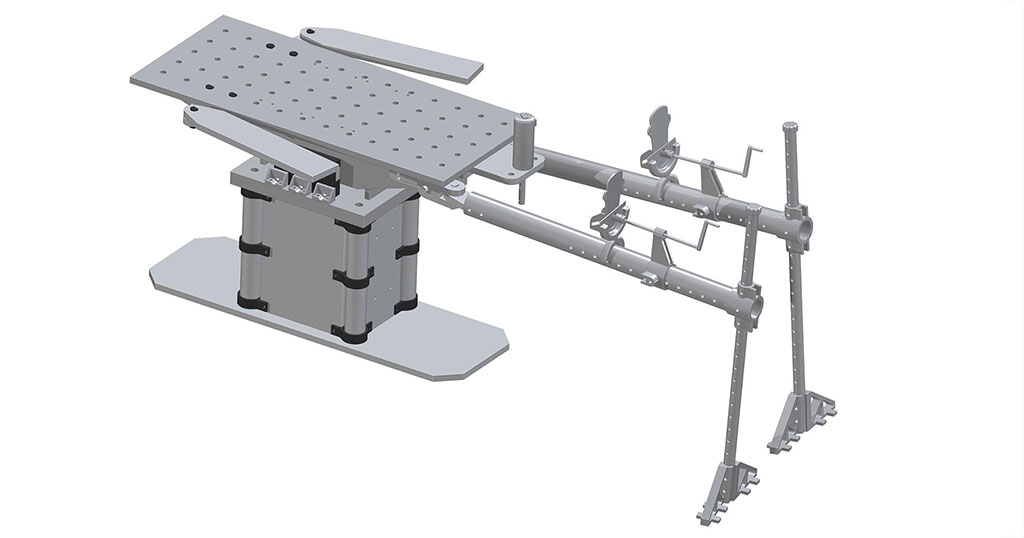
A fracture table helps to position the patient during surgery which frees up health-care workers from holding the patient in position while a procedure is being done. Nine of the World Bank’s priorities for cost-effective surgical procedures that should be universally available are orthopedic procedures. However, surgeries in many locations are limited partly due to the unaffordability of surgical tables. The capital cost of a surgical fracture table, for example, would generally cost more than USD 250,000. As a result, health-care workers do not always have the help and technology available to do even simple procedures. Now, a 3D-printed, functional surgical fracture table built at a fraction of what it would normally cost could have significant impact in the developing world, where the financial burden of medical equipment is a significant barrier to universal access to health care.
In a collaborative project between Western Engineering (Ontario, Canada) and Michigan Tech University (Houghton, MI, USA), researchers have developed an innovative, step-by-step, techniques to build a functionally comparable operating table using open-source hardware and 3D printing. The team used an open-source desktop 3D printer and made the necessary components for the cost-effective surgical table in a little over a week of continuous printing. The final constructed operating table costs just under USD 4,000, or a 98.5% savings compared to commercially available systems, thus radically increasing both affordability as well as accessibility. The open-source surgical fracture table can assist surgeons to complete a wide range of orthopedic procedures as well as general surgical procedures, gynecological procedures and childbirth. ‘Open-source’ refers to the license for a publicly accessible design that anyone can modify, use and share. It uses materials that are widely available worldwide and the specialty components required are easily 3D printed.
The open-source fracture table can be adjusted 90 to 116 cm in height and tilted from +/-15 degrees. The leg height ranges from 31 to 117 cm, the arm supports and foot holder both have a 180-degree range, the foot traction has a 54 cm range, and the legs can be adjusted from 55 to 120 degrees. Geometrically flexible to allow for a wide array of common surgeries, the open source surgical table has a weight capacity of more than 130 kg, is radiolucent (permeable to X-rays) in surgical zones, and is completely modular and upgradeable. The table is mechanically adjustable so it does not require electricity, however, surgical staff will need to be trained on how to perform needed adjustments during surgery.
Being open-source, the surgical fracture table can be improved and built even more cost-effectively. Ideally, the table design is useful to hospitals that might otherwise be unable to afford one. And as the design of the table is freely available, the table can be built, used and repaired on location. As surgeons and other health-care workers find a need for further attachments and modifications, they can add to the functionality of the design, either by designing a modification themselves, or by describing what they would like to see in the design and having others contribute to these designs.
“We want everyone in the world to have cost-effective medical care and this is one step on the path to getting us there,” said Joshua Pearce, John M. Thompson Chair in Information Technology and Innovation at Western University. “And if we help those who are financially less fortunate with acquiring high-performance medical equipment, we will also be making better medical tools for ourselves at a lower cost, so really, everyone wins. Designs can be shared digitally and replicated with digital manufacturing like 3D printing anywhere in the world. We’re right at the start of a decentralized manufacturing revolution.”
“Medical technology is absurdly expensive. One way we can help reduce costs is to enable all manufacturers to build these, sell them directly, and to integrate some of the innovations, like the use of the radiolucent 3D-printed parts we made into their own designs,” added Pearce. “This is in no way the final fracture table. I’m sure any decent engineer could look at it and make it a little bit better and that’s exactly what it’s meant to do – to be a starting point for other people to build on.”
Related Links:
Western Engineering
Michigan Tech University








Latest Surgical Techniques News
- Continuous Monitoring with Wearables Enhances Postoperative Patient Safety
- New Approach Enables Customized Muscle Tissue Without Biomaterial Scaffolds
- Robot-Assisted Brain Angiography Improves Procedural Outcomes
- Brain Mapping Technology Enhances Precision in Brain Tumor Resection
- Handheld Robotic System Expands Options for Total Knee Surgery
- VR Experience Reduces Patient Anxiety Before Kidney Stone Procedure
- Injectable Mini Livers Offer Hope for Patients Awaiting Transplant
- Pulsed Field Ablation Technology Cleared in Europe for Persistent AFib
- AI-Powered Imaging Brings Real-Time Margin Clarity to Breast Cancer Surgery
- Minimally Invasive Device Safely Treats Challenging Brain Aneurysms
- Surgical Robot Makes Complex Liver Tumor Surgery Safer and Less Invasive
- Neurostimulation Implant Reduces Seizure Burden in Drug-Resistant Epilepsy
- Minimally Invasive Procedure Effectively Treats Small Kidney Cancers
- Fluorescence Probe Paired with Engineered Enzymes Lights Up Tumors for Easier Surgical Removal
- Novel Hydrogel Could Become Bone Implant of the Future
- Skull Implant Design Could Shape Surgical Outcomes
Channels
Artificial Intelligence
view channel
Machine Learning Approach Enhances Liver Cancer Risk Stratification
Hepatocellular carcinoma, the most common form of primary liver cancer, is often detected late despite targeted surveillance programs. Current screening guidelines emphasize patients with known cirrhosis,... Read more
New AI Approach Monitors Brain Health Using Passive Wearable Data
Brain health spans cognitive and emotional functions and can fluctuate even in adults without diagnosed disease. Detecting early changes remains difficult in routine care and burdens specialty services... Read more

Critical Care
view channel
Automated IV Labeling Solution Improves Infusion Safety and Efficiency
Medication administration in high-acuity settings is often complicated by multiple concurrent infusions, making accurate line identification essential. In a 10-hospital intensive care unit study, 60% of... Read more
First-Of-Its-Kind AI Tool Detects Pulmonary Hypertension from Standard ECGs
Pulmonary hypertension is a progressive, life‑threatening disease that is frequently missed early because symptoms such as dyspnea are nonspecific and diagnostic delays can exceed two years.... Read more

Patient Care
view channel
Wearable Sleep Data Predict Adherence to Pulmonary Rehabilitation
Chronic obstructive pulmonary disease (COPD) is a long-term lung disorder that makes breathing difficult and often disturbs sleep, reducing energy for daily activities. Limited engagement in pulmonary... Read more
Revolutionary Automatic IV-Line Flushing Device to Enhance Infusion Care
More than 80% of in-hospital patients receive intravenous (IV) therapy. Every dose of IV medicine delivered in a small volume (<250 mL) infusion bag should be followed by subsequent flushing to ensure... Read more

Health IT
view channel
EMR-Based Tool Predicts Graft Failure After Kidney Transplant
Kidney transplantation offers patients with end-stage kidney disease longer survival and better quality of life than dialysis, yet graft failure remains a major challenge. Although a successful transplant... Read more
Printable Molecule-Selective Nanoparticles Enable Mass Production of Wearable Biosensors
The future of medicine is likely to focus on the personalization of healthcare—understanding exactly what an individual requires and delivering the appropriate combination of nutrients, metabolites, and... Read more


Business
view channel
GE HealthCare Leads Major European Initiative to Advance Cardio-Oncology Care
Cardiovascular complications are increasingly recognized among people undergoing or recovering from cancer treatment, driven by pre‑existing disease and the cardiotoxic effects of chemotherapy, radiotherapy,... Read more

