






New Generation Graphene-Based PCT/CRP IVD Test to Give Results Within Minutes
|
By HospiMedica International staff writers Posted on 20 Jul 2022 |


|
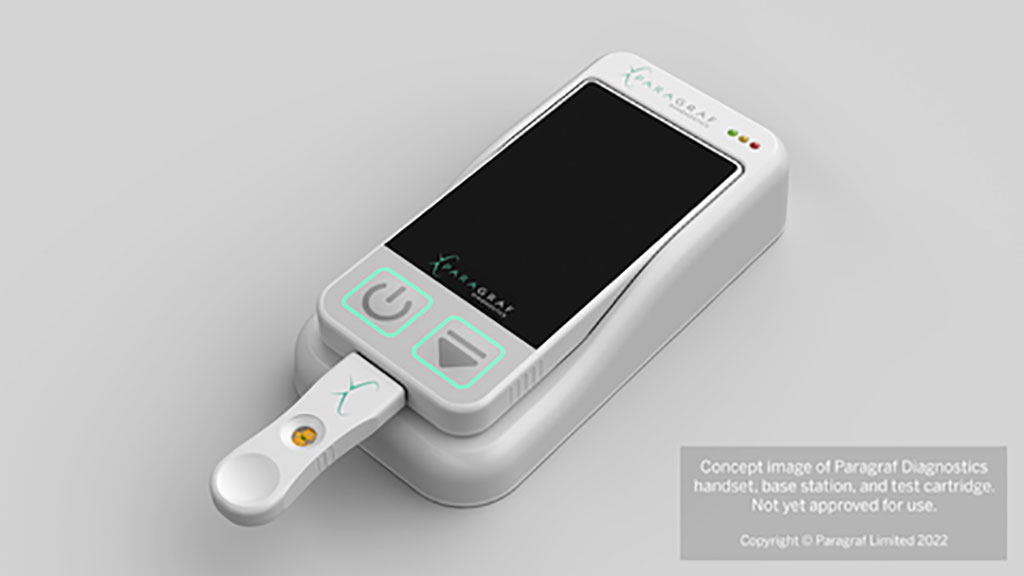
The first proof of concept graphene-based diagnostic test to immediately identify patients who need antibiotic treatment is currently under development. The test will be the first in a pipeline of affordable, portable, easy-to-use, graphene-based IVD products, which will at least match the performance of the most advanced hospital laboratory, but at the point of care.
Paragraf (Cambridgeshire, UK) is collaborating with leading UK universities to develop a new generation of graphene-based, in-vitro diagnostic products that will give results within a few minutes. The company is starting a two-year program to develop a proof-of-concept combined PCT (procalcitonin) and CRP (C-reactive protein) test, on a single panel. A clinical study of the combined PCT/CRP test will be delivered at the Diagnostics and Technology Accelerator (DiTA) in mid-2023. DiTA aims to address unmet needs, transform patient care and improve efficiency within the UK NHS, by facilitating the rapid translation and adoption of new innovations into the health and care system. The project is expected to be completed by the end of May 2024.
“This graphene-based diagnostic test is expected to become the first test in the world to give clinicians the ability to identify patients who need an antibiotic treatment within the space of a regular 15-minute clinic appointment. It encourages antimicrobial stewardship by giving clinicians the insight into when not to prescribe antibiotics as the test result differentiates viral from bacterial infections,” said Malcolm Stewart, Paragraf Diagnostics Business Development Director. “Paragraf will go on to deliver a series of high sensitivity, rapid tests for disease biomarkers in areas including cardiovascular disease, oncology, and infectious diseases. The ambition is to develop a comprehensive suite of tests that could be used in almost any environment or healthcare setting. Our tests are designed to provide ultra-fast answers to diagnostic challenges and to reach beyond the concept of point of care testing to create a complete diagnostic toolkit at the point of need.”
“We expect to show that our proposed acute inflammatory marker test will have the capability to deliver accurate results for emergency patient care within a few minutes, from a small sample of blood,” said Paul Dark, Professor of Critical Care Medicine at The University of Manchester. “The accuracy of the test is envisaged to be at least comparable with hospital centralized lab-based immunoassay (antibody) tests which can take hours to provide results back to emergency services.”
“The main benefit of a single PCT and CRP test is that a combined test increases confidence in the accuracy of the result when discriminating between bacterial and other infections,” said Dr. Tim Felton, Director of DiTA. “An accurate test able to provide results that can guide antibiotic therapy in real time is becoming a critical tool in the fight against antibiotic resistance.”
“This technology reduces the time and complexity of sample preparation which, together with its rapid measurement speed, provides clinicians with accurate results in a timeframe that allows immediate decisions to be made on antimicrobial prescribing. This is especially important for the treatment of children and neonates,” added Professor Enitan Carrol, Professor of Paediatric Infectious Diseases at the University of Liverpool.
Related Links:
Paragraf







Latest Molecular Diagnostics News
Channels
Artificial Intelligence
view channel
Machine Learning Approach Enhances Liver Cancer Risk Stratification
Hepatocellular carcinoma, the most common form of primary liver cancer, is often detected late despite targeted surveillance programs. Current screening guidelines emphasize patients with known cirrhosis,... Read more
New AI Approach Monitors Brain Health Using Passive Wearable Data
Brain health spans cognitive and emotional functions and can fluctuate even in adults without diagnosed disease. Detecting early changes remains difficult in routine care and burdens specialty services... Read more

Critical Care
view channel
Automated IV Labeling Solution Improves Infusion Safety and Efficiency
Medication administration in high-acuity settings is often complicated by multiple concurrent infusions, making accurate line identification essential. In a 10-hospital intensive care unit study, 60% of... Read more
First-Of-Its-Kind AI Tool Detects Pulmonary Hypertension from Standard ECGs
Pulmonary hypertension is a progressive, life‑threatening disease that is frequently missed early because symptoms such as dyspnea are nonspecific and diagnostic delays can exceed two years.... Read more
Surgical Techniques
view channel
Continuous Monitoring with Wearables Enhances Postoperative Patient Safety
Postoperative hypoxemia on general surgical wards is common and often missed by intermittent vital sign checks. Undetected low oxygen levels can delay recovery and raise the risk of complications that... Read more
New Approach Enables Customized Muscle Tissue Without Biomaterial Scaffolds
Volumetric muscle loss is a traumatic loss of skeletal muscle that often leads to permanent functional impairment and limited reconstructive options. Current experimental strategies struggle to deliver... Read more
Patient Care
view channel
Wearable Sleep Data Predict Adherence to Pulmonary Rehabilitation
Chronic obstructive pulmonary disease (COPD) is a long-term lung disorder that makes breathing difficult and often disturbs sleep, reducing energy for daily activities. Limited engagement in pulmonary... Read more
Revolutionary Automatic IV-Line Flushing Device to Enhance Infusion Care
More than 80% of in-hospital patients receive intravenous (IV) therapy. Every dose of IV medicine delivered in a small volume (<250 mL) infusion bag should be followed by subsequent flushing to ensure... Read more

Health IT
view channel
EMR-Based Tool Predicts Graft Failure After Kidney Transplant
Kidney transplantation offers patients with end-stage kidney disease longer survival and better quality of life than dialysis, yet graft failure remains a major challenge. Although a successful transplant... Read more
Printable Molecule-Selective Nanoparticles Enable Mass Production of Wearable Biosensors
The future of medicine is likely to focus on the personalization of healthcare—understanding exactly what an individual requires and delivering the appropriate combination of nutrients, metabolites, and... Read more


Business
view channel
GE HealthCare Leads Major European Initiative to Advance Cardio-Oncology Care
Cardiovascular complications are increasingly recognized among people undergoing or recovering from cancer treatment, driven by pre‑existing disease and the cardiotoxic effects of chemotherapy, radiotherapy,... Read more

