






Bedside AI Sepsis Detection System Can Cut Hospital Deaths by 20%
|
By HospiMedica International staff writers Posted on 22 Jul 2022 |


|
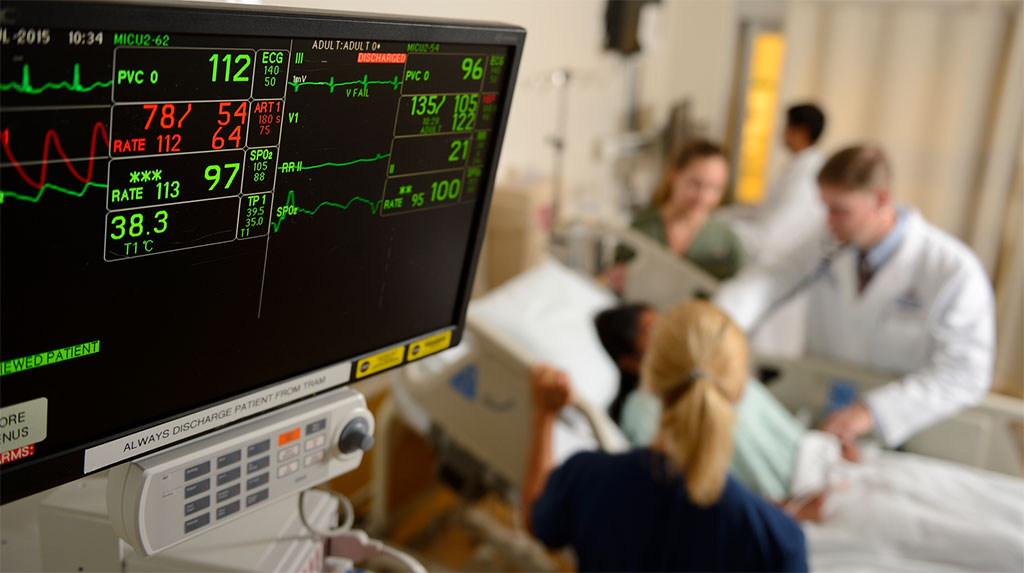
Sepsis occurs when an infection triggers a chain reaction throughout the body. Inflammation can lead to blood clots and leaking blood vessels, and ultimately can cause organ damage or organ failure. About 1.7 million adults develop sepsis every year in the US and more than 250,000 of them die. Sepsis is easy to miss because symptoms such as fever and confusion are common in other conditions. The faster it's caught, the better a patient's chances for survival. Now, patients are 20% less likely to die of sepsis because a new AI system catches the symptoms hours earlier than traditional methods
The AI system developed by researchers at Johns Hopkins University (Baltimore, MD, USA) scours medical records and clinical notes to identify patients at risk of life-threatening complications. The work could significantly cut patient mortality from one of the top causes of hospital deaths worldwide. The machine-learning system, named Targeted Real-Time Early Warning System, combines a patient's medical history with current symptoms and lab results to show clinicians when someone is at risk for sepsis and suggests treatment protocols, such as starting antibiotics. The AI tracks patients from when they arrive in the hospital through discharge, ensuring that critical information isn't overlooked even if staff changes or a patient moves to a different department.
In an extensive hospital study, more than 4,000 clinicians from five hospitals used the AI in treating 590,000 patients. The system also reviewed 173,931 previous patient cases. In 82% of sepsis cases, the AI was accurate nearly 40% of the time. Previous attempts to use electronic tools to detect sepsis caught less than half that many cases and were accurate 2% to 5% of the time. All sepsis cases are eventually caught, but with the current standard of care, the condition kills 30% of the people who develop it. In the most severe sepsis cases, where an hour delay is the difference between life and death, the AI detected it an average of nearly six hours earlier than traditional methods. The team has now adapted the technology to identify patients at risk for pressure injuries, commonly known as bed sores, and those at risk for sudden deterioration caused by bleeding, acute respiratory failure, and cardiac arrest.
"It is the first instance where AI is implemented at the bedside, used by thousands of providers, and where we're seeing lives saved," said Suchi Saria, founding research director of the Malone Center for Engineering in Healthcare at Johns Hopkins and lead author of the studies, which evaluated more than a half million patients over two years. "This is an extraordinary leap that will save thousands of sepsis patients annually. And the approach is now being applied to improve outcomes in other important problem areas beyond sepsis."
Related Links:
Johns Hopkins University







Latest AI News
- Machine Learning Approach Enhances Liver Cancer Risk Stratification
- New AI Approach Monitors Brain Health Using Passive Wearable Data
- AI Tool Maps Early Risk Patterns in Bloodstream Infections
- AI Model Identifies Rare Endocrine Disorder from Hand Images
- AI Tool Promises to Reduce Length of Hospital Stays and Free Up Beds
- Machine Learning Model Cuts Canceled Liver Transplants By 60%
Channels
Critical Care
view channel
Automated IV Labeling Solution Improves Infusion Safety and Efficiency
Medication administration in high-acuity settings is often complicated by multiple concurrent infusions, making accurate line identification essential. In a 10-hospital intensive care unit study, 60% of... Read more
First-Of-Its-Kind AI Tool Detects Pulmonary Hypertension from Standard ECGs
Pulmonary hypertension is a progressive, life‑threatening disease that is frequently missed early because symptoms such as dyspnea are nonspecific and diagnostic delays can exceed two years.... Read more
Surgical Techniques
view channel
Continuous Monitoring with Wearables Enhances Postoperative Patient Safety
Postoperative hypoxemia on general surgical wards is common and often missed by intermittent vital sign checks. Undetected low oxygen levels can delay recovery and raise the risk of complications that... Read more
New Approach Enables Customized Muscle Tissue Without Biomaterial Scaffolds
Volumetric muscle loss is a traumatic loss of skeletal muscle that often leads to permanent functional impairment and limited reconstructive options. Current experimental strategies struggle to deliver... Read more
Patient Care
view channel
Wearable Sleep Data Predict Adherence to Pulmonary Rehabilitation
Chronic obstructive pulmonary disease (COPD) is a long-term lung disorder that makes breathing difficult and often disturbs sleep, reducing energy for daily activities. Limited engagement in pulmonary... Read more
Revolutionary Automatic IV-Line Flushing Device to Enhance Infusion Care
More than 80% of in-hospital patients receive intravenous (IV) therapy. Every dose of IV medicine delivered in a small volume (<250 mL) infusion bag should be followed by subsequent flushing to ensure... Read more

Health IT
view channel
EMR-Based Tool Predicts Graft Failure After Kidney Transplant
Kidney transplantation offers patients with end-stage kidney disease longer survival and better quality of life than dialysis, yet graft failure remains a major challenge. Although a successful transplant... Read more
Printable Molecule-Selective Nanoparticles Enable Mass Production of Wearable Biosensors
The future of medicine is likely to focus on the personalization of healthcare—understanding exactly what an individual requires and delivering the appropriate combination of nutrients, metabolites, and... Read more


Business
view channel
GE HealthCare Leads Major European Initiative to Advance Cardio-Oncology Care
Cardiovascular complications are increasingly recognized among people undergoing or recovering from cancer treatment, driven by pre‑existing disease and the cardiotoxic effects of chemotherapy, radiotherapy,... Read more

