






High-Tech Vest for Monitoring Lung Function Could Speed Discharge of ICU Patients
|
By HospiMedica International staff writers Posted on 02 Aug 2022 |


|
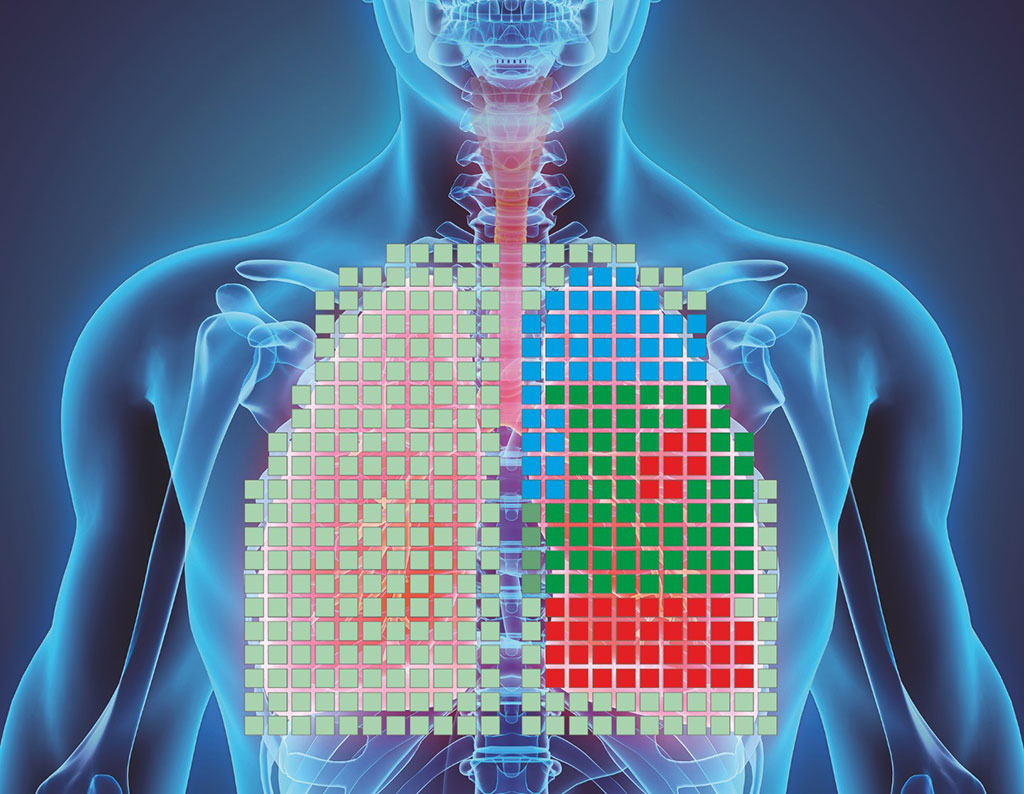
Patients with severe respiratory or lung diseases require intensive treatment and their lung function needs to be monitored on a continuous basis. For over 200 years, the stethoscope has been a standard tool for doctors who use them to listen very accurately to heartbeats and the lungs and, as a result, to diagnose illnesses. Now, the stethoscope is getting some help. A team of researchers has developed a technology whereby noises in the lungs are recorded using a textile vest with integrated acoustic sensors. The signals are then converted and displayed visually using software. In this way, patients can be discharged early from the intensive care unit (ICU) but can still be monitored continuously. The technology increases the options for diagnosis and improves the patient’s quality of life.
As part of the Pneumo.Vest project, researchers at Fraunhofer IKTS (Dresden, Germany) have developed a textile vest with integrated acoustic sensors, presenting a high-performance addition to the traditional stethoscope. Piezoceramic acoustic sensors have been incorporated into the front and back of the vest to register any noise produced by the lungs in the thorax, no matter how small. A software program records the signals and electronically amplifies them, while the lungs are depicted visually on a display. As the software knows the position of each individual sensor, it can attribute the data to its precise location. This produces a detailed acoustic and optical picture of the ventilation situation of all parts of the lungs. But what is particularly special about the system is that it collects and stores the data permanently, examinations can take place at any given time and in the absence of hospital staff.
Pneumo.Vest also indicates the status of the lungs over a period of time, for example over the previous 24 hours. Needless to say, traditional auscultation can also be carried out directly on the patients. However, instead of carrying out auscultation manually at different points with a stethoscope, a number of sensors are used simultaneously. Alongside the acoustic sensors, the software is at the core of the vest. It is responsible for storing, depicting and analyzing the data. It can be used by the doctor to view the acoustic events in specific individual areas of the lungs on the display. The use of algorithms in digital signal processing enables a targeted evaluation of acoustic signals. This means it is possible, for example, to filter out heartbeats or to amplify characteristic frequency ranges, making lung sounds, such as rustling or wheezing, much easier to hear.
On top of this, the researchers are now developing machine learning algorithms. In the future, these will be able to structure and classify complex ambient noises in the thorax. Then, the pneumologist will carry out the final assessment and diagnosis. Patients can also benefit from the digital sensor alternative. When wearing the vest, they can recover without requiring constant observation from medical staff. They can transfer to the general ward and possibly even be sent home and move about more or less freely. Despite this, the lungs are monitored continuously, and any sudden deterioration can be reported to medical personnel straight away. The technology was initially designed for respiratory patients, but it also works well for people in care facilities and for use in sleep laboratories. It can also be used to train young doctors in auscultation. The first tests have shown that the concept is successful in practice.
Pneumo.Vest is a product that is cut out for the increasingly strained situation at hospitals. Millions of patients with respiratory or lung diseases require inpatient treatment every year, with most of them connected to a ventilator for more than 24 hours. This does not take into account the current increase in respiratory patients due to the COVID-19 pandemic. As a result of increasing life expectancy, the medical industry also expects the number of older patients with breathing problems to increase. With the help of the new technology, the burden on hospitals and, in particular, costly ICUs can be relieved as their beds will no longer be occupied for quite as long.
“Pneumo.Vest is not looking to make the stethoscope redundant and does not replace the skills of experienced pneumologists,” explained Ralf Schallert, project manager at Fraunhofer IKTS. “However, auscultation or even CT scans of the lungs only ever present a snapshot at the time of the examination. Our technology provides added value because it allows for the lungs to be monitored continuously in the same way as a long-term ECG, even if the patient is not attached to machines in the ICU but has instead been admitted to the general ward.”
Related Links:
Fraunhofer IKTS





Latest Critical Care News
- Angiography-Based FFR Approach Matches Gold Standard Results Without Wires
- Eye Imaging AI Identifies Elevated Cardiovascular Risk
- Noninvasive Monitoring Device Enables Earlier Intervention in Heart Failure
- Automated IV Labeling Solution Improves Infusion Safety and Efficiency
- First-Of-Its-Kind AI Tool Detects Pulmonary Hypertension from Standard ECGs
- 4D Digital Twin Heart Model Improves CRT Outcomes
- AI Turns Glucose Data Into Actionable Insights for Diabetes Care
- Microscale Wireless Implant Tracks Brain Activity Over Time
- Smart Mask Delivers Continuous, Battery-Free Breath Monitoring
- Routine Blood Pressure Readings May Identify Risk of Future Cognitive Decline
- CGM-Based Algorithm Enhances Insulin Dose Adjustment in Type 2 Diabetes
- Fish Scale–Based Implants Offer New Approach to Corneal Repair
- Dual-Function Wound Patch Combines Infection Sensing and Treatment
- Smartwatch Signals and Blood Tests Team Up for Early Warning on Insulin Resistance
- Smart Fabric Technology Aims to Prevent Pressure Injuries in Hospital Care
- Standardized Treatment Algorithm Improves Blood Pressure Control
Channels
Artificial Intelligence
view channel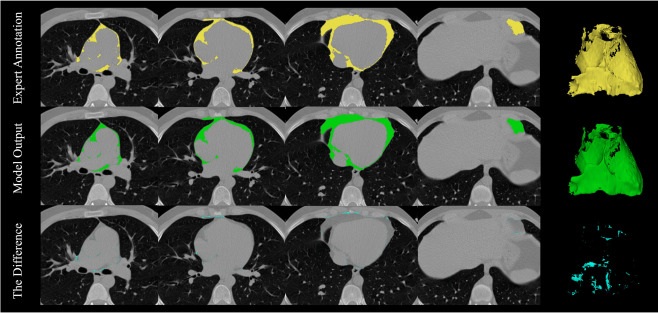
AI Analysis of Pericardial Fat Refines Long-Term Heart Disease Risk
Accurately identifying long-term cardiovascular disease risk in asymptomatic adults remains challenging for clinicians. Missed or underestimated risk delays preventive therapy and increases the chance... Read more
Machine Learning Approach Enhances Liver Cancer Risk Stratification
Hepatocellular carcinoma, the most common form of primary liver cancer, is often detected late despite targeted surveillance programs. Current screening guidelines emphasize patients with known cirrhosis,... Read more

Surgical Techniques
view channel
Fiber-Form Bone Graft Expands Intraoperative Options for Spinal Fusion
Spinal and orthopedic fusion procedures often require bone graft materials that handle predictably and support bone formation. Surgeons face added complexity in difficult anatomy and challenging fusion environments.... Read more
Ultrasound‑Aided Catheter Treatment Cuts Early Collapse in Pulmonary Embolism
Acute pulmonary embolism can cause rapid hemodynamic deterioration and early death in hospitalized and emergency patients. Systemic thrombolysis can dissolve clots but is limited by a high risk of major... Read more

Patient Care
view channel
Wearable Sleep Data Predict Adherence to Pulmonary Rehabilitation
Chronic obstructive pulmonary disease (COPD) is a long-term lung disorder that makes breathing difficult and often disturbs sleep, reducing energy for daily activities. Limited engagement in pulmonary... Read more
Revolutionary Automatic IV-Line Flushing Device to Enhance Infusion Care
More than 80% of in-hospital patients receive intravenous (IV) therapy. Every dose of IV medicine delivered in a small volume (<250 mL) infusion bag should be followed by subsequent flushing to ensure... Read more

Health IT
view channel
Voice-Driven AI System Enables Structured GI Procedure Documentation
Documentation during gastrointestinal (GI) procedures often competes with real-time clinical decision-making and imposes a significant cognitive burden on physicians. Manual data entry and post-procedure... Read more
EMR-Based Tool Predicts Graft Failure After Kidney Transplant
Kidney transplantation offers patients with end-stage kidney disease longer survival and better quality of life than dialysis, yet graft failure remains a major challenge. Although a successful transplant... Read more
Printable Molecule-Selective Nanoparticles Enable Mass Production of Wearable Biosensors
The future of medicine is likely to focus on the personalization of healthcare—understanding exactly what an individual requires and delivering the appropriate combination of nutrients, metabolites, and... Read more

Business
view channel
GE HealthCare Leads Major European Initiative to Advance Cardio-Oncology Care
Cardiovascular complications are increasingly recognized among people undergoing or recovering from cancer treatment, driven by pre‑existing disease and the cardiotoxic effects of chemotherapy, radiotherapy,... Read more

