






ML Tool Alerts Doctors to Patients’ Deteriorating Condition 2-8 Hours in Advance
|
By HospiMedica International staff writers Posted on 02 Sep 2022 |


|

With the massive amount of data in electronic medical records (EMRs) comes the potential for better patient care. For example, the information from the data can be used to help medical staff make decisions that can prevent a patient’s deterioration from adverse events and acute illness. Up until recently, and still in some hospitals, patient data was not available electronically, restricting the capacity to develop digital tools to benefit from it. Now, a study to develop a machine learning tool which provides an early warning to medical professionals of a patient’s deteriorating condition has shown that the early warning deterioration alerts can be set to monitor patients two to eight hours before they are triggered by current clinical criteria.
The machine learning tool developed by scientists from the Commonwealth Scientific and Industrial Research Organization (CSIRO, Canberra, Australia), Australia's national science agency, will allow medical professionals to now use the data contained in EMRs to predict when a patient’s vital signs such as blood pressure or temperature are likely to reach a danger zone, triggering patient decline. The CSIRO scientists are now in discussion with partners for a clinical trial to explore how the alerts work and how they can be best implemented into clinical workflows.
“Until now there hasn’t been a way to harness all the data in the EMR to predict patient health. This new tool has the potential to transform the day-to-day functioning of health systems,” said CSIRO scientist Dr. Sankalp Khanna. “When applied to a test cohort of 18,648 patient records, the tool achieved 100% for prediction windows two to eight hours in advance for patients that were identified at 95%, 85% and 70% risk of deterioration.”
“Our scientists hold expertise in transforming data into useable information to help guide clinical choices. The new tool also sets out the reasons for the warning, which can guide the choice of intervention,” added Dr. Khanna “The alerts warn medical staff when a patient is at risk of deterioration leading to possible death, cardiac arrest, or unplanned admission to ICU. The tool can notify of the need for clinical intervention. Clinical decision support tools such as these are a pre-emptive solution that can provide medical staff with an opportunity to intervene earlier to prevent adverse patient outcomes.”
Related Links:
CSIRO





Latest AI News
- AI Analysis of Pericardial Fat Refines Long-Term Heart Disease Risk
- Machine Learning Approach Enhances Liver Cancer Risk Stratification
- New AI Approach Monitors Brain Health Using Passive Wearable Data
- AI Tool Maps Early Risk Patterns in Bloodstream Infections
- AI Model Identifies Rare Endocrine Disorder from Hand Images
- AI Tool Promises to Reduce Length of Hospital Stays and Free Up Beds
Channels
Artificial Intelligence
view channel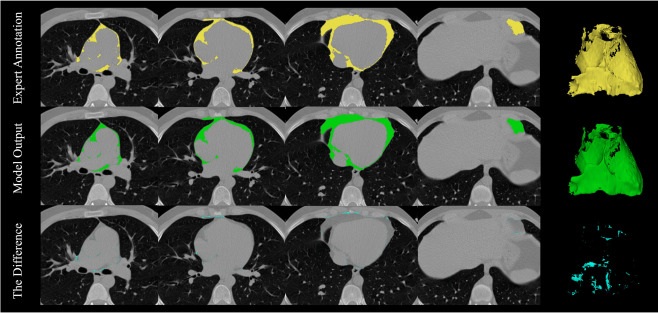
AI Analysis of Pericardial Fat Refines Long-Term Heart Disease Risk
Accurately identifying long-term cardiovascular disease risk in asymptomatic adults remains challenging for clinicians. Missed or underestimated risk delays preventive therapy and increases the chance... Read more
Machine Learning Approach Enhances Liver Cancer Risk Stratification
Hepatocellular carcinoma, the most common form of primary liver cancer, is often detected late despite targeted surveillance programs. Current screening guidelines emphasize patients with known cirrhosis,... Read more

Surgical Techniques
view channel
Ultrasound Technology Aims to Replace Invasive BPH Procedures
Benign prostatic hyperplasia (BPH) is a frequent cause of lower urinary tract symptoms in aging men and often requires invasive procedures or prolonged recovery. With prevalence expected to rise as populations... Read more
Continuous Monitoring with Wearables Enhances Postoperative Patient Safety
Postoperative hypoxemia on general surgical wards is common and often missed by intermittent vital sign checks. Undetected low oxygen levels can delay recovery and raise the risk of complications that... Read more
Patient Care
view channel
Wearable Sleep Data Predict Adherence to Pulmonary Rehabilitation
Chronic obstructive pulmonary disease (COPD) is a long-term lung disorder that makes breathing difficult and often disturbs sleep, reducing energy for daily activities. Limited engagement in pulmonary... Read more
Revolutionary Automatic IV-Line Flushing Device to Enhance Infusion Care
More than 80% of in-hospital patients receive intravenous (IV) therapy. Every dose of IV medicine delivered in a small volume (<250 mL) infusion bag should be followed by subsequent flushing to ensure... Read more

Health IT
view channel
EMR-Based Tool Predicts Graft Failure After Kidney Transplant
Kidney transplantation offers patients with end-stage kidney disease longer survival and better quality of life than dialysis, yet graft failure remains a major challenge. Although a successful transplant... Read more
Printable Molecule-Selective Nanoparticles Enable Mass Production of Wearable Biosensors
The future of medicine is likely to focus on the personalization of healthcare—understanding exactly what an individual requires and delivering the appropriate combination of nutrients, metabolites, and... Read more


Business
view channel
GE HealthCare Leads Major European Initiative to Advance Cardio-Oncology Care
Cardiovascular complications are increasingly recognized among people undergoing or recovering from cancer treatment, driven by pre‑existing disease and the cardiotoxic effects of chemotherapy, radiotherapy,... Read more

