






MEDICA 2022 to Take a Look at New Digital Reality and Revolutionary Technologies
|
By HospiMedica International staff writers Posted on 10 Oct 2022 |


|
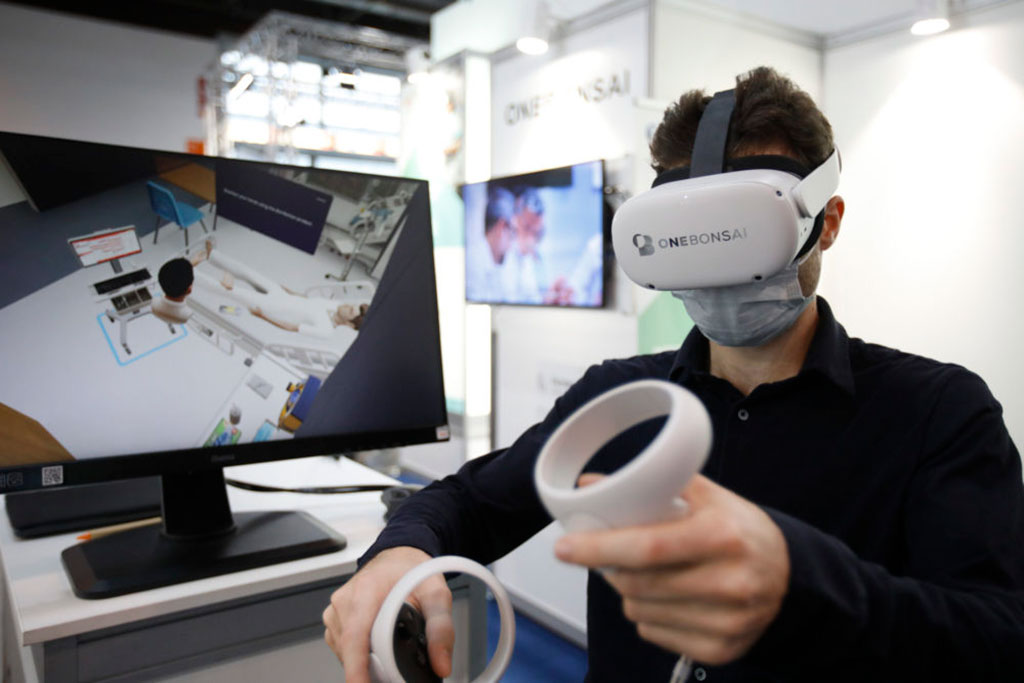
As one of the world's leading medical trade fairs, MEDICA (Düsseldorf, Germany) in Düsseldorf presents innovations every year for the entire healthcare workflow, for clinical and outpatients. Among the over 4,200 companies at MEDICA 2022 (duration: 14 – 17 November) there will again be several hundred start-ups. This event, which is one of the most international trade fairs (more than 70% of all visitors hail from abroad, and about 150 nations overall are represented), is a gateway to the world for them, through which they can make contacts across all continents.
One example is the MEDICA CONNECTED HEALTHCARE FORUM (in Hall 12), a special platform for young entrepreneurs. The most important issues of the four-day-program for the year 2022 are: Connected medical things, AI & big data, robotics, the health metaverse, the future of hospitals and care centers, health monitoring and diagnostics, mobile health, digital therapeutics, mental health, and more. About a hundred chosen start-ups and scale-ups present themselves on the forum stage during the MEDICA DISRUPT Sessions. The finale of the 11th MEDICA Start-Up COMPETITION and the "14th Healthcare Innovation World Cup" are highlights of the program.
The 11th MEDICA Start-Up COMPETITION is on the lookout for innovative healthcare industry solutions, from health apps and new tools for gathering and AI-supported analysis of health data, to robotic assistance systems and new approaches in diagnostics. Until mid-September, hundreds of innovators had already registered their participation in the finale of the competition during MEDICA 2022. The 12 best finalists, chosen by a professional jury, will now pitch on 15 November at 1 p.m. to win the grand prize. A day before, on 14 November at 1 p.m., the finale for the "14th Healthcare Innovation World Cup" will start. There, another 12 chosen finalists will pitch to win with their solutions for the "Internet of Medical Things" (IoMT). The span of developments reaches from interconnected medical technological devices, wearable technologies, digital biomarkers and intelligent plasters up to smart implants.
In addition, the metaverse is going to be one of the important topics at the MEDICA CONNECTED HEALTHCARE FORUM. The new buzzword hints at a novel digital reality that focuses on technologies like virtual reality (VR) and augmented reality (AR), the possibilities of processing big data in real time by artificial intelligence, and digital twins. This could lead to revolutionary changes in health care, both for monitoring health and treatments. This trend provides the focus for the content of a symposium, starting on Wednesday, 16 November, at 12 p.m. There, Eva Garcia Ramos, CEO and co-founder of WIVI Vision, will speak. The start-up concentrates mostly on children and adolescents. The products (for example with the capacity for 3D visualization) aim to improve health care with a view to evaluating and treating problems with visual function.
Khora, a Danish start-up, will also be present on stage at the MEDICA CONNECTED HEALTHCARE FORUM. The start-up has worked with the Rigshospitalet to create, for example, an AR universe aimed at children and adolescents from ages ten to fourteen, who have to spend considerable time in hospital with cancer or leukemia. It is supposed to make daily life easier for them. Khora created "Snail Battle", which allows persons affected to use plants to fight against evil monster snails. During the MEDICA CONNECTED HEALTHCARE FORUM, CEO Simon Lajboschitz will also explain, how VR can help patients with schizophrenia affected by auditory hallucinations. The metaverse can offer opportunities in many other areas, ranging from applications for attention deficit disorder over the development and testing of medical devices on virtual patients to simulation scenarios. These will be the focus of talks on Wednesday, 16 November.
Thericon and KuartisMED are among the companies participating in the MEDICA START-UP PARK. The shared booth (also located in Hall 12) has established itself over the years as a central meeting point for business and networking with the young founders' scene, and this year counts around 40 participants. German start-up Thericon see themselves as the first company to bring imaging compiled from several different sources into the operating theatre as a visual aid. Visual representations of hitherto invisible tissue properties are presented together with standard colored images on a single monitor. This diagnostic information and their intuitive display aims to make faster and more precise surgical results possible. The company’s MEDICA START-UP PARK presentation explains how it works in detail. Meanwhile, Turkish company KuartisMED concentrates on innovative solutions for the well-being of newborns. As children born before the 34th week of gestation lack sufficient coordination of the sucking and swallowing reflexes, they depend on feeding tubes for nutrition. The non-invasive medical device by KuartisMED aims to help with evaluating the maturity of these reflexes in the future. These aforementioned examples show that for those interested in innovations in the health sector, a visit to MEDICA 2022, and especially the novelties presented by the various start-ups, is a must.
Related Links:
MEDICA






Latest Business News
- GE HealthCare Leads Major European Initiative to Advance Cardio-Oncology Care
- Medtronic and GE HealthCare Broaden Alliance Across Monitoring and Care Solutions
- Quantum Surgical Acquires NeuWave from Johnson & Johnson
- Medtronic to Acquire Coronary Artery Medtech Company CathWorks
- Medtronic and Mindray Expand Strategic Partnership to Ambulatory Surgery Centers in the U.S.
- FDA Clearance Expands Robotic Options for Minimally Invasive Heart Surgery
- WHX in Dubai (formerly Arab Health) to debut specialised Biotech & Life Sciences Zone as sector growth accelerates globally
- WHX in Dubai (formerly Arab Health) to bring together key UAE government entities during the groundbreaking 2026 edition
- Interoperability Push Fuels Surge in Healthcare IT Market
- Philips and Masimo Partner to Advance Patient Monitoring Measurement Technologies
- B. Braun Acquires Digital Microsurgery Company True Digital Surgery
- CMEF 2025 to Promote Holistic and High-Quality Development of Medical and Health Industry
- Bayer and Broad Institute Extend Research Collaboration to Develop New Cardiovascular Therapies
- Medtronic Partners with Corsano to Expand Acute Care & Monitoring Portfolio in Europe
- Expanded Collaboration to Transform OR Technology Through AI and Automation
- Becton Dickinson to Spin Out Biosciences and Diagnostic Solutions Business
Channels
Artificial Intelligence
view channel
AI Analysis of Pericardial Fat Refines Long-Term Heart Disease Risk
Accurately identifying long-term cardiovascular disease risk in asymptomatic adults remains challenging for clinicians. Missed or underestimated risk delays preventive therapy and increases the chance... Read more
Machine Learning Approach Enhances Liver Cancer Risk Stratification
Hepatocellular carcinoma, the most common form of primary liver cancer, is often detected late despite targeted surveillance programs. Current screening guidelines emphasize patients with known cirrhosis,... Read more

Critical Care
view channel
Noninvasive Monitoring Device Enables Earlier Intervention in Heart Failure
Hospitalizations for heart failure with preserved ejection fraction (HFpEF) remain common because lung congestion often worsens before symptoms prompt treatment changes. Missed early decompensation... Read more
Automated IV Labeling Solution Improves Infusion Safety and Efficiency
Medication administration in high-acuity settings is often complicated by multiple concurrent infusions, making accurate line identification essential. In a 10-hospital intensive care unit study, 60% of... Read more

Surgical Techniques
view channel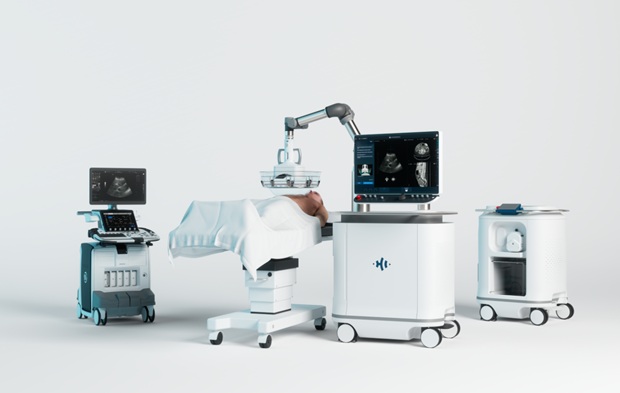
Ultrasound Technology Aims to Replace Invasive BPH Procedures
Benign prostatic hyperplasia (BPH) is a frequent cause of lower urinary tract symptoms in aging men and often requires invasive procedures or prolonged recovery. With prevalence expected to rise as populations... Read more
Continuous Monitoring with Wearables Enhances Postoperative Patient Safety
Postoperative hypoxemia on general surgical wards is common and often missed by intermittent vital sign checks. Undetected low oxygen levels can delay recovery and raise the risk of complications that... Read more

Patient Care
view channel
Wearable Sleep Data Predict Adherence to Pulmonary Rehabilitation
Chronic obstructive pulmonary disease (COPD) is a long-term lung disorder that makes breathing difficult and often disturbs sleep, reducing energy for daily activities. Limited engagement in pulmonary... Read more
Revolutionary Automatic IV-Line Flushing Device to Enhance Infusion Care
More than 80% of in-hospital patients receive intravenous (IV) therapy. Every dose of IV medicine delivered in a small volume (<250 mL) infusion bag should be followed by subsequent flushing to ensure... Read more

Health IT
view channel
EMR-Based Tool Predicts Graft Failure After Kidney Transplant
Kidney transplantation offers patients with end-stage kidney disease longer survival and better quality of life than dialysis, yet graft failure remains a major challenge. Although a successful transplant... Read more
Printable Molecule-Selective Nanoparticles Enable Mass Production of Wearable Biosensors
The future of medicine is likely to focus on the personalization of healthcare—understanding exactly what an individual requires and delivering the appropriate combination of nutrients, metabolites, and... Read more


Business
view channel
GE HealthCare Leads Major European Initiative to Advance Cardio-Oncology Care
Cardiovascular complications are increasingly recognized among people undergoing or recovering from cancer treatment, driven by pre‑existing disease and the cardiotoxic effects of chemotherapy, radiotherapy,... Read more

