






KUKA Presents Robot-Based Assistance Systems at MEDICA 2022
|
By HospiMedica International staff writers Posted on 15 Nov 2022 |


|
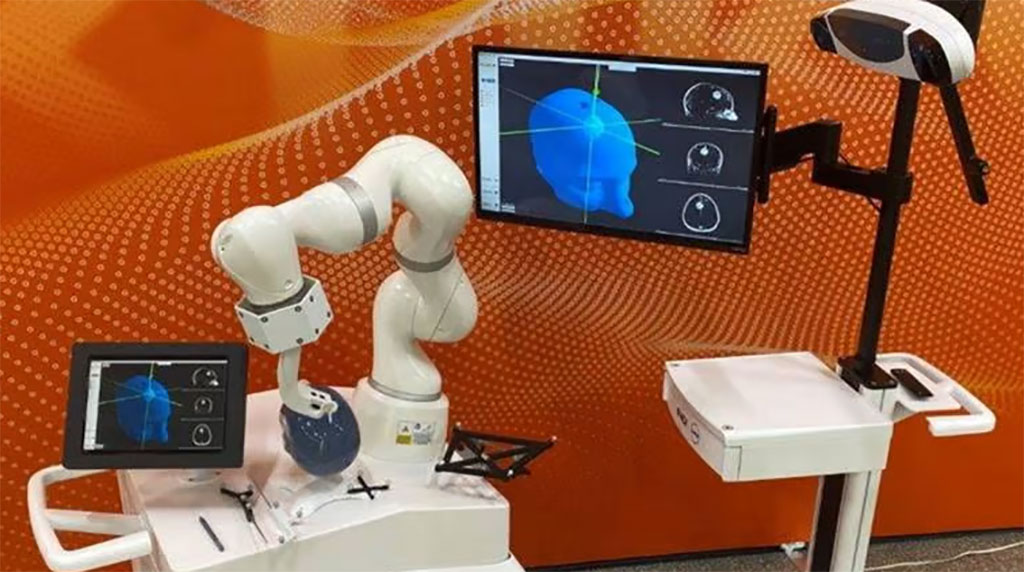
Robotic-based assistance in medicine and everyday hospital life relieves doctors as well as nursing staff and improves patient care. At the MEDICA 2022, KUKA AG (Augsburg, Germany) is presenting applications which show what is currently possible in the field of hair transplants, massages and in the biopsy of brain tumors. Furthermore, the company will present the new generation software KUKA Sunrise.OS Med 2.6 as well as welcome the finalists of the "KUKA Innovation Award", which is being presented as part of this year’s MEDICA.
At the world's largest medical technology trade fair MEDICA taking place from November 14 to 17 in Düsseldorf, KUKA is presenting applications which help reduce medical staff expenses and improve patient care. In hall 10 at booth A22, medical applications based on the seven-axis lightweight robot LBR Med can be discovered. It has been certified as the world's first robot-based component for integration into medical devices. The lightweight robot LBR Med was developed specifically for applications in medical technology and can be easily integrated into clinical assistance systems. Due to its sensitive sensor technology, comprehensive safety packages, hygiene-optimized surface and certification, medical device manufacturers choose the LBR Med as a basis for their products.
Among others, trade show visitors can explore a demo cell how the LBR Med assists in the biopsy of a brain tumor. The biopsy is simulated on a model with real-time tracking based on cameras from the company NDI for showcase purpose. The user can place the biopsy needle with the help of the LBR Med, which is mounted on a cart from MPE. The target and entry positions are planned in advance based on computed tomography data and displayed on an interactive screen. If the positioning of the model changes, the LBR Med follows the predetermined position thanks to dynamic tracking. The robotic-based application makes the procedure more precise.
Trade fair visitors will also have the opportunity to get to know the new software generation for the LBR Med, the KUKA Sunrise.OS Med 2.6, through the exhibits. The object-oriented programming is based on Java 8 and Windows 10 and enables fast commissioning. The new generation offers various option packages that, for example, allow very precise hand guidance or give the LBR Med a high degree of rigidity, e.g. in orthopedic operations. Real-time communication with the robot controller is enabled by new functions in KUKA Sunrise.FRI Med. Additionally, at MEDICA 2022 KUKA is presenting a model of the KR QUANTEC HC, a robot with a payload of up to 300 kg. Among other things, it is suitable for carrying heavy medical equipment such as a linear accelerator used in tumor therapies or an X-ray system in angiography. The KR QUANTEC HC has numerous features, such as additional brakes and a personnel recovery system, and allows the brakes to be released manually. As a result, the KR QUANTEC HC could be, for instance, moved manually in the event of a power failure.
Related Links:
KUKA AG






Latest MEDICA 2022 News
- Fisher & Paykel Highlights Innovative Products for Respiratory Care at MEDICA 2022
- Huntleigh Exhibits Range of Vital Signs Monitoring Solutions at MEDICA 2022
- Owen Mumford Presents Cutting-Edge Capillary Blood Sampling Devices for POC Testing
- Noul Demonstrates AI-Driven On-Site Diagnostics Platform at MEDICA 2022
- Heyer Medical Exhibits State-Of-The-Art Ventilators, Anesthesia Workstations and Surgical Lights
- Progetti Highlights Advanced Defibrillators for Emergency Medicine at MEDICA 2022
- LG Electronics Showcases State-Of-The-Art Surgical, Diagnostic and Clinical Monitors at MEDICA 2022
- World’s First Detachable 4K 8MP Handheld Camera for Telemedicine Showcased at MEDICA 2022
- EIZO Exhibits Complete New CuratOR Series of Surgical Monitors at MEDICA 2022
- Parker Labs Showcases Range of Ultrasound Equipment Cleaners and Disinfectants
- OptoMedic Demonstrates Range of Endoscopic Imaging Systems at MEDICA 2022
Channels
Artificial Intelligence
view channel
AI Analysis of Pericardial Fat Refines Long-Term Heart Disease Risk
Accurately identifying long-term cardiovascular disease risk in asymptomatic adults remains challenging for clinicians. Missed or underestimated risk delays preventive therapy and increases the chance... Read more
Machine Learning Approach Enhances Liver Cancer Risk Stratification
Hepatocellular carcinoma, the most common form of primary liver cancer, is often detected late despite targeted surveillance programs. Current screening guidelines emphasize patients with known cirrhosis,... Read more

Critical Care
view channel
Noninvasive Monitoring Device Enables Earlier Intervention in Heart Failure
Hospitalizations for heart failure with preserved ejection fraction (HFpEF) remain common because lung congestion often worsens before symptoms prompt treatment changes. Missed early decompensation... Read more
Automated IV Labeling Solution Improves Infusion Safety and Efficiency
Medication administration in high-acuity settings is often complicated by multiple concurrent infusions, making accurate line identification essential. In a 10-hospital intensive care unit study, 60% of... Read more

Surgical Techniques
view channel
Ultrasound Technology Aims to Replace Invasive BPH Procedures
Benign prostatic hyperplasia (BPH) is a frequent cause of lower urinary tract symptoms in aging men and often requires invasive procedures or prolonged recovery. With prevalence expected to rise as populations... Read more
Continuous Monitoring with Wearables Enhances Postoperative Patient Safety
Postoperative hypoxemia on general surgical wards is common and often missed by intermittent vital sign checks. Undetected low oxygen levels can delay recovery and raise the risk of complications that... Read more

Patient Care
view channel
Wearable Sleep Data Predict Adherence to Pulmonary Rehabilitation
Chronic obstructive pulmonary disease (COPD) is a long-term lung disorder that makes breathing difficult and often disturbs sleep, reducing energy for daily activities. Limited engagement in pulmonary... Read more
Revolutionary Automatic IV-Line Flushing Device to Enhance Infusion Care
More than 80% of in-hospital patients receive intravenous (IV) therapy. Every dose of IV medicine delivered in a small volume (<250 mL) infusion bag should be followed by subsequent flushing to ensure... Read more

Health IT
view channel
EMR-Based Tool Predicts Graft Failure After Kidney Transplant
Kidney transplantation offers patients with end-stage kidney disease longer survival and better quality of life than dialysis, yet graft failure remains a major challenge. Although a successful transplant... Read more
Printable Molecule-Selective Nanoparticles Enable Mass Production of Wearable Biosensors
The future of medicine is likely to focus on the personalization of healthcare—understanding exactly what an individual requires and delivering the appropriate combination of nutrients, metabolites, and... Read more


Business
view channel
GE HealthCare Leads Major European Initiative to Advance Cardio-Oncology Care
Cardiovascular complications are increasingly recognized among people undergoing or recovering from cancer treatment, driven by pre‑existing disease and the cardiotoxic effects of chemotherapy, radiotherapy,... Read more

