






Portable qPCR Platform Enables Faster, Better, Low-Cost Near-Patient Molecular Diagnosis
|
By HospiMedica International staff writers Posted on 13 Nov 2022 |


|
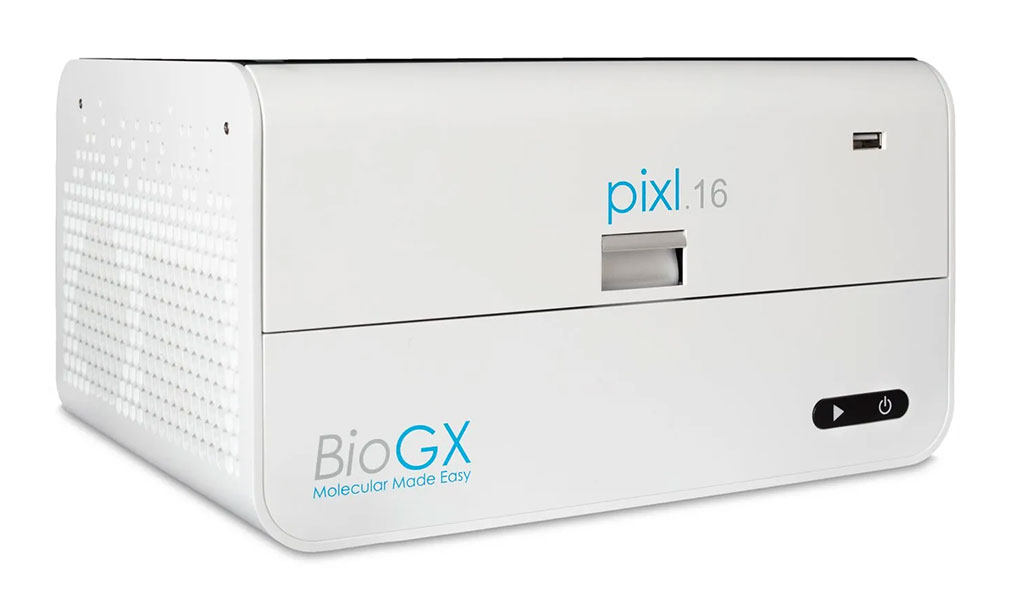
The point-of-care molecular diagnostics space seems to have gotten more crowded during COVID. Now, a portable molecular diagnostics platform with 16-well capabilities differentiates itself from most competitors who use single cartridge or single test formats.
BioGX’s (Birmingham, AL, USA) Pixl is a benchtop 4-channel, 16-well, RT-PCR instrument that supports rapid turnaround times for batches of up to 16 samples, with integrated results interpretation on a device with the compact footprint of a touchpad. The high-performance open system real-time PCR platform is equipped with 4-optical channel direct imaging fluorescence, ultra-low-light CMOS bio-imager sensor and fast Peltier-powered thermal cycler to enable reliable and accurate molecular diagnostic testing. The compact device is the ultimate solution for applications where portability, minimal space and fast turnaround times are required.
Between 1 and 16 individual patient samples can be batch tested in less than 1 hour, ensuring a fast turnaround time in any environment. With intuitive results analysis software and built-in touchscreen functionality, the portable qPCR real-time PCR platform adapts to any testing environment and boasts turnaround times of less than an hour. Pixl is a lightweight yet rugged device, with no internal moving parts that serves as a great advantage for any testing facility which requires effective molecular testing on the move. A 4-optical channel, multiplex capability, with commonly adopted excitation and emission range and filters allow for unparalleled performance with commonly used fluorophores. The system is also potentially compatible with the BioGX suite of lyophilized molecular diagnostics assays.
With the Pixl, customers can run tests on 16 patient samples, or up to 16 different tests on a single sample, with as many as four targets per test, if needed. The Pixl can report out Ct values, or it can be set up to call positive or negative test results. BioGX’s software enables sample accessioning and can create reports that can be customized to adapt to a customer’s laboratory information system. BioGX plans to target hospital and reference labs as well as physician offices with the system. The firm’s suite of lyophilized tests may also engender a particular advantage in the POC space, as a large menu could differentiate Pixl from the competition. While the current 16-well Pixl can detect four targets per sample, a future version of the 16-well platform will be able to detect five to six targets.
BioGX has announced the Ex-US commercial release of its portable Pixl qPCR real-time PCR platform for use with BioGX CE-IVD marked assays, enabling global access and complementing the recent US FDA EUA expanded use of Xfree COVID-19 Direct RT-PCR on the Pixl. The platform was previously CE-IVD marked and can be used with other BioGX CE-IVD marked assays including Xfree COVID-19 (N1-gene) Direct RT-PCR, Xfree COVID-19 (N1/RdRp), Flu A, Flu B, and Xfree Group A Streptococcus. BioGX will soon make additional syndromic tests available on the Pixl platform from its large menu of lyophilized multiplex assays, including the Research Use Only (RUO) Direct-Sample assays: Xfree Human Monkeypox (hMPXV), Xfree HSV1/HSV2/VZV and Xfree Treponema pallidum (Syphilis). The Xfree assay format is compatible with most commonly used transport/collection media types and can be validated with a wide variety of patient sample collections.
"Pixl, combined with our unique Xfree chemistry, offers a low-cost direct-sample-to-answer PCR solution on a portable, compact device. pixl will provide broader access to clinical laboratories for decentralized PCR testing, enabling faster, better, low-cost near-patient molecular diagnostics," said Shazi Iqbal, Ph.D., CEO of BioGX.
Related Links:
BioGX






Latest Critical Care News
- Automated IV Labeling Solution Improves Infusion Safety and Efficiency
- First-Of-Its-Kind AI Tool Detects Pulmonary Hypertension from Standard ECGs
- 4D Digital Twin Heart Model Improves CRT Outcomes
- AI Turns Glucose Data Into Actionable Insights for Diabetes Care
- Microscale Wireless Implant Tracks Brain Activity Over Time
- Smart Mask Delivers Continuous, Battery-Free Breath Monitoring
- Routine Blood Pressure Readings May Identify Risk of Future Cognitive Decline
- CGM-Based Algorithm Enhances Insulin Dose Adjustment in Type 2 Diabetes
- Fish Scale–Based Implants Offer New Approach to Corneal Repair
- Dual-Function Wound Patch Combines Infection Sensing and Treatment
- Smartwatch Signals and Blood Tests Team Up for Early Warning on Insulin Resistance
- Smart Fabric Technology Aims to Prevent Pressure Injuries in Hospital Care
- Standardized Treatment Algorithm Improves Blood Pressure Control
- Combined Infection Control Strategy Limits Drug-Resistant Outbreak in NICU
- AI Helps Predict Which Heart-Failure Patients Will Worsen Within a Year
- Algorithm Allows Paramedics to Predict Brain Damage Risk After Cardiac Arrest
Channels
Artificial Intelligence
view channel
Machine Learning Approach Enhances Liver Cancer Risk Stratification
Hepatocellular carcinoma, the most common form of primary liver cancer, is often detected late despite targeted surveillance programs. Current screening guidelines emphasize patients with known cirrhosis,... Read more
New AI Approach Monitors Brain Health Using Passive Wearable Data
Brain health spans cognitive and emotional functions and can fluctuate even in adults without diagnosed disease. Detecting early changes remains difficult in routine care and burdens specialty services... Read more

Critical Care
view channel
Automated IV Labeling Solution Improves Infusion Safety and Efficiency
Medication administration in high-acuity settings is often complicated by multiple concurrent infusions, making accurate line identification essential. In a 10-hospital intensive care unit study, 60% of... Read more
First-Of-Its-Kind AI Tool Detects Pulmonary Hypertension from Standard ECGs
Pulmonary hypertension is a progressive, life‑threatening disease that is frequently missed early because symptoms such as dyspnea are nonspecific and diagnostic delays can exceed two years.... Read more
Surgical Techniques
view channel
Continuous Monitoring with Wearables Enhances Postoperative Patient Safety
Postoperative hypoxemia on general surgical wards is common and often missed by intermittent vital sign checks. Undetected low oxygen levels can delay recovery and raise the risk of complications that... Read more
New Approach Enables Customized Muscle Tissue Without Biomaterial Scaffolds
Volumetric muscle loss is a traumatic loss of skeletal muscle that often leads to permanent functional impairment and limited reconstructive options. Current experimental strategies struggle to deliver... Read more

Patient Care
view channel
Wearable Sleep Data Predict Adherence to Pulmonary Rehabilitation
Chronic obstructive pulmonary disease (COPD) is a long-term lung disorder that makes breathing difficult and often disturbs sleep, reducing energy for daily activities. Limited engagement in pulmonary... Read more
Revolutionary Automatic IV-Line Flushing Device to Enhance Infusion Care
More than 80% of in-hospital patients receive intravenous (IV) therapy. Every dose of IV medicine delivered in a small volume (<250 mL) infusion bag should be followed by subsequent flushing to ensure... Read more

Health IT
view channel
EMR-Based Tool Predicts Graft Failure After Kidney Transplant
Kidney transplantation offers patients with end-stage kidney disease longer survival and better quality of life than dialysis, yet graft failure remains a major challenge. Although a successful transplant... Read more
Printable Molecule-Selective Nanoparticles Enable Mass Production of Wearable Biosensors
The future of medicine is likely to focus on the personalization of healthcare—understanding exactly what an individual requires and delivering the appropriate combination of nutrients, metabolites, and... Read more

Business
view channel
GE HealthCare Leads Major European Initiative to Advance Cardio-Oncology Care
Cardiovascular complications are increasingly recognized among people undergoing or recovering from cancer treatment, driven by pre‑existing disease and the cardiotoxic effects of chemotherapy, radiotherapy,... Read more

