






Advanced Hematology Analyzer Brings Simplicity and Efficiency to Decentralized Healthcare Facilities
|
By HospiMedica International staff writers Posted on 02 Jan 2023 |


|
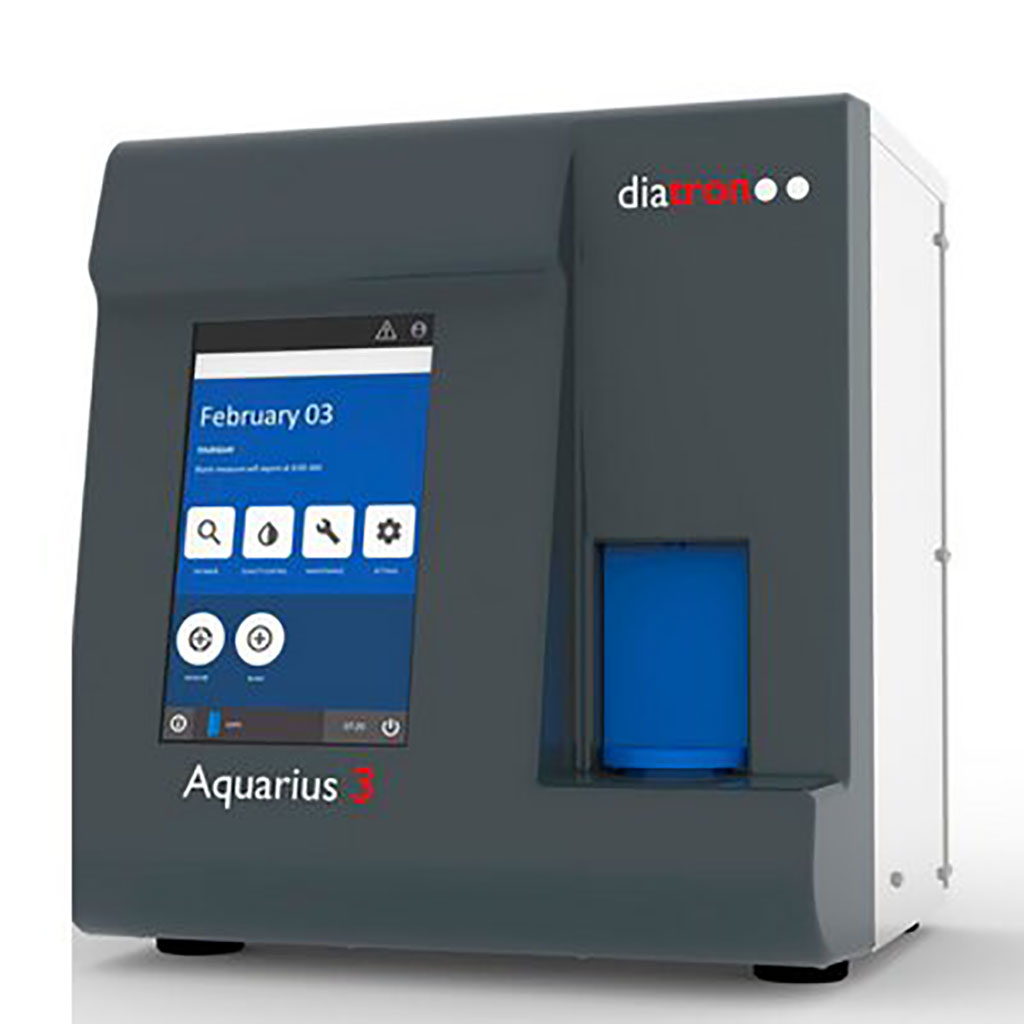
A new hematology analyzer is all set to bring unrivaled simplicity and efficiency to the decentralized market segment.
Diatron (Budapest, Hungary) has announced the launch of Aquarius 3, its latest IVD hematology analyzer for Complete Blood Count testing. Aquarius 3 will be the first in a new family of hematology analyzers from Diatron. Evolving from the Abacus 380, Diatron’s flagship analyzer, the Aquarius 3 incorporates similar robust and trusted counting technology but is equipped with new features to improve operability and connectivity, allowing it to adapt to diverse environments for the benefit of both customers and users alike.
While still retaining the important features of the Abacus 380, the Aquarius 3 has many other product enhancements, with the most obvious change being the addition of an 8” high resolution, color touch screen, making it clear and simple to operate. Other features include 1D/2D barcode scanner for sample ID, QC and reagent management (closed system), 25 μl sampling volume, including micro‐tube capability, increased database capacity with 10,000 + USB mass storage, and a wider choice of external printers. In line with its predecessors, the new Aquarius 3 is easy to use, flexible and suitable for a variety uses such as in doctor’s offices, low to mid‐size laboratories and other decentralized healthcare facilities.
Related Links:
Diatron





Latest Point of Care News
Channels
Artificial Intelligence
view channel
Machine Learning Approach Enhances Liver Cancer Risk Stratification
Hepatocellular carcinoma, the most common form of primary liver cancer, is often detected late despite targeted surveillance programs. Current screening guidelines emphasize patients with known cirrhosis,... Read more
New AI Approach Monitors Brain Health Using Passive Wearable Data
Brain health spans cognitive and emotional functions and can fluctuate even in adults without diagnosed disease. Detecting early changes remains difficult in routine care and burdens specialty services... Read more

Critical Care
view channel
Automated IV Labeling Solution Improves Infusion Safety and Efficiency
Medication administration in high-acuity settings is often complicated by multiple concurrent infusions, making accurate line identification essential. In a 10-hospital intensive care unit study, 60% of... Read more
First-Of-Its-Kind AI Tool Detects Pulmonary Hypertension from Standard ECGs
Pulmonary hypertension is a progressive, life‑threatening disease that is frequently missed early because symptoms such as dyspnea are nonspecific and diagnostic delays can exceed two years.... Read more
Surgical Techniques
view channel
Continuous Monitoring with Wearables Enhances Postoperative Patient Safety
Postoperative hypoxemia on general surgical wards is common and often missed by intermittent vital sign checks. Undetected low oxygen levels can delay recovery and raise the risk of complications that... Read more
New Approach Enables Customized Muscle Tissue Without Biomaterial Scaffolds
Volumetric muscle loss is a traumatic loss of skeletal muscle that often leads to permanent functional impairment and limited reconstructive options. Current experimental strategies struggle to deliver... Read more

Patient Care
view channel
Wearable Sleep Data Predict Adherence to Pulmonary Rehabilitation
Chronic obstructive pulmonary disease (COPD) is a long-term lung disorder that makes breathing difficult and often disturbs sleep, reducing energy for daily activities. Limited engagement in pulmonary... Read more
Revolutionary Automatic IV-Line Flushing Device to Enhance Infusion Care
More than 80% of in-hospital patients receive intravenous (IV) therapy. Every dose of IV medicine delivered in a small volume (<250 mL) infusion bag should be followed by subsequent flushing to ensure... Read more

Health IT
view channel
EMR-Based Tool Predicts Graft Failure After Kidney Transplant
Kidney transplantation offers patients with end-stage kidney disease longer survival and better quality of life than dialysis, yet graft failure remains a major challenge. Although a successful transplant... Read more
Printable Molecule-Selective Nanoparticles Enable Mass Production of Wearable Biosensors
The future of medicine is likely to focus on the personalization of healthcare—understanding exactly what an individual requires and delivering the appropriate combination of nutrients, metabolites, and... Read more

Business
view channel
GE HealthCare Leads Major European Initiative to Advance Cardio-Oncology Care
Cardiovascular complications are increasingly recognized among people undergoing or recovering from cancer treatment, driven by pre‑existing disease and the cardiotoxic effects of chemotherapy, radiotherapy,... Read more

