






AR Visualization Software for Complex Surgeries a Huge Step Forward for Surgeons
|
By HospiMedica International staff writers Posted on 03 Jan 2023 |


|
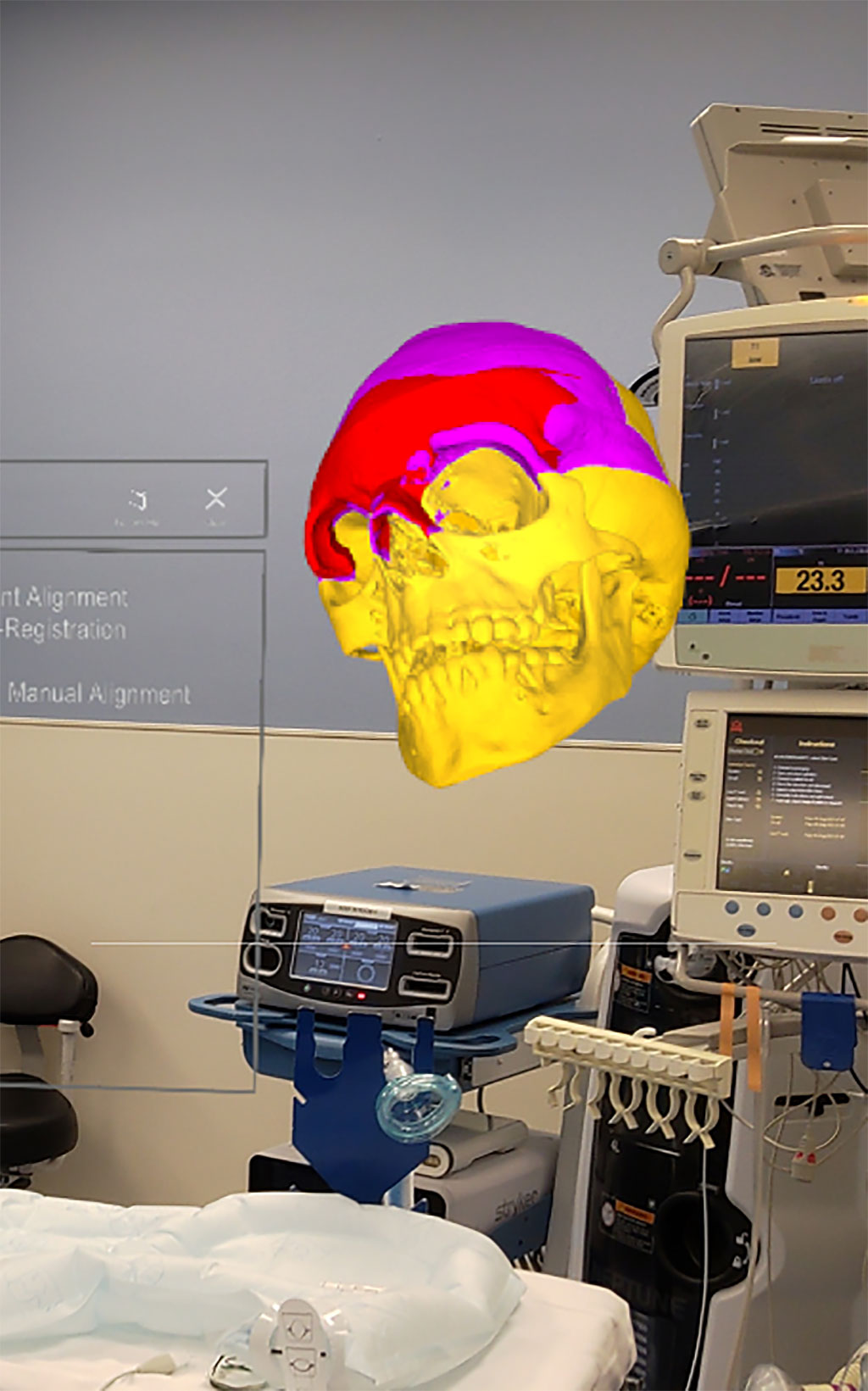
An augmented reality (AR) visualization software for complex surgeries displays patient CT and MRI as three-dimensional holograms in AR headsets, helping surgeons visualize surgical plans, anatomical targets, and cutting guides alongside or overlayed on the patient. The software can be used during surgery and pre-operative planning and includes hand tracking and voice recognition features.
With the FDA-approved IntraOpVSP from Xironetic (Oklahoma City, OK, USA), patient data translates from two-dimensional TV screens and monitors into three-dimensional extended reality to provide a heads-up reference during surgery. IntraOpVSP displays segmented three-dimensional holograms originally acquired from sources such as CT and MRI using extended reality head-mounted displays such as the Microsoft HoloLens 2, all while preserving the actual scale of the anatomical data. Surgeons can utilize intuitive voice commands and gesture interfaces to view and interact with holographic patient data in the operating room. Using intuitive voice and gesture interactions, surgeons can place or orient patient holographic data in the operating field to visualize with the patient using IntraOpVSP. Surgeons can perform complex fragment planning for challenging reconstructive surgeries, and utilize three-dimensional patient data to plan cuts or roadmap to difficult structures.
Holographic visualizations can provide intuitive shape and contour information in cases such as trauma reconstruction. Surgeons can visualize steps in surgical sequences and plan for contingencies during the operation. Surgeons can use holographic models in the operating room to aid in bending and contouring reconstruction hardware. IntraOpVSP provides high-fidelity data with high-contrast colors and shading optimized for bright operating room lighting. Current and planned use cases for IntraOpVSP are expected to align to the needs of physicians across general, craniofacial and maxillofacial, neuro, orthopedic, plastic, thoracic and vascular surgery disciplines.
“IntraOpVSP is an extension to virtual surgical planning tools used today, bringing the insights of 3D visualization of CT and MRI data into the operating room to support improved surgical outcomes,” said Christian El-Amm, MD, Xironetic founder, and chief pediatric surgeon at Oklahoma Children’s Hospital. “Our software is a huge step forward for surgeons and their patients, and the FDA’s clearance is another important milestone in getting it into operating rooms everywhere.”
Related Links:
Xironetic






Latest AI News
- AI Analysis of Pericardial Fat Refines Long-Term Heart Disease Risk
- Machine Learning Approach Enhances Liver Cancer Risk Stratification
- New AI Approach Monitors Brain Health Using Passive Wearable Data
- AI Tool Maps Early Risk Patterns in Bloodstream Infections
- AI Model Identifies Rare Endocrine Disorder from Hand Images
- AI Tool Promises to Reduce Length of Hospital Stays and Free Up Beds
Channels
Artificial Intelligence
view channel
AI Analysis of Pericardial Fat Refines Long-Term Heart Disease Risk
Accurately identifying long-term cardiovascular disease risk in asymptomatic adults remains challenging for clinicians. Missed or underestimated risk delays preventive therapy and increases the chance... Read more
Machine Learning Approach Enhances Liver Cancer Risk Stratification
Hepatocellular carcinoma, the most common form of primary liver cancer, is often detected late despite targeted surveillance programs. Current screening guidelines emphasize patients with known cirrhosis,... Read more

Critical Care
view channel
Noninvasive Monitoring Device Enables Earlier Intervention in Heart Failure
Hospitalizations for heart failure with preserved ejection fraction (HFpEF) remain common because lung congestion often worsens before symptoms prompt treatment changes. Missed early decompensation... Read more
Automated IV Labeling Solution Improves Infusion Safety and Efficiency
Medication administration in high-acuity settings is often complicated by multiple concurrent infusions, making accurate line identification essential. In a 10-hospital intensive care unit study, 60% of... Read more

Patient Care
view channel
Wearable Sleep Data Predict Adherence to Pulmonary Rehabilitation
Chronic obstructive pulmonary disease (COPD) is a long-term lung disorder that makes breathing difficult and often disturbs sleep, reducing energy for daily activities. Limited engagement in pulmonary... Read more
Revolutionary Automatic IV-Line Flushing Device to Enhance Infusion Care
More than 80% of in-hospital patients receive intravenous (IV) therapy. Every dose of IV medicine delivered in a small volume (<250 mL) infusion bag should be followed by subsequent flushing to ensure... Read more

Health IT
view channel
EMR-Based Tool Predicts Graft Failure After Kidney Transplant
Kidney transplantation offers patients with end-stage kidney disease longer survival and better quality of life than dialysis, yet graft failure remains a major challenge. Although a successful transplant... Read more
Printable Molecule-Selective Nanoparticles Enable Mass Production of Wearable Biosensors
The future of medicine is likely to focus on the personalization of healthcare—understanding exactly what an individual requires and delivering the appropriate combination of nutrients, metabolites, and... Read more


Business
view channel
GE HealthCare Leads Major European Initiative to Advance Cardio-Oncology Care
Cardiovascular complications are increasingly recognized among people undergoing or recovering from cancer treatment, driven by pre‑existing disease and the cardiotoxic effects of chemotherapy, radiotherapy,... Read more

