






Ingestible Sensor Could Replace Invasive Procedures for Diagnosing GI Motility Disorders
|
By HospiMedica International staff writers Posted on 14 Feb 2023 |


|
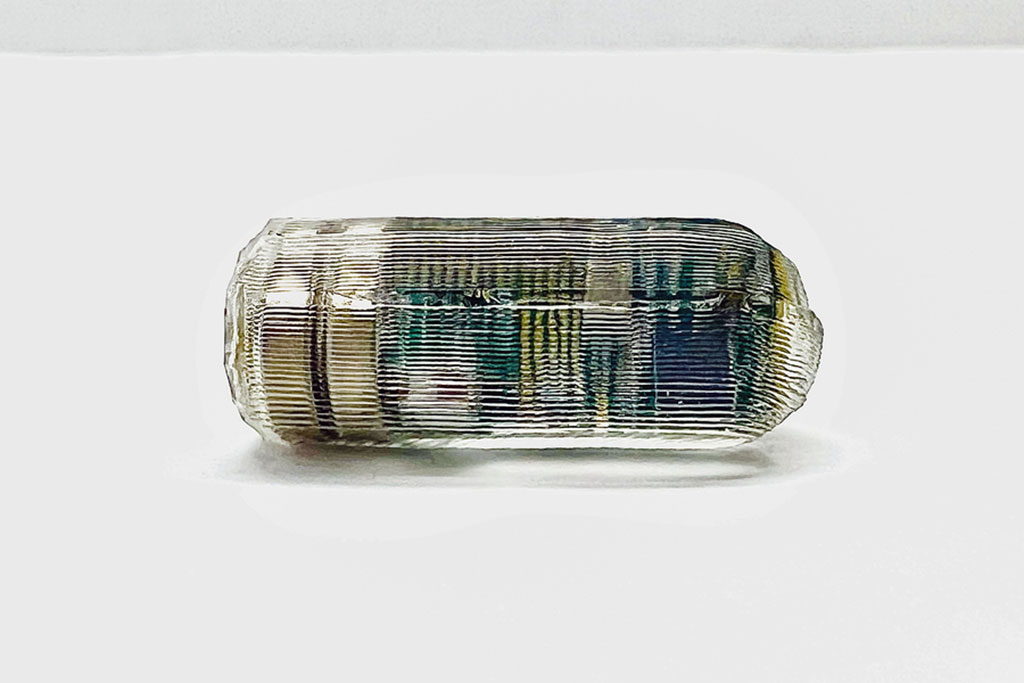
Gastrointestinal (GI) motility disorders such as constipation, gastro esophageal reflux disease, and gastroparesis affect millions of people globally and can occur in any part of the digestive tract, stopping the movement of food through the tract. Doctors generally diagnose the condition by using nuclear imaging studies or X-rays, or inserting catheters with pressure transducers that can sense contractions of the GI tract. Now, a team of engineers has demonstrated an ingestible sensor that allows its location to be monitored as it moves through the digestive tract and could help doctors diagnose GI motility disorders more easily.
The tiny sensor developed by engineers at MIT (Cambridge, MA, USA) and Caltech (Pasadena, CA, USA) detects a magnetic field created by an electromagnetic coil located outside the body. The strength of the field varies depending upon the distance from the coil, as a result of which the sensor’s position is calculated based on its measurement of the magnetic field. In the new study, the researchers showed that they could use the technology to track the sensor as it moved through the digestive tract of large animals. The device could offer an alternative to more invasive procedures, such as endoscopy, that are presently being used to diagnose GI motility disorders.
The MIT and Caltech researchers set out to develop an alternative for diagnosing GI motility disorders that was less invasive and could be done at the patient’s home. They worked on developing a capsule that could be swallowed and would transmit a signal to reveal its position in the GI tract. This would enable doctors to identify the precise part of the tract that was causing a slowdown and decide the appropriate treatment needed for the patient’s condition. They achieved this by taking advantage of the fact that the field produced by an electromagnetic coil becomes predictably weaker with the increase in the distance from the coil. The magnetic sensor developed by the researchers is tiny enough to fit inside an ingestible capsule and measures the surrounding magnetic field. It then uses that information to calculate its distance from a coil located outside the body.
In order to accurately pinpoint the location of a device inside the body, the system has another sensor that remains outside the body and acts as a reference point. Researchers can compare the position of this sensor that can be taped to the skin with the position of the sensor inside the body to precisely calculate where the ingestible sensor lies in the GI tract. The ingestible sensor also features a wireless transmitter that transmits the magnetic field measurement to a nearby computer or smartphone. The system’s current version can take a measurement any time it receives a wireless trigger from a smartphone and can also be programmed to take measurements at specific intervals. It can detect a magnetic field from electromagnetic coils within a distance of 60 centimeters or less. The coils could be placed in the patient’s backpack or jacket, or even the back of a toilet, according to the researchers, thus enabling the ingestible sensor to take measurements whenever it comes within range of the coils.
The researchers used a large animal model to test their new system by placing the ingestible capsule in the stomach and then tracking its location as it moved through the digestive tract over a period of several days. In the first experiment, the team delivered two magnetic sensors attached to each other by a small rod that allowed them to know the exact distance between them. They then compared their magnetic field measurements to this known distance and found the measurements to be accurate to a resolution of about two millimeters which was far higher than the resolution of the magnetic-field-based sensors developed earlier. The team then went on to perform tests using a single ingestible sensor accompanied by an external sensor attached to the skin.
By measuring the distance from each sensor to the coils, the research team demonstrated that it was possible to track the ingested sensor as it moved from the stomach to the colon and was finally excreted. Upon comparing the accuracy of their strategy with the measurements taken by X-ray, the researchers found them to be accurate within 5 to 10 millimeters. Such level of monitoring can allow doctors to more easily identify the section of the GI tract causing a slowdown in digestion. The researchers now plan to develop manufacturing processes for the system in collaboration with others and further characterize its performance in animals, ultimately paving the way to its testing in human clinical trials.
“Many people around the world suffer from GI dysmotility or poor motility, and having the ability to monitor GI motility without having to go into a hospital is important to really understand what is happening to a patient,” said Giovanni Traverso, an associate professor of mechanical engineering at MIT and a gastroenterologist at Brigham and Women’s Hospital. “The ability to characterize motility without the need for radiation, or more invasive placement of devices, I think will lower the barrier for people to be evaluated.”







Latest Critical Care News
- Automated IV Labeling Solution Improves Infusion Safety and Efficiency
- First-Of-Its-Kind AI Tool Detects Pulmonary Hypertension from Standard ECGs
- 4D Digital Twin Heart Model Improves CRT Outcomes
- AI Turns Glucose Data Into Actionable Insights for Diabetes Care
- Microscale Wireless Implant Tracks Brain Activity Over Time
- Smart Mask Delivers Continuous, Battery-Free Breath Monitoring
- Routine Blood Pressure Readings May Identify Risk of Future Cognitive Decline
- CGM-Based Algorithm Enhances Insulin Dose Adjustment in Type 2 Diabetes
- Fish Scale–Based Implants Offer New Approach to Corneal Repair
- Dual-Function Wound Patch Combines Infection Sensing and Treatment
- Smartwatch Signals and Blood Tests Team Up for Early Warning on Insulin Resistance
- Smart Fabric Technology Aims to Prevent Pressure Injuries in Hospital Care
- Standardized Treatment Algorithm Improves Blood Pressure Control
- Combined Infection Control Strategy Limits Drug-Resistant Outbreak in NICU
- AI Helps Predict Which Heart-Failure Patients Will Worsen Within a Year
- Algorithm Allows Paramedics to Predict Brain Damage Risk After Cardiac Arrest
Channels
Artificial Intelligence
view channel
Machine Learning Approach Enhances Liver Cancer Risk Stratification
Hepatocellular carcinoma, the most common form of primary liver cancer, is often detected late despite targeted surveillance programs. Current screening guidelines emphasize patients with known cirrhosis,... Read more
New AI Approach Monitors Brain Health Using Passive Wearable Data
Brain health spans cognitive and emotional functions and can fluctuate even in adults without diagnosed disease. Detecting early changes remains difficult in routine care and burdens specialty services... Read more
Surgical Techniques
view channel
Continuous Monitoring with Wearables Enhances Postoperative Patient Safety
Postoperative hypoxemia on general surgical wards is common and often missed by intermittent vital sign checks. Undetected low oxygen levels can delay recovery and raise the risk of complications that... Read more
New Approach Enables Customized Muscle Tissue Without Biomaterial Scaffolds
Volumetric muscle loss is a traumatic loss of skeletal muscle that often leads to permanent functional impairment and limited reconstructive options. Current experimental strategies struggle to deliver... Read more
Patient Care
view channel
Wearable Sleep Data Predict Adherence to Pulmonary Rehabilitation
Chronic obstructive pulmonary disease (COPD) is a long-term lung disorder that makes breathing difficult and often disturbs sleep, reducing energy for daily activities. Limited engagement in pulmonary... Read more
Revolutionary Automatic IV-Line Flushing Device to Enhance Infusion Care
More than 80% of in-hospital patients receive intravenous (IV) therapy. Every dose of IV medicine delivered in a small volume (<250 mL) infusion bag should be followed by subsequent flushing to ensure... Read more

Health IT
view channel
EMR-Based Tool Predicts Graft Failure After Kidney Transplant
Kidney transplantation offers patients with end-stage kidney disease longer survival and better quality of life than dialysis, yet graft failure remains a major challenge. Although a successful transplant... Read more
Printable Molecule-Selective Nanoparticles Enable Mass Production of Wearable Biosensors
The future of medicine is likely to focus on the personalization of healthcare—understanding exactly what an individual requires and delivering the appropriate combination of nutrients, metabolites, and... Read more


Business
view channel
GE HealthCare Leads Major European Initiative to Advance Cardio-Oncology Care
Cardiovascular complications are increasingly recognized among people undergoing or recovering from cancer treatment, driven by pre‑existing disease and the cardiotoxic effects of chemotherapy, radiotherapy,... Read more

