






Cardiac Troponin Diagnostics Market Driven by Demand for High Sensitivity POC Testing
|
By HospiMedica International staff writers Posted on 27 Mar 2023 |


|

Cardiac troponin (cTn) biomarkers are commonly used by healthcare professionals to diagnose myocardial infarction (MI), and their popularity has led to an increasing demand for cTn diagnostics in emergency departments (EDs). To detect troponin at lower concentrations, hospitals and clinical laboratories are adopting high-sensitivity (hs) assays. The use of point-of-care testing (POCT) for cTn is also on the rise, particularly in EDs and remote locations, due to its ability to provide rapid results in a shorter period compared to lab-based tests. Furthermore, companies have developed high-sensitivity POCT cTn assays that provide accurate results within a few minutes.
The global market for cTn diagnostics is expected to achieve a compound annual growth rate (CAGR) of 2.4%, reaching USD 2.28 billion by 2025 from USD 2.07 billion in 2021. This growth will be fueled by a rise in the number of patients with cardiac complaints visiting EDs and the increasing adoption of hs-cTn assays by hospitals and clinical laboratories, which can detect troponin in lower concentrations and shorten the timeline for MI detection. North America is leading the global cTn diagnostics market, as hospitals and laboratories have started using high-sensitivity (hs) assays since receiving approval from the United States Food and Drug Administration in 2017. These are the latest findings of Frost & Sullivan (San Antonio, TX, USA), a business consulting and services company.
In the future, market players are expected to focus on developing quick and user-friendly diagnostic tests tailored to EDs, as shorter turnaround times in EDs can lead to substantial cost savings in healthcare. Investment in research and development of hs-cTn is likely to increase, as it can provide fast diagnostic results and lower the likelihood of false positives. The market is anticipated to witness the emergence of applications and software platforms that can integrate with devices, allowing for real-time data and improving the speed and effectiveness of the diagnostic process. Furthermore, there will be an increased emphasis on educating and empowering patients and clinicians about new diagnostic technologies and their proper use to prevent false positives.
"An increasing need for rapid and reliable cTn diagnostics tests in EDs to mitigate urgent response challenges for a positive test result is noticeable," said Utkarsha Kaustubh Soundankar, Healthcare Research Analyst at Frost & Sullivan. "The dynamics will boost the market revenue for POC tests during the forecast period."
"Point-of-care testing (POCT) is rapidly gaining traction globally and reduces turnaround time and the length of stay in the ED. Additionally, POC troponin assays can offer test results within 20 minutes, and doctors can use them for diagnosis in remote settings and the ED," Soundankar added.
Related Links:
Frost & Sullivan





Latest Business News
- GE HealthCare Leads Major European Initiative to Advance Cardio-Oncology Care
- Medtronic and GE HealthCare Broaden Alliance Across Monitoring and Care Solutions
- Quantum Surgical Acquires NeuWave from Johnson & Johnson
- Medtronic to Acquire Coronary Artery Medtech Company CathWorks
- Medtronic and Mindray Expand Strategic Partnership to Ambulatory Surgery Centers in the U.S.
- FDA Clearance Expands Robotic Options for Minimally Invasive Heart Surgery
- WHX in Dubai (formerly Arab Health) to debut specialised Biotech & Life Sciences Zone as sector growth accelerates globally
- WHX in Dubai (formerly Arab Health) to bring together key UAE government entities during the groundbreaking 2026 edition
- Interoperability Push Fuels Surge in Healthcare IT Market
- Philips and Masimo Partner to Advance Patient Monitoring Measurement Technologies
- B. Braun Acquires Digital Microsurgery Company True Digital Surgery
- CMEF 2025 to Promote Holistic and High-Quality Development of Medical and Health Industry
- Bayer and Broad Institute Extend Research Collaboration to Develop New Cardiovascular Therapies
- Medtronic Partners with Corsano to Expand Acute Care & Monitoring Portfolio in Europe
- Expanded Collaboration to Transform OR Technology Through AI and Automation
- Becton Dickinson to Spin Out Biosciences and Diagnostic Solutions Business
Channels
Artificial Intelligence
view channel
AI Analysis of Pericardial Fat Refines Long-Term Heart Disease Risk
Accurately identifying long-term cardiovascular disease risk in asymptomatic adults remains challenging for clinicians. Missed or underestimated risk delays preventive therapy and increases the chance... Read more
Machine Learning Approach Enhances Liver Cancer Risk Stratification
Hepatocellular carcinoma, the most common form of primary liver cancer, is often detected late despite targeted surveillance programs. Current screening guidelines emphasize patients with known cirrhosis,... Read more

Critical Care
view channel
Eye Imaging AI Identifies Elevated Cardiovascular Risk
Many adults at risk for atherosclerotic cardiovascular disease are not identified until they undergo formal primary care assessment. Delayed risk recognition can postpone initiation of statins and lifestyle... Read more
Noninvasive Monitoring Device Enables Earlier Intervention in Heart Failure
Hospitalizations for heart failure with preserved ejection fraction (HFpEF) remain common because lung congestion often worsens before symptoms prompt treatment changes. Missed early decompensation... Read more

Surgical Techniques
view channel
Fiber-Form Bone Graft Expands Intraoperative Options for Spinal Fusion
Spinal and orthopedic fusion procedures often require bone graft materials that handle predictably and support bone formation. Surgeons face added complexity in difficult anatomy and challenging fusion environments.... Read more
Ultrasound‑Aided Catheter Treatment Cuts Early Collapse in Pulmonary Embolism
Acute pulmonary embolism can cause rapid hemodynamic deterioration and early death in hospitalized and emergency patients. Systemic thrombolysis can dissolve clots but is limited by a high risk of major... Read more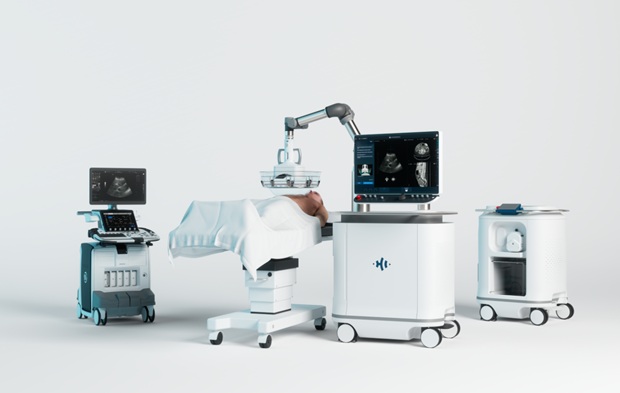

Patient Care
view channel
Wearable Sleep Data Predict Adherence to Pulmonary Rehabilitation
Chronic obstructive pulmonary disease (COPD) is a long-term lung disorder that makes breathing difficult and often disturbs sleep, reducing energy for daily activities. Limited engagement in pulmonary... Read more
Revolutionary Automatic IV-Line Flushing Device to Enhance Infusion Care
More than 80% of in-hospital patients receive intravenous (IV) therapy. Every dose of IV medicine delivered in a small volume (<250 mL) infusion bag should be followed by subsequent flushing to ensure... Read more

Health IT
view channel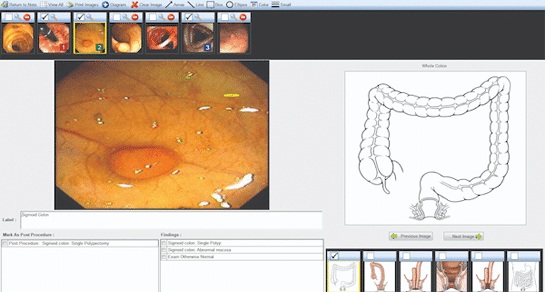
Voice-Driven AI System Enables Structured GI Procedure Documentation
Documentation during gastrointestinal (GI) procedures often competes with real-time clinical decision-making and imposes a significant cognitive burden on physicians. Manual data entry and post-procedure... Read more
EMR-Based Tool Predicts Graft Failure After Kidney Transplant
Kidney transplantation offers patients with end-stage kidney disease longer survival and better quality of life than dialysis, yet graft failure remains a major challenge. Although a successful transplant... Read more
Printable Molecule-Selective Nanoparticles Enable Mass Production of Wearable Biosensors
The future of medicine is likely to focus on the personalization of healthcare—understanding exactly what an individual requires and delivering the appropriate combination of nutrients, metabolites, and... Read more
Business
view channel
GE HealthCare Leads Major European Initiative to Advance Cardio-Oncology Care
Cardiovascular complications are increasingly recognized among people undergoing or recovering from cancer treatment, driven by pre‑existing disease and the cardiotoxic effects of chemotherapy, radiotherapy,... Read more

