






AI Helps Identify Liver Cirrhosis Using Electronic Health Records
|
By HospiMedica International staff writers Posted on 28 Mar 2023 |


|
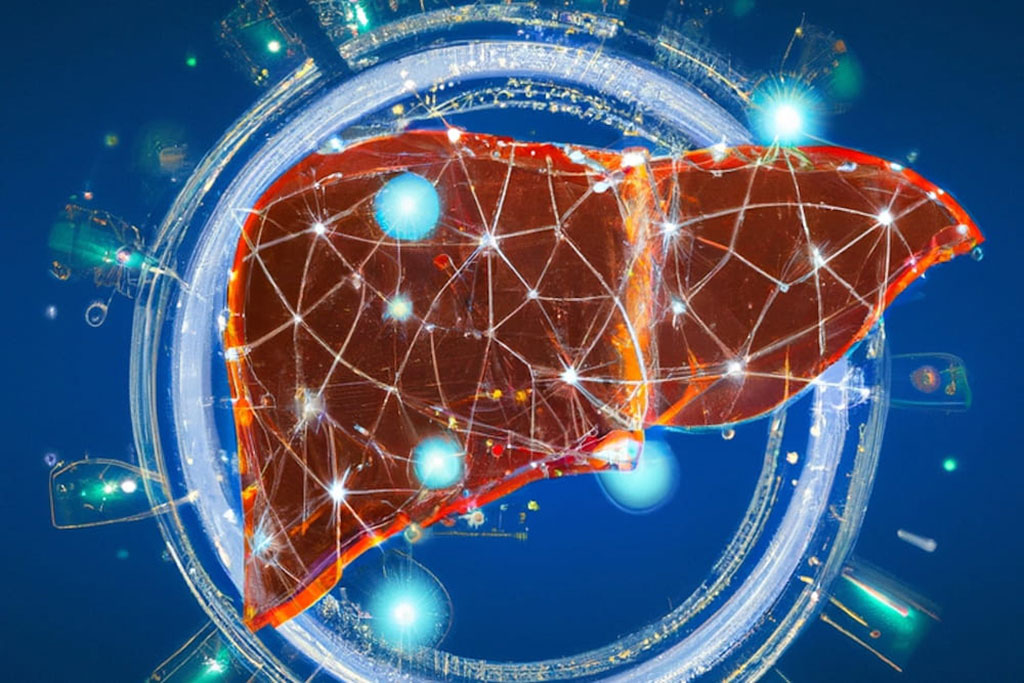
Cirrhosis, which is the end-stage of chronic liver disease and ranked as the 9th leading cause of death in 2021 by the Centers for Disease Control and Prevention, can result from various forms of liver damage and disease. Identifying patients who are likely to progress to cirrhosis has been difficult. However, early diagnosis could improve disease management. Artificial intelligence (AI) can be used to collect and analyze vast amounts of data, often from the electronic health record (EHR) containing the patient’s health history. While computers can easily interpret data entered into forms, it has been challenging to extract information from narrative text, such as clinician notes or discharge summaries. Previous attempts to extract information relied on keyword searches, which required input from a clinician familiar with the disease and multiple rounds of trial and error.
Researchers at the Medical University of South Carolina (MUSC, Charleston, SC, USA) have created a new AI method to automate the detection of liver cirrhosis by utilizing extensive data from EHRs. The AI model, called a convolutional neural network (CNN), mimics the neurons in the brain and was trained on EHRs of patients previously diagnosed with cirrhosis. By analyzing information embedded in narrative text and utilizing multiple layers of artificial neurons, the neural network can extract features and patterns to help identify cirrhosis.
After training on patient records manually reviewed to confirm cirrhosis diagnosis, the researchers applied their deep learning-based AI model that does not require prompts to a new set of health records. The model demonstrated exceptional success in identifying cirrhosis patients based solely on narrative text in clinician notes. Specifically, the trained CNN model achieved a precision rate of 97% when identifying cirrhosis patients using clinical text found in patient discharge summaries alone. While AI and machine learning have the potential to revolutionize the medical field, the researchers believe that these models are not meant to replace clinical judgment but rather to support and enhance it. Therefore, clinicians remain responsible for solving the case, with AI serving as a powerful tool to assist them, according to the researchers.
“The nice thing about using deep learning models is that the model learns from the examples you give it, without training it to look for certain words,” said Jihad Obeid, M.D., a professor in Biomedical Informatics at MUSC. “I think it's exciting that it was successful at identifying cirrhosis using just the text in the discharge summaries, as is the idea of taking it to the next level to see if we can apply it for earlier identification.”
Related Links:
MUSC







Latest AI News
- Machine Learning Approach Enhances Liver Cancer Risk Stratification
- New AI Approach Monitors Brain Health Using Passive Wearable Data
- AI Tool Maps Early Risk Patterns in Bloodstream Infections
- AI Model Identifies Rare Endocrine Disorder from Hand Images
- AI Tool Promises to Reduce Length of Hospital Stays and Free Up Beds
- Machine Learning Model Cuts Canceled Liver Transplants By 60%
Channels
Critical Care
view channel
Automated IV Labeling Solution Improves Infusion Safety and Efficiency
Medication administration in high-acuity settings is often complicated by multiple concurrent infusions, making accurate line identification essential. In a 10-hospital intensive care unit study, 60% of... Read more
First-Of-Its-Kind AI Tool Detects Pulmonary Hypertension from Standard ECGs
Pulmonary hypertension is a progressive, life‑threatening disease that is frequently missed early because symptoms such as dyspnea are nonspecific and diagnostic delays can exceed two years.... Read more
Surgical Techniques
view channel
Continuous Monitoring with Wearables Enhances Postoperative Patient Safety
Postoperative hypoxemia on general surgical wards is common and often missed by intermittent vital sign checks. Undetected low oxygen levels can delay recovery and raise the risk of complications that... Read more
New Approach Enables Customized Muscle Tissue Without Biomaterial Scaffolds
Volumetric muscle loss is a traumatic loss of skeletal muscle that often leads to permanent functional impairment and limited reconstructive options. Current experimental strategies struggle to deliver... Read more
Patient Care
view channel
Wearable Sleep Data Predict Adherence to Pulmonary Rehabilitation
Chronic obstructive pulmonary disease (COPD) is a long-term lung disorder that makes breathing difficult and often disturbs sleep, reducing energy for daily activities. Limited engagement in pulmonary... Read more
Revolutionary Automatic IV-Line Flushing Device to Enhance Infusion Care
More than 80% of in-hospital patients receive intravenous (IV) therapy. Every dose of IV medicine delivered in a small volume (<250 mL) infusion bag should be followed by subsequent flushing to ensure... Read more

Health IT
view channel
EMR-Based Tool Predicts Graft Failure After Kidney Transplant
Kidney transplantation offers patients with end-stage kidney disease longer survival and better quality of life than dialysis, yet graft failure remains a major challenge. Although a successful transplant... Read more
Printable Molecule-Selective Nanoparticles Enable Mass Production of Wearable Biosensors
The future of medicine is likely to focus on the personalization of healthcare—understanding exactly what an individual requires and delivering the appropriate combination of nutrients, metabolites, and... Read more


Business
view channel
GE HealthCare Leads Major European Initiative to Advance Cardio-Oncology Care
Cardiovascular complications are increasingly recognized among people undergoing or recovering from cancer treatment, driven by pre‑existing disease and the cardiotoxic effects of chemotherapy, radiotherapy,... Read more

