






New Surgical Sealing Biomaterial Could Eliminate Standard Methods of Suturing and Stapling
|
By HospiMedica International staff writers Posted on 31 Mar 2023 |


|
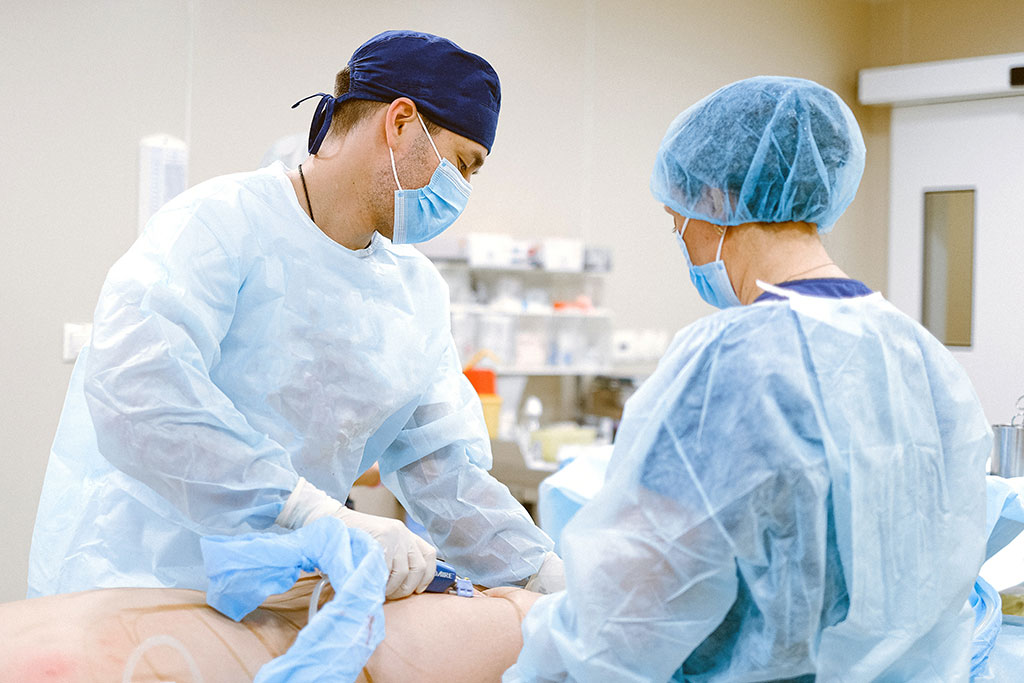
For surgical wounds to be properly closed, the sealant material used must effectively seal on wet, slippery tissue surfaces that vary in shape and may involve tissue movement, such as an expanding lung, or have crumbly textures. The application and effectiveness of the sealant must also occur within a suitable timeframe for surgical procedures. Traditional methods such as suturing and stapling can be ineffective and time-consuming, leading to increased blood loss. Fibrin-based bioadhesive sealants are expensive, exhibit insufficient adhesion, and are susceptible to viral transmission. Although commercial gelatin-based wound dressings offer biocompatibility, low cost, and hemostatic effectiveness, they lack adhesive strength due to inherent brittleness. Previous efforts to improve adhesion through functionalization with catechol, a naturally occurring compound that can provide adhesive capabilities when bound to gelatin, have been made. However, the limited number of binding sites on the gelatin results in a low level of adhesion achievable through catechol functionalization.
Scientists from the Terasaki Institute for Biomedical Innovation (TIBI, Los Angeles, CA, USA) have utilized innovative chemistry to create an injectable biomaterial that has considerably enhanced adhesive strength, stretchability, and toughness. This hydrogel, based on gelatin and modified chemically, has numerous appealing features, including fast gelation at room temperature and customizable levels of adhesion. This specially designed biomaterial is ideal as a surgical wound sealant due to its injectability and controllable adhesion, as well as its superior ability to stick to a range of tissue and organ surfaces.
The researchers utilized caffeic acid (CA), a naturally occurring compound found in coffee and olive oil, to enhance the tissue adhesion properties of gelatin. To achieve this, they first oxidized CA to create CA oligomers (CAO), which consist of a small number of repeating catechol units. By coupling these CA derivatives with gelatin, they were able to significantly improve the chemical binding of catechol groups and enhance their adhesive capabilities. As a result, the engineered bioadhesive sealant exhibits superior adhesive strength, stretchability, toughness, and injectability, and can rapidly gel at the wound site, while maintaining stable adhesion under physiological conditions.
In addition, the sealants were engineered to exhibit selective tissue adhesion. This is crucial for effective sealing, as there must be strong bonding between the sealant and tissue at the interface, while avoiding adhesion on the opposite face of the sealant that is exposed to bodily fluids. Validation tests conducted on wet collagen sheets, as well as burst pressure experiments to assess the limits of adhesive strength, confirmed the efficacy of the new sealant and contradicted previous reports suggesting adverse effects of oxidative chemistry.
The newly developed sealant was put to the test on pig lung, heart, and bladder wounds in laboratory experiments. Results showed that the sealant's adhesive strength was significantly greater than that of commercial gelatin-based sealants. Even after being scraped and twisted experimentally, the sealant remained firmly affixed to the tissue surface. The biocompatibility of the sealant was also confirmed through testing. The sealant exhibited drug loading and drug release capabilities and demonstrated potential for promoting antioxidant effects that can aid in wound healing. This versatile technique can be applied to other biomaterials to impart strong adhesion.
“Our team has utilized manipulative and strategic chemistry to significantly improve adhesive strength and versatility in biomaterials,” said Ali Khademhosseini, TIBI’s Director and CEO. “This creates exciting possibilities for more effective surgical wound management in the clinic.”
Related Links:
TIBI





Latest Surgical Techniques News
- Continuous Monitoring with Wearables Enhances Postoperative Patient Safety
- New Approach Enables Customized Muscle Tissue Without Biomaterial Scaffolds
- Robot-Assisted Brain Angiography Improves Procedural Outcomes
- Brain Mapping Technology Enhances Precision in Brain Tumor Resection
- Handheld Robotic System Expands Options for Total Knee Surgery
- VR Experience Reduces Patient Anxiety Before Kidney Stone Procedure
- Injectable Mini Livers Offer Hope for Patients Awaiting Transplant
- Pulsed Field Ablation Technology Cleared in Europe for Persistent AFib
- AI-Powered Imaging Brings Real-Time Margin Clarity to Breast Cancer Surgery
- Minimally Invasive Device Safely Treats Challenging Brain Aneurysms
- Surgical Robot Makes Complex Liver Tumor Surgery Safer and Less Invasive
- Neurostimulation Implant Reduces Seizure Burden in Drug-Resistant Epilepsy
- Minimally Invasive Procedure Effectively Treats Small Kidney Cancers
- Fluorescence Probe Paired with Engineered Enzymes Lights Up Tumors for Easier Surgical Removal
- Novel Hydrogel Could Become Bone Implant of the Future
- Skull Implant Design Could Shape Surgical Outcomes
Channels
Artificial Intelligence
view channel
Machine Learning Approach Enhances Liver Cancer Risk Stratification
Hepatocellular carcinoma, the most common form of primary liver cancer, is often detected late despite targeted surveillance programs. Current screening guidelines emphasize patients with known cirrhosis,... Read more
New AI Approach Monitors Brain Health Using Passive Wearable Data
Brain health spans cognitive and emotional functions and can fluctuate even in adults without diagnosed disease. Detecting early changes remains difficult in routine care and burdens specialty services... Read more
Critical Care
view channel
Noninvasive Monitoring Device Enables Earlier Intervention in Heart Failure
Hospitalizations for heart failure with preserved ejection fraction (HFpEF) remain common because lung congestion often worsens before symptoms prompt treatment changes. Missed early decompensation... Read more
Automated IV Labeling Solution Improves Infusion Safety and Efficiency
Medication administration in high-acuity settings is often complicated by multiple concurrent infusions, making accurate line identification essential. In a 10-hospital intensive care unit study, 60% of... Read more
Patient Care
view channel
Wearable Sleep Data Predict Adherence to Pulmonary Rehabilitation
Chronic obstructive pulmonary disease (COPD) is a long-term lung disorder that makes breathing difficult and often disturbs sleep, reducing energy for daily activities. Limited engagement in pulmonary... Read more
Revolutionary Automatic IV-Line Flushing Device to Enhance Infusion Care
More than 80% of in-hospital patients receive intravenous (IV) therapy. Every dose of IV medicine delivered in a small volume (<250 mL) infusion bag should be followed by subsequent flushing to ensure... Read more

Health IT
view channel
EMR-Based Tool Predicts Graft Failure After Kidney Transplant
Kidney transplantation offers patients with end-stage kidney disease longer survival and better quality of life than dialysis, yet graft failure remains a major challenge. Although a successful transplant... Read more
Printable Molecule-Selective Nanoparticles Enable Mass Production of Wearable Biosensors
The future of medicine is likely to focus on the personalization of healthcare—understanding exactly what an individual requires and delivering the appropriate combination of nutrients, metabolites, and... Read more


Business
view channel
GE HealthCare Leads Major European Initiative to Advance Cardio-Oncology Care
Cardiovascular complications are increasingly recognized among people undergoing or recovering from cancer treatment, driven by pre‑existing disease and the cardiotoxic effects of chemotherapy, radiotherapy,... Read more

