






POC Test Detects Genetic Blood Disorders with High Accuracy
|
By HospiMedica International staff writers Posted on 31 Mar 2023 |


|
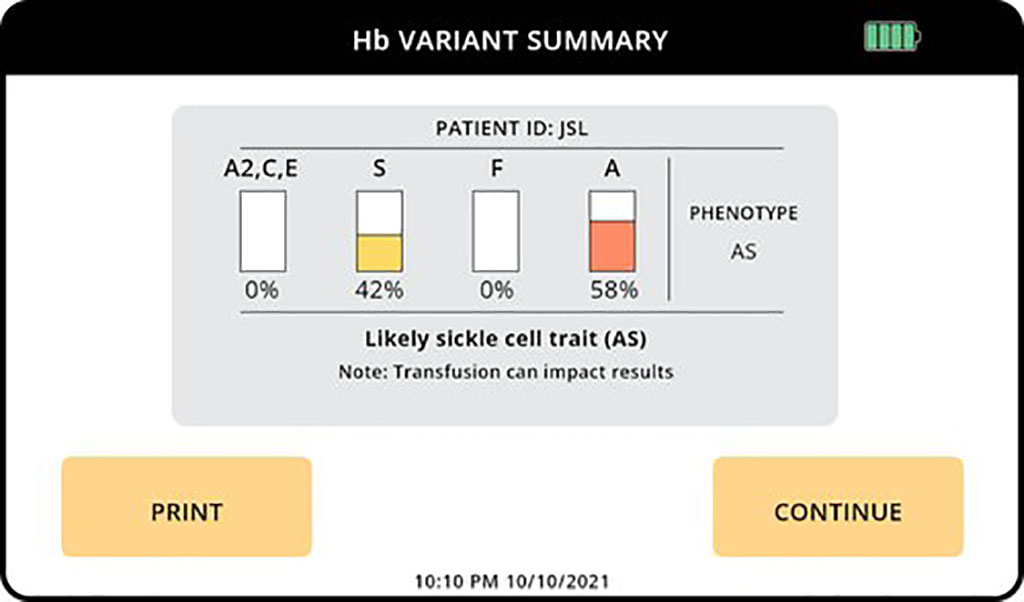
Sickle cell disease (SCD) and beta thalassemia are genetic blood disorders that affect over 7% of the global population, posing the risk of severe complications, disability, and even death. Early diagnosis is crucial and can prevent thousands of SCD-related deaths, especially among Americans of African, Hispanic, Indian, Mediterranean, and Southeast Asian descent, who are more susceptible to these disorders. In the US, SCD is estimated to affect 100,000 people, with up to 8% of African-Americans being carriers, and can reduce life expectancy by up to 20 years. Now, an affordable sickle cell and beta thalassemia test that is currently used in 27 countries seeks to replicate its international success and expand into the U.S.
Hemex Health (Portland, Oregon, USA) has been awarded a three-year, USD 3 million grant from the National Heart, Lung, and Blood Institute (NHLBI, Bethesda, MD, USA) to advance the commercialization of the company’s Gazelle Hb Variant Test for the U.S. market. Hemex intends to use the grant to complete activities required for FDA 510(k) clearance. The Hb Variant Test, one of the tests supported by Hemex’s Gazelle diagnostic platform, can detect SCD and beta thalassemia. Gazelle is a compact, durable, battery-powered, and can be operated at a low cost by entry-level healthcare workers in areas with limited access, resources, or electricity, without the need for refrigeration. Results and patient information are digitally captured for later use.
Gazelle is authorized in a growing number of countries for the detection of SCD and beta thalassemia and incorporates miniaturized trusted technologies, innovative optics, and artificial intelligence. This versatile design enables the company to expand its test menu to include other diseases and to serve a broader user base. Gazelle is an accurate and rapid digital platform that can function in various settings, from remote, low-resource locations to drive-through testing, border crossings, or nursing homes.
Gazelle is a cost-effective and portable point-of-care device that provides results equivalent to standard lab tests without requiring complex logistical support. Previous research has shown that it is highly accurate, detecting SCD with 99% precision. The device and cartridges are designed to be affordable for underserved communities, and results are displayed on the screen in only eight minutes.
"An accurate point-of-care test for sickle cell disease and trait is crucial in helping address the challenges of misdiagnosis and undiagnosed patients who could potentially miss out on life saving medical care,” said Dr. Stephen Boateng, Director of Research, Sickle Cell 101, a non-profit patient group providing sickle cell education to individuals impacted by the condition in the U.S. and globally. “Such a test that can also provide results in minutes provides an additional benefit, especially during community outreach events where participants could be lost to follow up due to the length of time it might take for results to come back."
“Millions of Americans are carriers of the sickle cell trait or beta thalassemia trait, but according to research, only a small percentage know their status,” said Patti White, CEO, Hemex Health. “This test can empower people to quickly learn their status, which may impact family planning or other important decisions.”
Related Links:
Hemex Health






Latest Point of Care News
Channels
Artificial Intelligence
view channel
Machine Learning Approach Enhances Liver Cancer Risk Stratification
Hepatocellular carcinoma, the most common form of primary liver cancer, is often detected late despite targeted surveillance programs. Current screening guidelines emphasize patients with known cirrhosis,... Read more
New AI Approach Monitors Brain Health Using Passive Wearable Data
Brain health spans cognitive and emotional functions and can fluctuate even in adults without diagnosed disease. Detecting early changes remains difficult in routine care and burdens specialty services... Read more

Critical Care
view channel
Automated IV Labeling Solution Improves Infusion Safety and Efficiency
Medication administration in high-acuity settings is often complicated by multiple concurrent infusions, making accurate line identification essential. In a 10-hospital intensive care unit study, 60% of... Read more
First-Of-Its-Kind AI Tool Detects Pulmonary Hypertension from Standard ECGs
Pulmonary hypertension is a progressive, life‑threatening disease that is frequently missed early because symptoms such as dyspnea are nonspecific and diagnostic delays can exceed two years.... Read more
Surgical Techniques
view channel
Continuous Monitoring with Wearables Enhances Postoperative Patient Safety
Postoperative hypoxemia on general surgical wards is common and often missed by intermittent vital sign checks. Undetected low oxygen levels can delay recovery and raise the risk of complications that... Read more
New Approach Enables Customized Muscle Tissue Without Biomaterial Scaffolds
Volumetric muscle loss is a traumatic loss of skeletal muscle that often leads to permanent functional impairment and limited reconstructive options. Current experimental strategies struggle to deliver... Read more

Patient Care
view channel
Wearable Sleep Data Predict Adherence to Pulmonary Rehabilitation
Chronic obstructive pulmonary disease (COPD) is a long-term lung disorder that makes breathing difficult and often disturbs sleep, reducing energy for daily activities. Limited engagement in pulmonary... Read more
Revolutionary Automatic IV-Line Flushing Device to Enhance Infusion Care
More than 80% of in-hospital patients receive intravenous (IV) therapy. Every dose of IV medicine delivered in a small volume (<250 mL) infusion bag should be followed by subsequent flushing to ensure... Read more

Health IT
view channel
EMR-Based Tool Predicts Graft Failure After Kidney Transplant
Kidney transplantation offers patients with end-stage kidney disease longer survival and better quality of life than dialysis, yet graft failure remains a major challenge. Although a successful transplant... Read more
Printable Molecule-Selective Nanoparticles Enable Mass Production of Wearable Biosensors
The future of medicine is likely to focus on the personalization of healthcare—understanding exactly what an individual requires and delivering the appropriate combination of nutrients, metabolites, and... Read more

Business
view channel
GE HealthCare Leads Major European Initiative to Advance Cardio-Oncology Care
Cardiovascular complications are increasingly recognized among people undergoing or recovering from cancer treatment, driven by pre‑existing disease and the cardiotoxic effects of chemotherapy, radiotherapy,... Read more

