New Artificial Intelligence System Improves Surgeon Performance
|
By HospiMedica International staff writers Posted on 24 Apr 2023 |


|

As surgeons undergo training, they typically require guidance from seasoned doctors who can help refine their technique. Now, a new artificial intelligence (AI) system may soon offer valuable insights into a surgeon's performance, potentially reducing the need for direct supervision.
The Surgical AI System (SAIS) developed by researchers at California Institute of Technology (Caltech, Pasadena, CA, USA) and Keck School of Medicine of University of Southern California (USC, Los Angeles, CA, USA) aims to deliver objective evaluations of a surgeon's performance, with the ultimate goal of enhancing their skills and, consequently, their patients' outcomes. By analyzing a video recording of a surgical procedure, SAIS can determine the type of surgery being performed and assess the surgeon's execution quality. The system was trained on a vast collection of video data annotated by medical professionals, evaluating surgeons' performances down to individual discrete motions, such as handling a needle or manipulating tissue.
Once trained, SAIS was employed to review and assess the performance of surgeons during a wide array of procedures captured on video from various hospitals. Researchers hope that SAIS will guide surgeons on which skills need further development. To enhance the tool's usefulness, the AI system was designed to justify its assessments, enabling it to inform surgeons of their skill level and offer detailed feedback, supported by specific video clips.
During initial tests, researchers discovered an unintended bias in SAIS, causing it to rate surgeons' skill levels inaccurately based on an analysis of their overall movements. To address this issue, the AI system was directed to concentrate solely on relevant aspects of the surgical video. While this approach reduced the bias, it did not completely eliminate it, and researchers continue to work on refining the system.
"In high stakes environments such as robotic surgery, it is not realistic for AI to replace human surgeons in the short term," said Anima Anandkumar, Bren Professor of Computing and Mathematical Sciences and senior author of the studies. "Instead, we asked how AI can safely improve surgical outcomes for the patients, and hence, our focus on making human surgeons better and more effective through AI."
"Human-derived surgical feedback is not presently objective nor scalable," added Andrew Hung, a urologist with Keck Medicine of USC and associate professor of urology at Keck School of Medicine of USC. "AI-derived feedback, such as what our system delivers, presents a major opportunity to provide surgeons actionable feedback."








Channels

Critical Care
view channel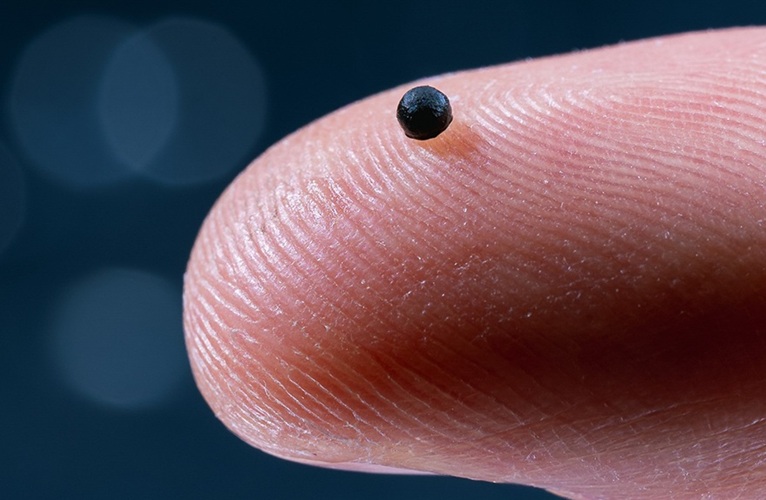
Magnetically Guided Microrobots to Enable Targeted Drug Delivery
Stroke affects 12 million people globally each year, often causing death or lasting disability. Current treatment relies on systemic administration of clot-dissolving drugs, which circulate throughout... Read more
Smart Nanomaterials Detect and Treat Traumatic Brain Injuries Simultaneously
Traumatic brain injury (TBI) continues to leave millions with long-term disabilities every year. After a sudden impact from a fall, collision, or accident, the brain undergoes inflammation, oxidative stress,... Read more
Earlier Blood Transfusion Could Reduce Heart Failure and Arrhythmia in Heart Disease Patients
Blood loss during or after surgery can place significant stress on people with heart disease, increasing the risk of dangerous complications. Transfusions are often delayed until hemoglobin levels fall... Read more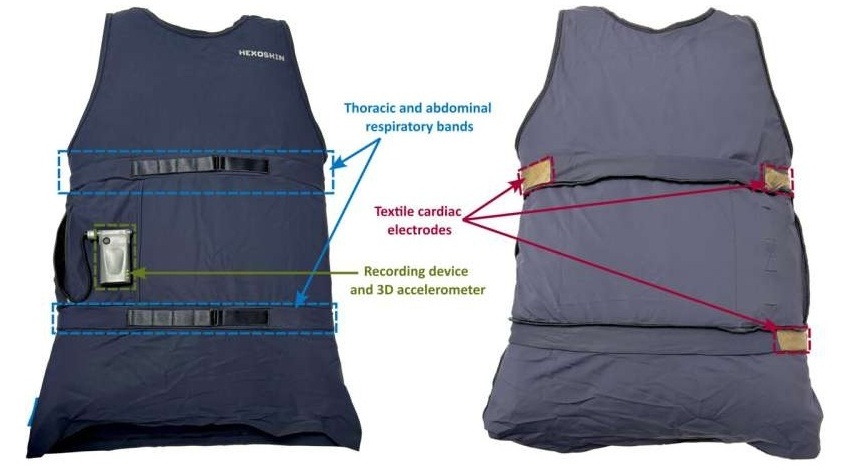
Patient Care
view channel
Revolutionary Automatic IV-Line Flushing Device to Enhance Infusion Care
More than 80% of in-hospital patients receive intravenous (IV) therapy. Every dose of IV medicine delivered in a small volume (<250 mL) infusion bag should be followed by subsequent flushing to ensure... Read more
VR Training Tool Combats Contamination of Portable Medical Equipment
Healthcare-associated infections (HAIs) impact one in every 31 patients, cause nearly 100,000 deaths each year, and cost USD 28.4 billion in direct medical expenses. Notably, up to 75% of these infections... Read more
Portable Biosensor Platform to Reduce Hospital-Acquired Infections
Approximately 4 million patients in the European Union acquire healthcare-associated infections (HAIs) or nosocomial infections each year, with around 37,000 deaths directly resulting from these infections,... Read more
First-Of-Its-Kind Portable Germicidal Light Technology Disinfects High-Touch Clinical Surfaces in Seconds
Reducing healthcare-acquired infections (HAIs) remains a pressing issue within global healthcare systems. In the United States alone, 1.7 million patients contract HAIs annually, leading to approximately... Read moreHealth IT
view channel
EMR-Based Tool Predicts Graft Failure After Kidney Transplant
Kidney transplantation offers patients with end-stage kidney disease longer survival and better quality of life than dialysis, yet graft failure remains a major challenge. Although a successful transplant... Read more
Printable Molecule-Selective Nanoparticles Enable Mass Production of Wearable Biosensors
The future of medicine is likely to focus on the personalization of healthcare—understanding exactly what an individual requires and delivering the appropriate combination of nutrients, metabolites, and... Read more

Business
view channel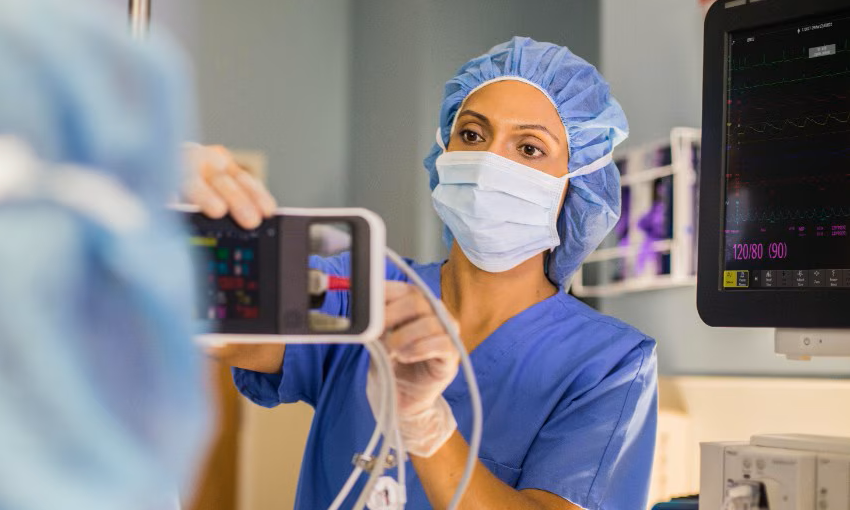
Philips and Masimo Partner to Advance Patient Monitoring Measurement Technologies
Royal Philips (Amsterdam, Netherlands) and Masimo (Irvine, California, USA) have renewed their multi-year strategic collaboration, combining Philips’ expertise in patient monitoring with Masimo’s noninvasive... Read more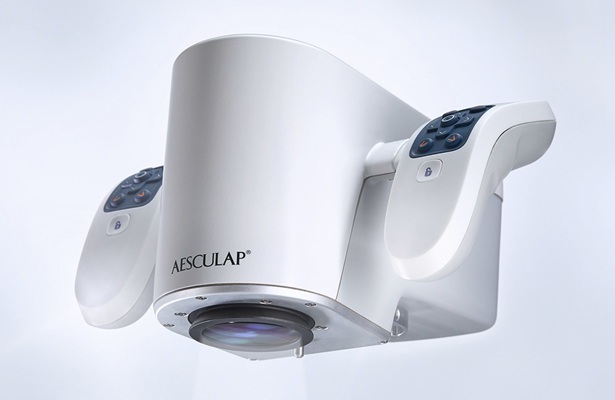
B. Braun Acquires Digital Microsurgery Company True Digital Surgery
The high-end microsurgery market in neurosurgery, spine, and ENT is undergoing a significant transformation. Traditional analog microscopes are giving way to digital exoscopes, which provide improved visualization,... Read more
CMEF 2025 to Promote Holistic and High-Quality Development of Medical and Health Industry
The 92nd China International Medical Equipment Fair (CMEF 2025) Autumn Exhibition is scheduled to be held from September 26 to 29 at the China Import and Export Fair Complex (Canton Fair Complex) in Guangzhou.... Read more