New ‘Droplet Battery’ Could Power Next-Generation Wearable Devices and Implants
|
By HospiMedica International staff writers Posted on 05 Sep 2023 |


|
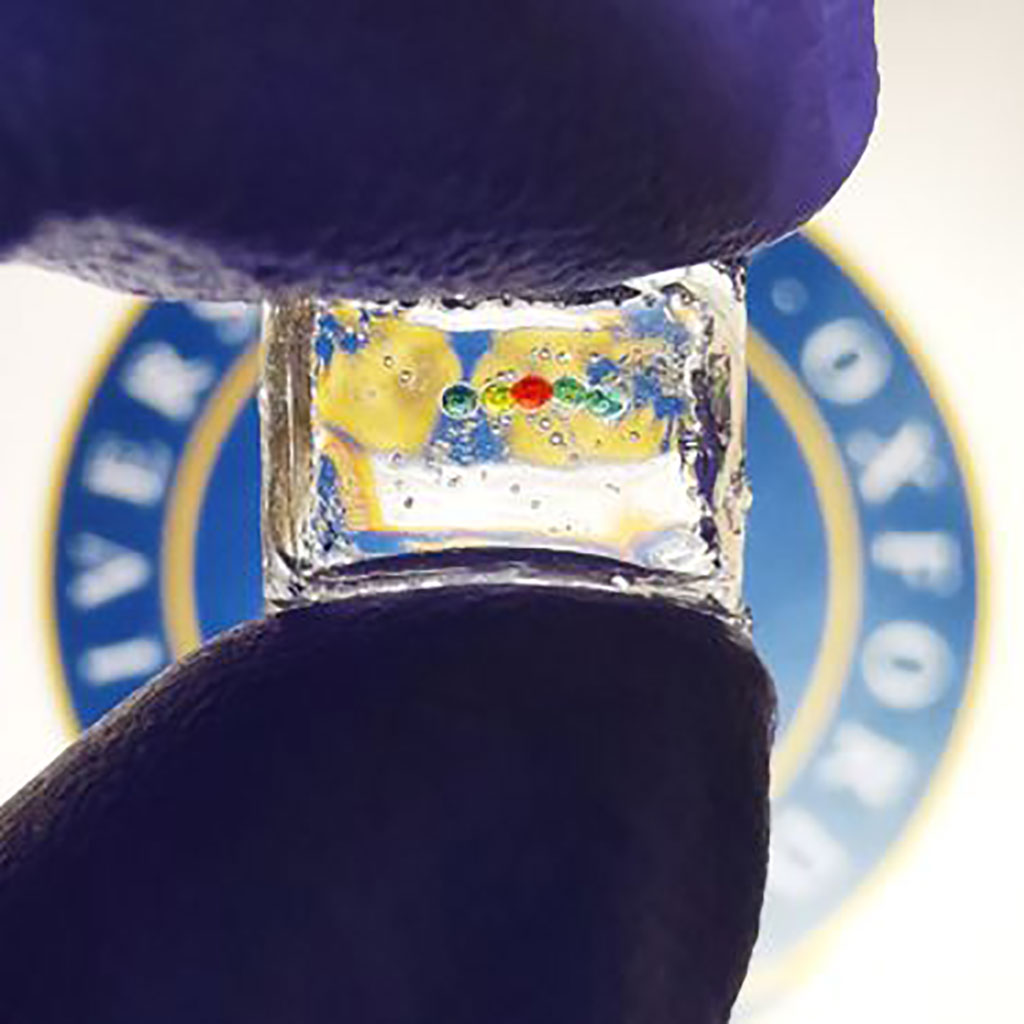
Small bio-integrated devices with the capability to interact with and stimulate cells have potential therapeutic applications, including targeted drug delivery and faster wound healing. However, these devices require a power source to function. Until now, finding an efficient method for providing power at the microscale has been a challenge. Scientists have now developed a miniature power source that can alter the activity of cultured human nerve cells. Drawing inspiration from how electric eels generate electricity, this device employs internal ion gradients to generate energy.
Researchers at University of Oxford (Oxford, UK) have created a miniaturized soft power source that works by depositing a sequence of five nanoliter-sized droplets of a conductive hydrogel (a 3D network of polymer chains infused with a significant amount of water). Each droplet possesses a distinct composition, generating a salt concentration gradient across the chain. These droplets are separated by lipid bilayers, which provide structural support while preventing ions from moving between the droplets. The power source becomes active when the structure is cooled to 4°C and the surrounding medium is changed. This disrupts the lipid bilayers and causes the droplets to merge into a continuous hydrogel. This allows ions to travel through the conductive hydrogel, from the high-salt droplets at the ends to the low-salt droplet in the center. Connecting the end droplets to electrodes converts the energy released from the ion gradients into electricity, enabling the hydrogel structure to serve as a power source for external components.
In the study, the activated droplet power source produced a sustained current for over 30 minutes. A unit comprising 50 nanoliter droplets yielded a maximum output power of around 65 nanowatts (nW). The devices maintained similar current levels even after 36 hours of storage. The research team then demonstrated how living cells could be attached to the device, allowing their activity to be directly regulated by the ionic current. Human neural progenitor cells stained with a fluorescent dye were connected to the device. When the power source was activated, time-lapse recording exhibited waves of intercellular calcium signaling in the neurons, induced by the local ionic current. According to the researchers, the device's modular design could facilitate the combination of multiple units to enhance generated voltage and/or current. This potential advancement could pave the way for powering next-generation wearable devices, bio-hybrid interfaces, implants, synthetic tissues, and microrobots. By linking 20 sets of five-droplet units in series, the researchers were able to illuminate a light-emitting diode requiring approximately 2 Volts. They envision that automating device production, such as using a droplet printer, could result in droplet networks comprised of thousands of power units.
“This work addresses the important question of how stimulation produced by soft, biocompatible devices can be coupled with living cells. The potential impact on devices including bio-hybrid interfaces, implants, and microrobots is substantial,” said Professor Hagan Bayley from the Department of Chemistry at University of Oxford, who was the research group leader for the study.
Related Links:
University of Oxford






Latest Surgical Techniques News
- New Study Findings Could Halve Number of Stent Procedures
- Breakthrough Surgical Device Redefines Hip Arthroscopy
- Automated System Enables Real-Time "Molecular Pathology" During Cancer Surgery
- Groundbreaking Procedure Combines New Treatments for Liver Tumors
- Ablation Reduces Stroke Risk Associated with Atrial Fibrillation
- Optical Tracking Method Identifies Target Areas in Robot-Assisted Neurosurgery
- General Anesthesia Improves Post-Surgery Outcomes for Acute Stroke Patients
- Drug-Coated Balloons Can Replace Stents Even in Larger Coronary Arteries
- Magnetic Kidney Stone Retrieval Device Outperforms Ureteroscopic Laser Lithotripsy
- Absorbable Skull Device Could Replace Traditional Metal Implants Used After Brain Surgery
- Magic Silicone Liquid Powered Robots Perform MIS in Narrow Cavities
- 'Lab-on-a-Scalpel' Provides Real-Time Surgical Insights for POC Diagnostics in OR
- Biodegradable Brain Implant Prevents Glioblastoma Recurrence
- Tiny 3D Printer Reconstructs Tissues During Vocal Cord Surgery
- Minimally Invasive Procedure for Aortic Valve Disease Has Similar Outcomes as Surgery
- Safer Hip Implant Design Prevents Early Femoral Fractures
Channels

Surgical Techniques
view channel
New Study Findings Could Halve Number of Stent Procedures
When a coronary artery becomes acutely blocked during a heart attack, opening it immediately is essential to prevent irreversible damage. However, many patients also have other narrowed vessels that appear... Read more
Breakthrough Surgical Device Redefines Hip Arthroscopy
Hip arthroscopy has surged in popularity, yet surgeons still face major mechanical constraints when navigating deep joint spaces through traditional cannulas. Limited tool mobility and the need for an... Read more
Patient Care
view channel
Revolutionary Automatic IV-Line Flushing Device to Enhance Infusion Care
More than 80% of in-hospital patients receive intravenous (IV) therapy. Every dose of IV medicine delivered in a small volume (<250 mL) infusion bag should be followed by subsequent flushing to ensure... Read more
VR Training Tool Combats Contamination of Portable Medical Equipment
Healthcare-associated infections (HAIs) impact one in every 31 patients, cause nearly 100,000 deaths each year, and cost USD 28.4 billion in direct medical expenses. Notably, up to 75% of these infections... Read more
Portable Biosensor Platform to Reduce Hospital-Acquired Infections
Approximately 4 million patients in the European Union acquire healthcare-associated infections (HAIs) or nosocomial infections each year, with around 37,000 deaths directly resulting from these infections,... Read more
First-Of-Its-Kind Portable Germicidal Light Technology Disinfects High-Touch Clinical Surfaces in Seconds
Reducing healthcare-acquired infections (HAIs) remains a pressing issue within global healthcare systems. In the United States alone, 1.7 million patients contract HAIs annually, leading to approximately... Read moreHealth IT
view channel
EMR-Based Tool Predicts Graft Failure After Kidney Transplant
Kidney transplantation offers patients with end-stage kidney disease longer survival and better quality of life than dialysis, yet graft failure remains a major challenge. Although a successful transplant... Read more
Printable Molecule-Selective Nanoparticles Enable Mass Production of Wearable Biosensors
The future of medicine is likely to focus on the personalization of healthcare—understanding exactly what an individual requires and delivering the appropriate combination of nutrients, metabolites, and... Read more

Business
view channel
Philips and Masimo Partner to Advance Patient Monitoring Measurement Technologies
Royal Philips (Amsterdam, Netherlands) and Masimo (Irvine, California, USA) have renewed their multi-year strategic collaboration, combining Philips’ expertise in patient monitoring with Masimo’s noninvasive... Read more
B. Braun Acquires Digital Microsurgery Company True Digital Surgery
The high-end microsurgery market in neurosurgery, spine, and ENT is undergoing a significant transformation. Traditional analog microscopes are giving way to digital exoscopes, which provide improved visualization,... Read more
CMEF 2025 to Promote Holistic and High-Quality Development of Medical and Health Industry
The 92nd China International Medical Equipment Fair (CMEF 2025) Autumn Exhibition is scheduled to be held from September 26 to 29 at the China Import and Export Fair Complex (Canton Fair Complex) in Guangzhou.... Read more