Thin-Film Neural Electrodes Placed Directly on Brain Tissue Can Diagnose and Treat Epilepsy 
|
By HospiMedica International staff writers Posted on 25 Sep 2023 |


|
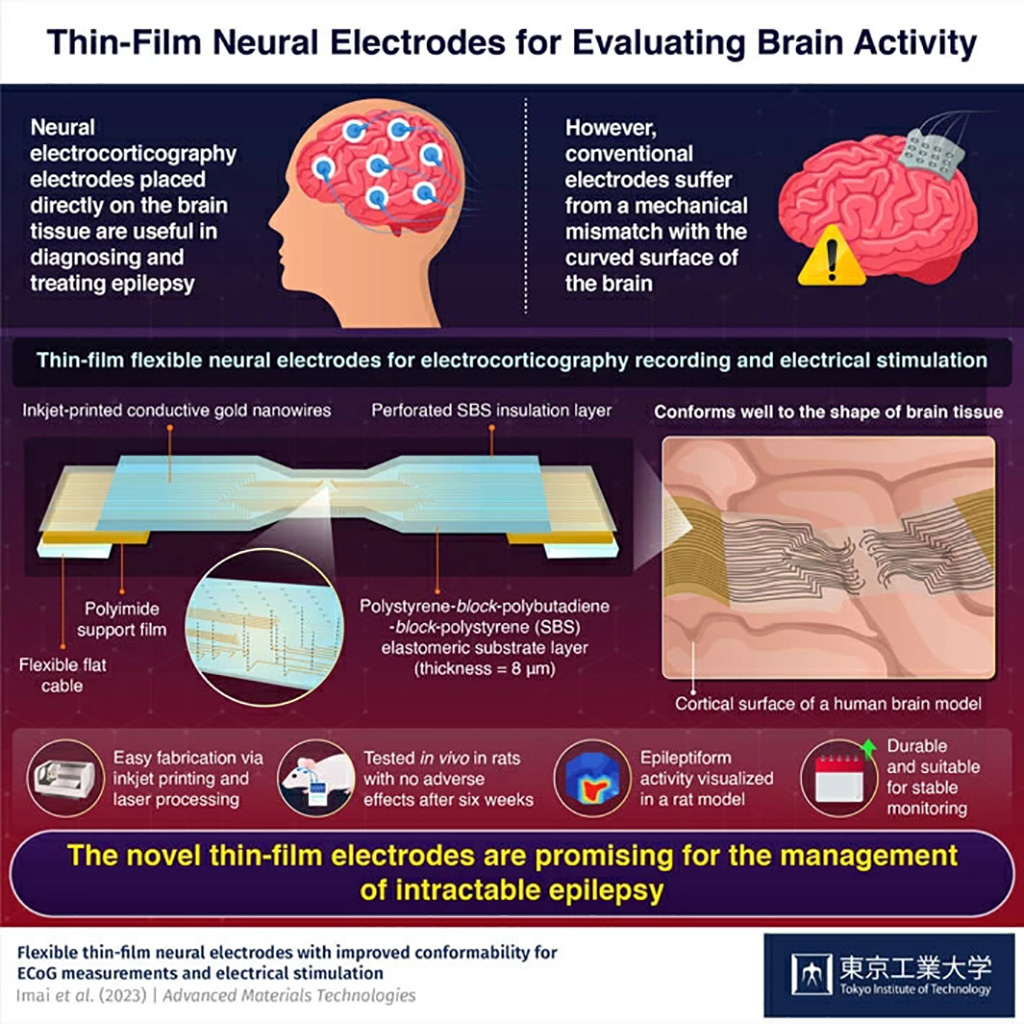
Analyzing brain activity is crucial for diagnosing conditions like epilepsy and other mental health disorders. Among various methods, electroencephalography (EEG) is considered the least intrusive, using electrodes placed on the scalp to capture brain signals. However, the downside is that EEG has limited resolution, as brain signals get distorted and weakened by the time they reach the scalp. Electrocorticography (ECoG), on the other hand, places electrodes directly onto the brain's surface, offering much better recordings due to their proximity to the area of interest. These electrodes can also send electrical pulses to manage symptoms like epileptic seizures. But there's a hitch: conventional ECoG electrodes don't usually fit well with the brain's shape and mechanical properties, leading to issues like increased brain pressure. Although softer electrodes have been created to address this issue, they tend to lack durability or involve complex manufacturing steps. Now, researchers have designed flexible thin-film electrodes placed directly on brain tissue that align well with the brain's mechanical properties. This new design improves ECoG recordings and also allows for more targeted stimulation of neurons.
A research team at Tokyo Institute of Technology (Tokyo, Japan) has developed a novel flexible neural electrode made from a material known as polystyrene-block-polybutadiene-block-polystyrene (SBS). Using an inkjet printer, the team fabricated conductive wiring on the electrode with gold nanoink and then proceeded to cover the circuit by stacking another SBS layer as insulation, with laser-perforated microchannels as measurement or stimulation points. The team undertook extensive mechanical testing and simulations to show that these electrodes conform well to the brain's irregular shape. The straightforward design and manufacturing process also make these electrodes practical for broader applications.
To validate the effectiveness of their electrodes, the researchers conducted several tests on rat models with epilepsy. With their new ECoG electrodes, they were able to accurately gauge brain responses when the rats' whiskers were mechanically affected. Moreover, the electrodes were used to visualize seizure activities that were chemically induced. They were even able to trigger specific movements in the rats by sending electric pulses through particular channels on the electrode, indicating its potential for targeted brain stimulation. Notably, these electrodes did not result in any inflammation or negative effects in the rats' brains, even weeks after the tests. The team aims to refine this promising technology for future clinical use.
“As far as we know, this is the first study to demonstrate such ultra-conformable ECoG electrodes based on printed electronics, which closely match the mechanical properties of brain tissue,” said Associate Professor Toshinori Fujie of Tokyo Tech who led the team. “The integration of our thin-film electrode with an implantable device could make it even less invasive and more sensitive to the brain’s abnormal electrical activity. This would enable improved diagnostics and therapeutic strategies for the management of intractable epilepsy.”
Related Links:
Tokyo Institute of Technology






Latest Critical Care News
- Nanogel Technology Almost 100% Effective in Destroying Drug-Resistant Bacteria Within Hours
- Wearable Ultrasound Sensor Delivers Noninvasive Treatment Without Surgery
- Gel-Free ECG System to Transform Heart Health Diagnosis
- Biodegradable Patch Repairs Damaged Tissue After Heart Attack
- Magnetically Guided Microrobots to Enable Targeted Drug Delivery
- Smart Nanomaterials Detect and Treat Traumatic Brain Injuries Simultaneously
- Earlier Blood Transfusion Could Reduce Heart Failure and Arrhythmia in Heart Disease Patients
- 'Smart' Shirt Detects Epileptic Seizures in Real Time
- Skin Patch Measures Effectiveness of Flu/COVID Vaccines in 10 Minutes
- Complete Revascularization Reduces Risk of Death from Cardiovascular Causes
- Tiny Fish-Inspired Robots Navigate Through Body to Deliver Targeted Drug Therapy
- Coronary Artery Stenosis Could Protect Patients from Pulmonary Embolism Effects
- Sweat-Powered Sticker Turns Drinking Cup into Health Sensor
- Skin-Mounted 3D Microfluidic Device Analyzes Sweat for Real-Time Health Assessment
- New Therapeutic Brain Implants to Eliminate Need for Surgery
- Stem Cell Patch Gently Heals Damaged Hearts Without Open-Heart Surgery
Channels

Surgical Techniques
view channel
Novel Endoscopy Technique Provides Access to Deep Lung Tumors
Detecting lung cancer early can save lives, but diagnosing small tumors deep in the outer regions of the lungs remains a major clinical challenge. Although CT scans frequently identify tiny suspicious... Read more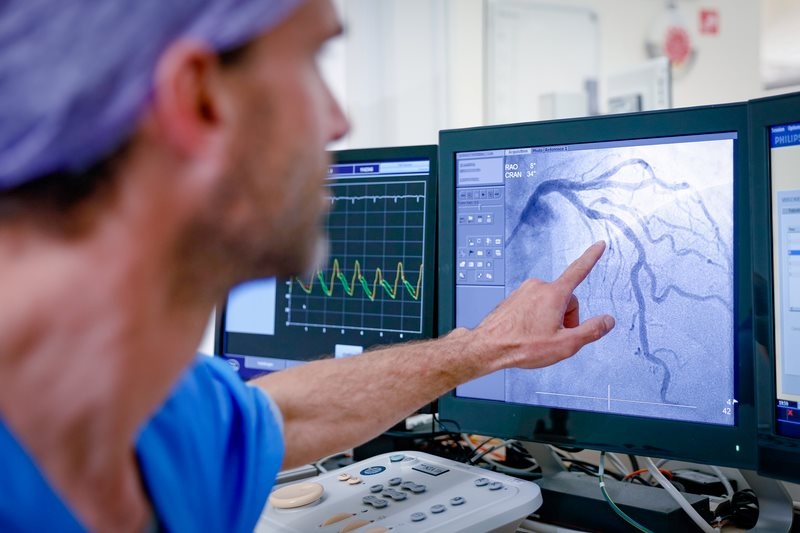
New Study Findings Could Halve Number of Stent Procedures
When a coronary artery becomes acutely blocked during a heart attack, opening it immediately is essential to prevent irreversible damage. However, many patients also have other narrowed vessels that appear... Read more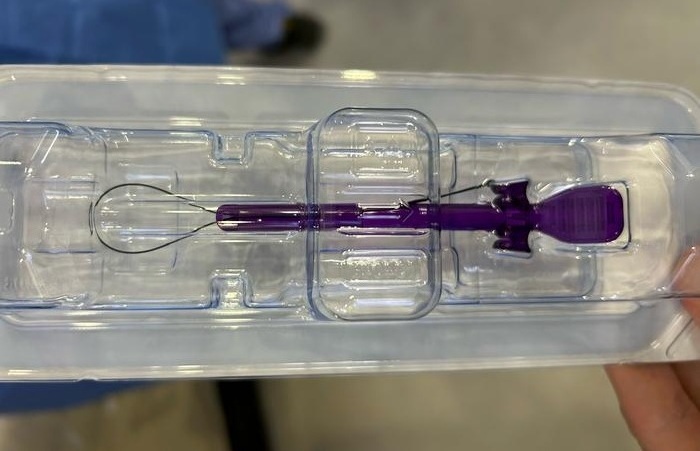
Patient Care
view channel
Revolutionary Automatic IV-Line Flushing Device to Enhance Infusion Care
More than 80% of in-hospital patients receive intravenous (IV) therapy. Every dose of IV medicine delivered in a small volume (<250 mL) infusion bag should be followed by subsequent flushing to ensure... Read more
VR Training Tool Combats Contamination of Portable Medical Equipment
Healthcare-associated infections (HAIs) impact one in every 31 patients, cause nearly 100,000 deaths each year, and cost USD 28.4 billion in direct medical expenses. Notably, up to 75% of these infections... Read more
Portable Biosensor Platform to Reduce Hospital-Acquired Infections
Approximately 4 million patients in the European Union acquire healthcare-associated infections (HAIs) or nosocomial infections each year, with around 37,000 deaths directly resulting from these infections,... Read more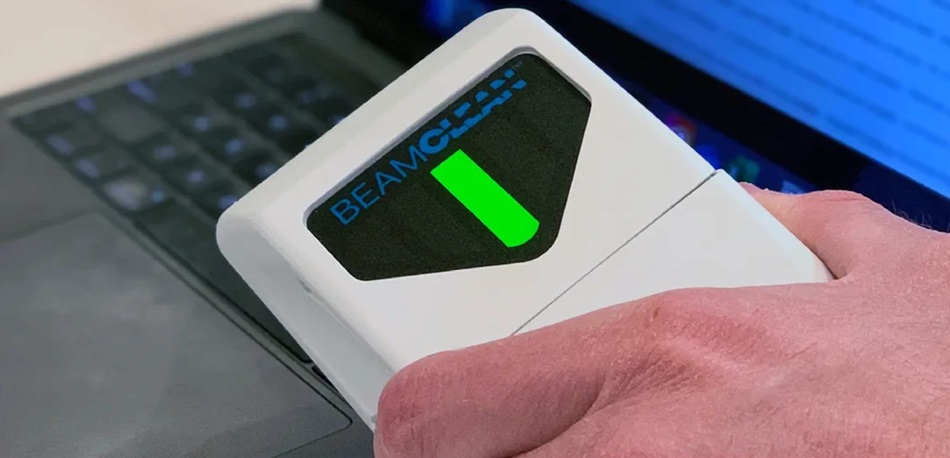
First-Of-Its-Kind Portable Germicidal Light Technology Disinfects High-Touch Clinical Surfaces in Seconds
Reducing healthcare-acquired infections (HAIs) remains a pressing issue within global healthcare systems. In the United States alone, 1.7 million patients contract HAIs annually, leading to approximately... Read moreHealth IT
view channel
EMR-Based Tool Predicts Graft Failure After Kidney Transplant
Kidney transplantation offers patients with end-stage kidney disease longer survival and better quality of life than dialysis, yet graft failure remains a major challenge. Although a successful transplant... Read more
Printable Molecule-Selective Nanoparticles Enable Mass Production of Wearable Biosensors
The future of medicine is likely to focus on the personalization of healthcare—understanding exactly what an individual requires and delivering the appropriate combination of nutrients, metabolites, and... Read more

Business
view channel
Philips and Masimo Partner to Advance Patient Monitoring Measurement Technologies
Royal Philips (Amsterdam, Netherlands) and Masimo (Irvine, California, USA) have renewed their multi-year strategic collaboration, combining Philips’ expertise in patient monitoring with Masimo’s noninvasive... Read more
B. Braun Acquires Digital Microsurgery Company True Digital Surgery
The high-end microsurgery market in neurosurgery, spine, and ENT is undergoing a significant transformation. Traditional analog microscopes are giving way to digital exoscopes, which provide improved visualization,... Read more
CMEF 2025 to Promote Holistic and High-Quality Development of Medical and Health Industry
The 92nd China International Medical Equipment Fair (CMEF 2025) Autumn Exhibition is scheduled to be held from September 26 to 29 at the China Import and Export Fair Complex (Canton Fair Complex) in Guangzhou.... Read more