AI Diagnostic Tool Accurately Detects Valvular Disorders Often Missed by Doctors
|
By HospiMedica International staff writers Posted on 12 Oct 2023 |


|

Doctors generally use stethoscopes to listen for the characteristic lub-dub sounds made by heart valves opening and closing. They also listen for less prominent sounds that indicate problems with these valves. But the human body is full of other noises, like the flow of blood, stomach rumblings, and breath sounds, which can easily mask the signs of valvular heart disease (VHD). Research reveals that only 44% of VHD cases are caught through regular stethoscope check-ups. This leads to delayed diagnoses, worsening health conditions for patients, and huge costs for the healthcare system. To improve on this, researchers have now developed a new diagnostic tool that uses a short burst of audio data to accurately identify VHD.
Researchers at Stevens Institute of Technology (Hoboken, NJ, USA) used a contact microphone to take 10-second sound vibrations directly from a patient's chest. This data was then analyzed by an AI model adapted from algorithms normally used in speech processing to separate overlapping voices. In this case, the algorithm works to isolate the specific sounds associated with different types of heart valve diseases. The AI system can quickly identify up to five different types of valvular issues in a single patient, even if more than one condition is present.
The AI tool can detect VHD with 93% sensitivity and 98% specificity, substantially reducing undiagnosed cases and limiting false positives. The results are given in a simple 5-digit code made of ones and zeros, indicating the presence or absence of specific VHD. What sets this diagnostic tool apart from previously used neural networks to detect VHD is the use of accelerometers instead of more complex and cumbersome machines. Not only is this technique more accurate, but it also has the potential for further refinement. The team aims to extend their approach to identify other cardiovascular conditions and hopes to integrate this technology into medical practices nationwide, making it easier to diagnose cardiac disorders.
“Most cases of VHD are missed because of human error — so we brought in AI to help the human,” explained Negar Ebadi, the principal investigator of the project. “Our current goal is to collect more data so we can begin to classify diseases by severity — so instead of showing that you have a particular valvular disorder, we could give a grade out of 10 describing how far the disease has progressed.”
Related Links:
Stevens Institute of Technology






Channels
Critical Care
view channel
Nanogel Technology Almost 100% Effective in Destroying Drug-Resistant Bacteria Within Hours
Antibiotic resistance is one of the most serious global health threats, driven by bacteria that evade treatment and form protective biofilms that shield them from drugs. Pathogens such as Pseudomonas aeruginosa,... Read more
Wearable Ultrasound Sensor Delivers Noninvasive Treatment Without Surgery
Wearable ultrasound devices have long struggled with low acoustic power and poor structural stability, limiting their use in high-resolution imaging and therapeutic applications. Conventional flexible... Read more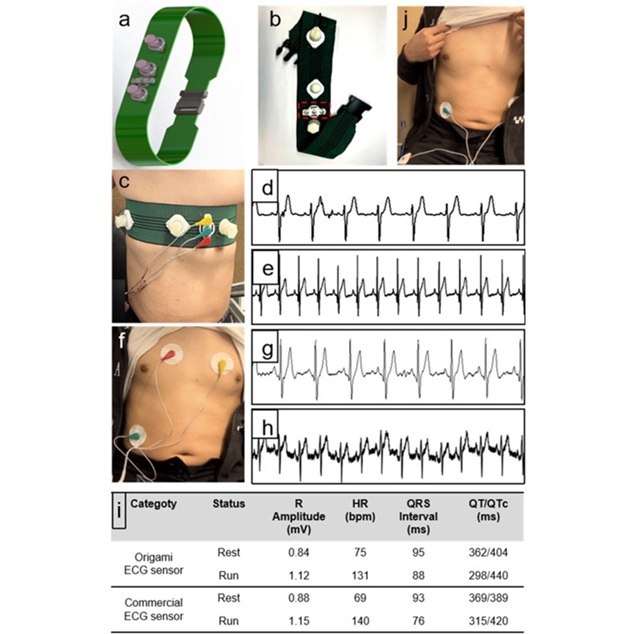

Surgical Techniques
view channel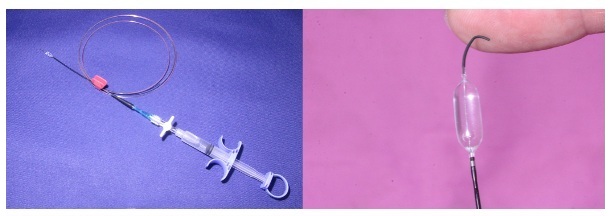
Novel Endoscopy Technique Provides Access to Deep Lung Tumors
Detecting lung cancer early can save lives, but diagnosing small tumors deep in the outer regions of the lungs remains a major clinical challenge. Although CT scans frequently identify tiny suspicious... Read more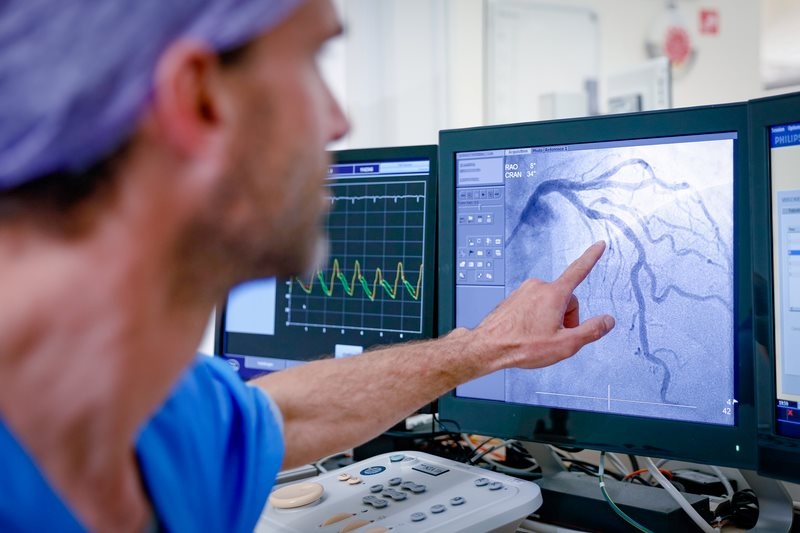
New Study Findings Could Halve Number of Stent Procedures
When a coronary artery becomes acutely blocked during a heart attack, opening it immediately is essential to prevent irreversible damage. However, many patients also have other narrowed vessels that appear... Read more
Patient Care
view channel
Revolutionary Automatic IV-Line Flushing Device to Enhance Infusion Care
More than 80% of in-hospital patients receive intravenous (IV) therapy. Every dose of IV medicine delivered in a small volume (<250 mL) infusion bag should be followed by subsequent flushing to ensure... Read more
VR Training Tool Combats Contamination of Portable Medical Equipment
Healthcare-associated infections (HAIs) impact one in every 31 patients, cause nearly 100,000 deaths each year, and cost USD 28.4 billion in direct medical expenses. Notably, up to 75% of these infections... Read more
Portable Biosensor Platform to Reduce Hospital-Acquired Infections
Approximately 4 million patients in the European Union acquire healthcare-associated infections (HAIs) or nosocomial infections each year, with around 37,000 deaths directly resulting from these infections,... Read more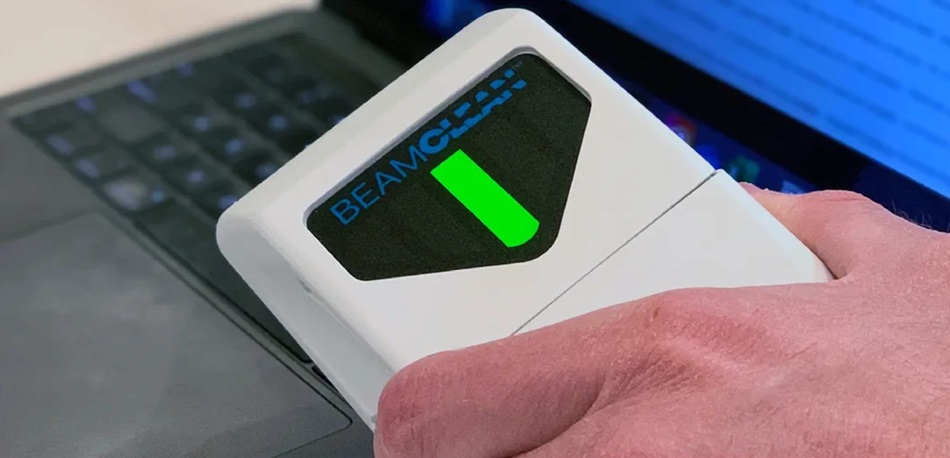
First-Of-Its-Kind Portable Germicidal Light Technology Disinfects High-Touch Clinical Surfaces in Seconds
Reducing healthcare-acquired infections (HAIs) remains a pressing issue within global healthcare systems. In the United States alone, 1.7 million patients contract HAIs annually, leading to approximately... Read moreHealth IT
view channel
EMR-Based Tool Predicts Graft Failure After Kidney Transplant
Kidney transplantation offers patients with end-stage kidney disease longer survival and better quality of life than dialysis, yet graft failure remains a major challenge. Although a successful transplant... Read more
Printable Molecule-Selective Nanoparticles Enable Mass Production of Wearable Biosensors
The future of medicine is likely to focus on the personalization of healthcare—understanding exactly what an individual requires and delivering the appropriate combination of nutrients, metabolites, and... Read more

Business
view channel
Philips and Masimo Partner to Advance Patient Monitoring Measurement Technologies
Royal Philips (Amsterdam, Netherlands) and Masimo (Irvine, California, USA) have renewed their multi-year strategic collaboration, combining Philips’ expertise in patient monitoring with Masimo’s noninvasive... Read more
B. Braun Acquires Digital Microsurgery Company True Digital Surgery
The high-end microsurgery market in neurosurgery, spine, and ENT is undergoing a significant transformation. Traditional analog microscopes are giving way to digital exoscopes, which provide improved visualization,... Read more
CMEF 2025 to Promote Holistic and High-Quality Development of Medical and Health Industry
The 92nd China International Medical Equipment Fair (CMEF 2025) Autumn Exhibition is scheduled to be held from September 26 to 29 at the China Import and Export Fair Complex (Canton Fair Complex) in Guangzhou.... Read more