Handheld, Sound-Based Diagnostic System Delivers Bedside Blood Test Results in An Hour 
|
By HospiMedica International staff writers Posted on 17 Oct 2024 |


|
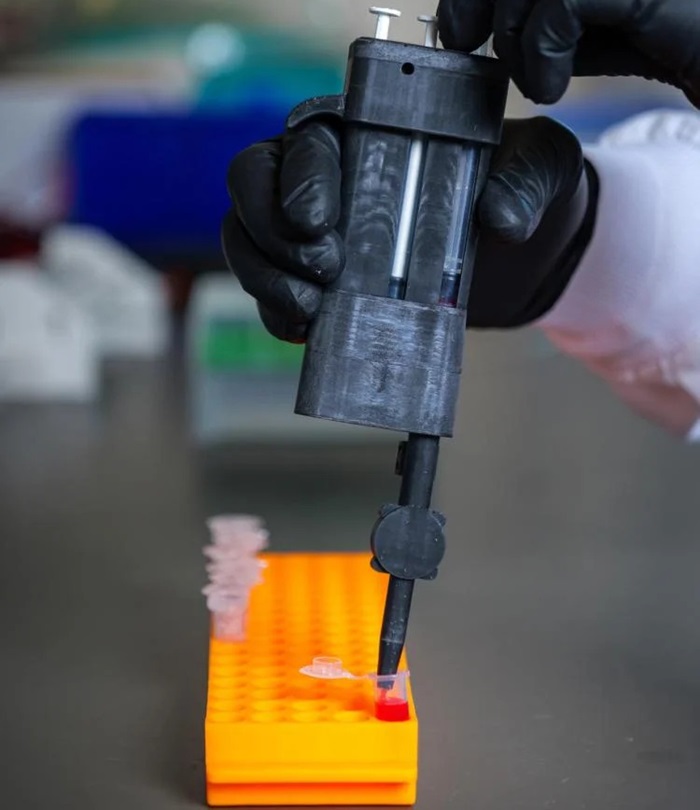
Patients who go to a doctor for a blood test often have to contend with a needle and syringe, followed by a long wait—sometimes hours or even days—for lab results. Scientists have been working hard to make diagnostic testing more accessible, especially for individuals in rural areas or developing countries, and for those who fear needles when it comes to blood tests. Existing rapid tests, known as lateral-flow assays, such as COVID tests or pregnancy tests, can quickly indicate a "yes" or "no" regarding the presence of a specific biomarker or biomolecule in blood or urine. However, these tests usually cannot quantify how much of the substance is present and often lack the sensitivity to detect very low amounts. On the other hand, the gold standard for clinical blood tests, the enzyme-linked immunosorbent assay (ELISA), is highly sensitive and specialized enough to identify rare or scarce biomarkers. However, it requires costly equipment and complex procedures, leading to delays of hours or days before patients receive their results. But all that could now change with the introduction of a new handheld, sound-based diagnostic system that can provide accurate results in just an hour using only a small finger prick of blood.
Based on systematic experiments and peer-reviewed research, researchers at the University of Colorado Boulder (Boulder, CO, USA) are developing a diagnostic tool that is sensitive, portable, and user-friendly. Their innovative components include tiny particles referred to as “functional negative acoustic contrast” particles (fNACPs) and a custom-built handheld device known as an “acoustic pipette,” which emits sound waves to the blood samples. The fNACPs, which resemble cell-sized rubber balls, are engineered with functional coatings that enable them to recognize and capture a specific biomarker of interest, such as an infectious virus or a protein associated with a potential health issue. These particles respond to sound wave pressure differently than blood cells, and the acoustic pipette is designed to take advantage of this unique response.
When a small blood sample is combined with the custom particles and placed into the acoustic pipette, sound waves push the particles to the side of a chamber where they are trapped, allowing the rest of the blood to be flushed away. The remaining biomarkers attached to the particles are then tagged with fluorescent markers and illuminated with lasers to quantify their presence. This entire process takes less than 70 minutes and is within a device small enough to fit in the palm of a hand. The pipette and particle system, detailed in a new paper published in the journal Science Advances, shows that it can provide the same level of sensitivity and specificity as a gold-standard clinical test while simplifying the workflow significantly. Future enhancements could further decrease testing time, enabling blood diagnostics to be conducted right at the patient’s bedside. This could be particularly beneficial for determining whether a patient has an infectious disease, assessing their viral load, and monitoring how quickly it increases. Additionally, the device could potentially be used to measure antibodies to establish the need for booster shots, test for allergies, or detect proteins linked to certain cancers.
“We’ve developed a technology that is very user-friendly, can be deployed in various settings, and provides valuable diagnostic information in a short time frame,” said senior author Wyatt Shields, assistant professor in the Department of Chemical and Biological Engineering at CU Boulder. “We think this has a lot of potential to address some of the longstanding challenges that have come from having to take a blood sample from a patient, haul it off to a lab and wait to get results back.”





Latest Point of Care News
Channels

Critical Care
view channel
Magnetically Guided Microrobots to Enable Targeted Drug Delivery
Stroke affects 12 million people globally each year, often causing death or lasting disability. Current treatment relies on systemic administration of clot-dissolving drugs, which circulate throughout... Read more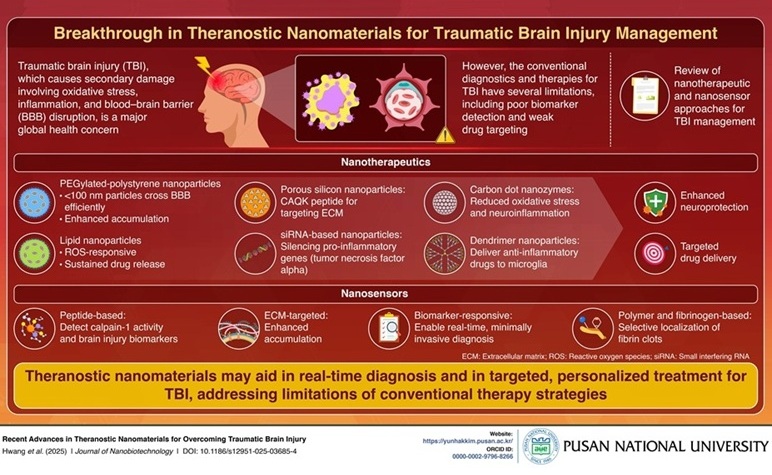
Smart Nanomaterials Detect and Treat Traumatic Brain Injuries Simultaneously
Traumatic brain injury (TBI) continues to leave millions with long-term disabilities every year. After a sudden impact from a fall, collision, or accident, the brain undergoes inflammation, oxidative stress,... Read more
Earlier Blood Transfusion Could Reduce Heart Failure and Arrhythmia in Heart Disease Patients
Blood loss during or after surgery can place significant stress on people with heart disease, increasing the risk of dangerous complications. Transfusions are often delayed until hemoglobin levels fall... Read more
Surgical Techniques
view channel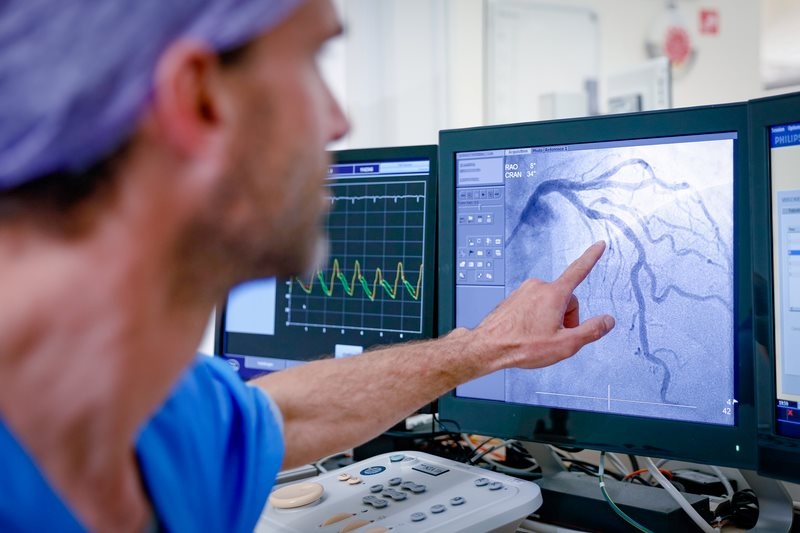
New Study Findings Could Halve Number of Stent Procedures
When a coronary artery becomes acutely blocked during a heart attack, opening it immediately is essential to prevent irreversible damage. However, many patients also have other narrowed vessels that appear... Read more
Breakthrough Surgical Device Redefines Hip Arthroscopy
Hip arthroscopy has surged in popularity, yet surgeons still face major mechanical constraints when navigating deep joint spaces through traditional cannulas. Limited tool mobility and the need for an... Read more
Patient Care
view channel
Revolutionary Automatic IV-Line Flushing Device to Enhance Infusion Care
More than 80% of in-hospital patients receive intravenous (IV) therapy. Every dose of IV medicine delivered in a small volume (<250 mL) infusion bag should be followed by subsequent flushing to ensure... Read more
VR Training Tool Combats Contamination of Portable Medical Equipment
Healthcare-associated infections (HAIs) impact one in every 31 patients, cause nearly 100,000 deaths each year, and cost USD 28.4 billion in direct medical expenses. Notably, up to 75% of these infections... Read more
Portable Biosensor Platform to Reduce Hospital-Acquired Infections
Approximately 4 million patients in the European Union acquire healthcare-associated infections (HAIs) or nosocomial infections each year, with around 37,000 deaths directly resulting from these infections,... Read more
First-Of-Its-Kind Portable Germicidal Light Technology Disinfects High-Touch Clinical Surfaces in Seconds
Reducing healthcare-acquired infections (HAIs) remains a pressing issue within global healthcare systems. In the United States alone, 1.7 million patients contract HAIs annually, leading to approximately... Read moreHealth IT
view channel
Printable Molecule-Selective Nanoparticles Enable Mass Production of Wearable Biosensors
The future of medicine is likely to focus on the personalization of healthcare—understanding exactly what an individual requires and delivering the appropriate combination of nutrients, metabolites, and... Read more

Business
view channel
Philips and Masimo Partner to Advance Patient Monitoring Measurement Technologies
Royal Philips (Amsterdam, Netherlands) and Masimo (Irvine, California, USA) have renewed their multi-year strategic collaboration, combining Philips’ expertise in patient monitoring with Masimo’s noninvasive... Read more
B. Braun Acquires Digital Microsurgery Company True Digital Surgery
The high-end microsurgery market in neurosurgery, spine, and ENT is undergoing a significant transformation. Traditional analog microscopes are giving way to digital exoscopes, which provide improved visualization,... Read more
CMEF 2025 to Promote Holistic and High-Quality Development of Medical and Health Industry
The 92nd China International Medical Equipment Fair (CMEF 2025) Autumn Exhibition is scheduled to be held from September 26 to 29 at the China Import and Export Fair Complex (Canton Fair Complex) in Guangzhou.... Read more