






Critical Care
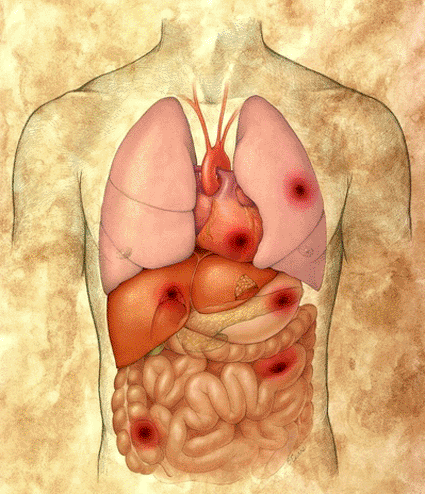
Hemoperfusion Helps Improve Outcomes for Patients with Severe Sepsis
A new study has found that therapy for severe sepsis that includes the use of an antibiotic-based hemoperfusion device results in a reduced risk of death, improved blood circulation, and reduced organ dysfunction. More...30 Jun 2009


Gold Member

SARS‑CoV‑2/Flu A/Flu B/RSV Sample-To-Answer Test
SARS‑CoV‑2/Flu A/Flu B/RSV Cartridge (CE-IVD)


Patient Preoperative Skin Preparation
BD ChloraPrep


Vessel Sealing Instrument
ERGOseal
In Other News
Packed RBC Transfusion Significantly Increases Postsurgical Morbidity and Mortality
Greater Controls Recommended for Genetic Testing
The Window of Opportunity for Effective Stroke Treatment Has Been Widened
Noninvasive Technique Monitors Fetal Heartbeat
Floating Blood Bank Helps Thousands in Africa
Wound Care Nursing Protocol Dramatically Reduces Bedsores
Possible Treatment for Insomnia
Economic Downturn Predicted to Have Severe Effects on Global Health
Positive Results on First Pacemaker Designed for Use with MRI
Unbalanced Trace Elements Found in Dialysis Patients
Single Radiotherapy Dose Effective in Relieving Pain from Bone Cancer
Skiing is Getting Safer, Resulting in Reduced Sports Injuries
Rapid Solutions for Point-of-Care Diagnostics Provided Worldwide
Positive Effects of Sunshine on Multiple Sclerosis Sufferers Seen
High-Definition Endoscopic Ultrasound Technology Enhances Diagnostic Procedures
Minimally Invasive Stroke Treatment Offers Better Results than Open Surgery
Mandatory Folic Acid Fortification Reduces Heart Defects at Birth
Dose Verification System Tracks Radiation Dose
Fast Patient-Stabilization Mobile Units to Trial in India
Long-Term Study Confirms CTA Effective for Chest Pain Diagnosis
Steroid-Like Hormone Prompts Change of Morphology in Parasitic Nematodes
ICDs Extend the Lives of Heart Attack Survivors by Over a Year
Brain's Problem-Solving Processes Found Active During Daydreams


HospiMedica Critical Care channel provides timely reporting on emergency medicine, intensive care, anesthesia, neonatal care, patient monitoring, respiratory care, infection control, and more hospital related subjects.