






Private Sector, Not Government, Will Drive EMR Usage Uptake
|
By HospiMedica International staff writers Posted on 29 Dec 2009 |


|
Vendors and hospitals that affiliate with the physicians, and not government initiatives, will ultimately determine if doctors in the United States adopt electronic medical records (EMRs), according to a new report from Kalorama Information (New York, NY, USA), a healthcare market research firm.
According to the report, solo practices or small group practice-based physicians have fewer savings to reap than large healthcare systems from the adoption of EMRs, and the change in their workflow will likely reduce short-term productivity when they make the switch. The announcement of U.S. government incentives of up to US$18,000 in increased Medicare payments to doctors for the meaningful use of EMR has created interest among physicians; but these incentives represent future payouts for EMR systems that physicians have to pay for immediately, at a time when patients are paying bills slower, expenses are rising, and some physicians are reducing staff, all factors that explain why surveys indicate low usage of EMR among U.S. physicians.
To encourage implementation of EMR among these smaller practices, health systems and hospital are offering subsidies of up to $40,000 over five years to physicians who implement EMR systems. Some of the healthcare systems adopting these strategies are Tufts Medical Center (Boston, MA, USA), Beth Israel Deaconess (Boston, MA, USA), and North Shore – Long Island Jewish Health System (New York, NY, USA); Kalorama information predicts that these initiatives will be emulated by other health systems.
The report also notes that vendor actions have enhanced the effect of government incentives. Stimulus guarantees, where the vendor assures the customer that the system will earn stimulus incentives from the U.S. Centers for Medicare and Medicaid Services (CMS; Baltimore, MD, USA), have garnered interest. Athena Health, ChartLogic, e-MDs, and GE Healthcare are among the vendors who have adopted some form of this strategy. Given the precarious state of some physician practices, Kalorama Information expects vendors to go further, offering aggressive financing and installment of the capital outlay to attract small group practices.
"There's a lot of focus right now on the incentives, but we think what vendors and health systems do to piggyback off these incentives is even more important,” said Bruce Carlson, publisher of Kalorama Information. "A body at rest stays at rest unless acted upon by an outside force. We think that hospitals and large health systems will need to have parallel incentives in order for the EMR concept to happen in a meaningful way.”
Kalorama Information has found that the EMR market will come in at $13.8 billion for 2009, which is not up to its full potential.
Related Links:
Kalorama Information
Tufts Medical Center
Beth Israel Deaconess
U.S. Centers for Medicare and Medicaid Services




According to the report, solo practices or small group practice-based physicians have fewer savings to reap than large healthcare systems from the adoption of EMRs, and the change in their workflow will likely reduce short-term productivity when they make the switch. The announcement of U.S. government incentives of up to US$18,000 in increased Medicare payments to doctors for the meaningful use of EMR has created interest among physicians; but these incentives represent future payouts for EMR systems that physicians have to pay for immediately, at a time when patients are paying bills slower, expenses are rising, and some physicians are reducing staff, all factors that explain why surveys indicate low usage of EMR among U.S. physicians.
To encourage implementation of EMR among these smaller practices, health systems and hospital are offering subsidies of up to $40,000 over five years to physicians who implement EMR systems. Some of the healthcare systems adopting these strategies are Tufts Medical Center (Boston, MA, USA), Beth Israel Deaconess (Boston, MA, USA), and North Shore – Long Island Jewish Health System (New York, NY, USA); Kalorama information predicts that these initiatives will be emulated by other health systems.
The report also notes that vendor actions have enhanced the effect of government incentives. Stimulus guarantees, where the vendor assures the customer that the system will earn stimulus incentives from the U.S. Centers for Medicare and Medicaid Services (CMS; Baltimore, MD, USA), have garnered interest. Athena Health, ChartLogic, e-MDs, and GE Healthcare are among the vendors who have adopted some form of this strategy. Given the precarious state of some physician practices, Kalorama Information expects vendors to go further, offering aggressive financing and installment of the capital outlay to attract small group practices.
"There's a lot of focus right now on the incentives, but we think what vendors and health systems do to piggyback off these incentives is even more important,” said Bruce Carlson, publisher of Kalorama Information. "A body at rest stays at rest unless acted upon by an outside force. We think that hospitals and large health systems will need to have parallel incentives in order for the EMR concept to happen in a meaningful way.”
Kalorama Information has found that the EMR market will come in at $13.8 billion for 2009, which is not up to its full potential.
Related Links:
Kalorama Information
Tufts Medical Center
Beth Israel Deaconess
U.S. Centers for Medicare and Medicaid Services

New
Gold Member
Handheld Blood Glucose Analyzer
STAT-Site
New
Monitor/Defibrillator
Zenix
New
Surgical System
Stealth AXiS
Latest Business News
- External Liver Assist System Receives FDA RMAT Designation
- New Partnership Expands Access to Predictive Tool for Patient Monitoring
- GE HealthCare Leads Major European Initiative to Advance Cardio-Oncology Care
- Medtronic and GE HealthCare Broaden Alliance Across Monitoring and Care Solutions
- Quantum Surgical Acquires NeuWave from Johnson & Johnson
- Medtronic to Acquire Coronary Artery Medtech Company CathWorks
- Medtronic and Mindray Expand Strategic Partnership to Ambulatory Surgery Centers in the U.S.
- FDA Clearance Expands Robotic Options for Minimally Invasive Heart Surgery
- WHX in Dubai (formerly Arab Health) to debut specialised Biotech & Life Sciences Zone as sector growth accelerates globally
- WHX in Dubai (formerly Arab Health) to bring together key UAE government entities during the groundbreaking 2026 edition
- Interoperability Push Fuels Surge in Healthcare IT Market
- Philips and Masimo Partner to Advance Patient Monitoring Measurement Technologies
- B. Braun Acquires Digital Microsurgery Company True Digital Surgery
- CMEF 2025 to Promote Holistic and High-Quality Development of Medical and Health Industry
- Bayer and Broad Institute Extend Research Collaboration to Develop New Cardiovascular Therapies
- Medtronic Partners with Corsano to Expand Acute Care & Monitoring Portfolio in Europe
Channels
Artificial Intelligence
view channel
Algorithm Identifies Cardiac Arrest Hotspots to Guide AED Placement
Out-of-hospital sudden cardiac arrest is common and usually fatal, and survival depends on rapid defibrillation. Many communities deploy automated external defibrillators without precise guidance, which... Read more
AI Analysis of Pericardial Fat Refines Long-Term Heart Disease Risk
Accurately identifying long-term cardiovascular disease risk in asymptomatic adults remains challenging for clinicians. Missed or underestimated risk delays preventive therapy and increases the chance... Read more

Critical Care
view channel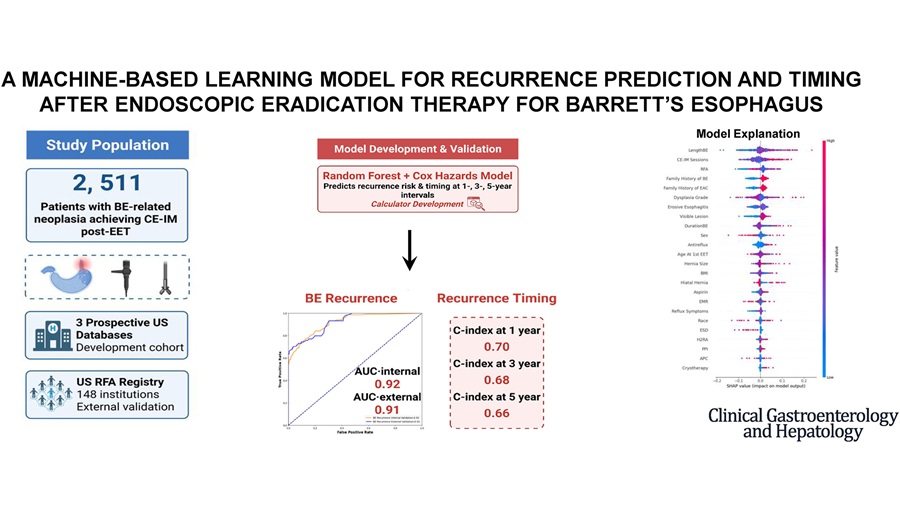
AI Tool Predicts Post-Therapy Barrett’s Esophagus Recurrence
Barrett’s esophagus (BE) is the only known precursor to esophageal adenocarcinoma, an aggressive cancer with high mortality. After endoscopic eradication therapy, disease can recur, making long-term surveillance... Read more
New Technology Turns Earbuds into Sensors for Cardiac Function Tracking
Continuous assessment of cardiac mechanics outside the clinic remains difficult because existing tools often require chest-mounted sensors and brief, supervised recordings. Missed early changes in valve... Read more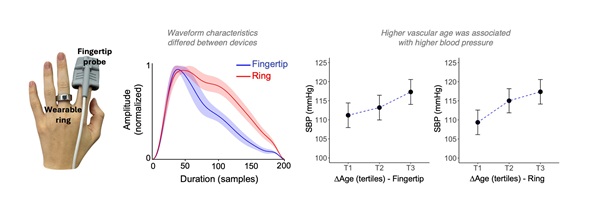
Surgical Techniques
view channel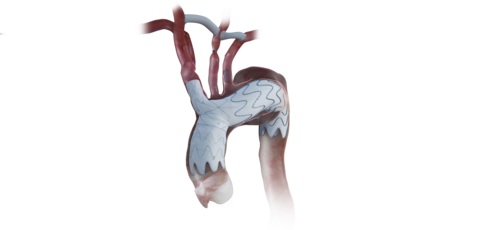
Endovascular Stent Graft Enables Minimally Invasive Aortic Arch Repair
Open repair of aortic arch disease is complex and carries substantial risk for patients with significant comorbidities. Many individuals are not candidates for surgery, and endovascular options for this... Read more
Dynamic Pressure Overlay Reduces Perioperative Pressure Injuries
Perioperative pressure injuries are a persistent risk during long procedures, particularly when repositioning is limited. Time in the operating room beyond two hours is cited as an intrinsic risk factor,... Read more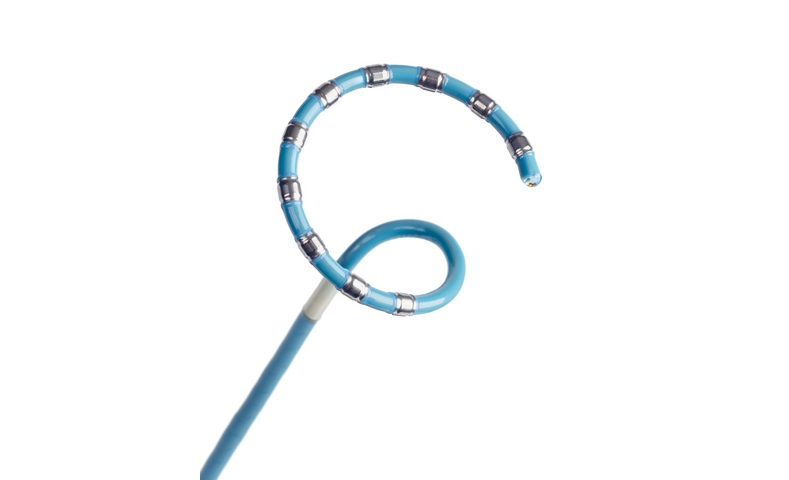
Pulsed Field Ablation System Streamlines Atrial Fibrillation Procedures
Atrial fibrillation is the most common cardiac arrhythmia, affecting more than 50 million people worldwide and straining capacity for rhythm-control procedures. Electrophysiology teams continue to seek... Read more
Single-Use System Enables Minimally Invasive Decompression for Lumbar Spinal Stenosis
Lumbar spinal stenosis is frequently driven by hypertrophic bone that narrows the canal and produces pain. Conventional decompression often relies on larger incisions and bulky retractors, adding time,... Read morePatient Care
view channel
Wearable Sleep Data Predict Adherence to Pulmonary Rehabilitation
Chronic obstructive pulmonary disease (COPD) is a long-term lung disorder that makes breathing difficult and often disturbs sleep, reducing energy for daily activities. Limited engagement in pulmonary... Read more
Revolutionary Automatic IV-Line Flushing Device to Enhance Infusion Care
More than 80% of in-hospital patients receive intravenous (IV) therapy. Every dose of IV medicine delivered in a small volume (<250 mL) infusion bag should be followed by subsequent flushing to ensure... Read more

Health IT
view channel
Automated System Classifies and Tracks Cardiogenic Shock Across Hospital Settings
Cardiogenic shock remains a difficult, time-sensitive emergency, with delayed identification driving poor outcomes and persistently high mortality. Many cases go undocumented even at advanced stages, hindering... Read more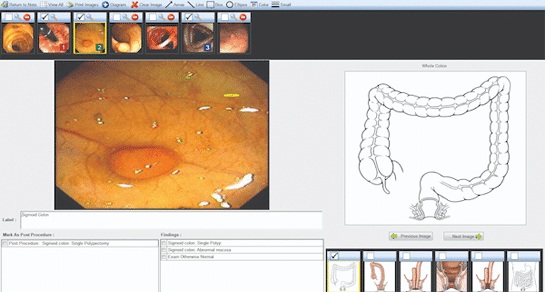
Voice-Driven AI System Enables Structured GI Procedure Documentation
Documentation during gastrointestinal (GI) procedures often competes with real-time clinical decision-making and imposes a significant cognitive burden on physicians. Manual data entry and post-procedure... Read more
EMR-Based Tool Predicts Graft Failure After Kidney Transplant
Kidney transplantation offers patients with end-stage kidney disease longer survival and better quality of life than dialysis, yet graft failure remains a major challenge. Although a successful transplant... Read more
