Most Errors at Hospitals Go Unreported
|
By HospiMedica International staff writers Posted on 18 Jan 2012 |


|
Hospital employees recognize and report only one out of seven errors, accidents, and other events that harm Medicare patients while they are hospitalized, according to a new report.
The report, issued by the Office of Inspector General (OIG) in the US Department of Health and Human Services (HHS; Washington DC, USA) analyzed the records of 780 Medicare patients with a combined 838 hospital stays with discharges in October 2008. The researchers focused on 174 temporary-harm events and 128 adverse events in this patient sample, for a grand total of 302 events. The adverse events had to meet least 1 of 3 criteria; they had to appear on the list of serious reportable events compiled by the US National Quality Forum, or on the list of hospital-acquired "never" conditions no longer reimbursed by Medicare, or else result in a prolonged hospital stay, permanent harm, life-sustaining interventions, or death.
The OIG then requested incident reports from the 195 hospitals associated with the 302 events and received responses from 189 hospitals on 293 events. All 189 hospitals operated incident-reporting systems in addition to specialized ones for tracking infections, pharmacy errors, and etcetera. Hospital administrators interviewed for the study said that employees were instructed to report instances of patient harm, and that they typically received training on how to report specific types of problems. In all, only 40 (14%) of the 189 adverse and temporary-harm events were captured by the incident reporting systems at 34 hospitals; the other 86% went unreported. For most of these unreported events (62%), hospital staff probably did not consider them reportable, according to hospital administrators.
Some of the reasons given for the lapse in reporting were that the event was not caused by a perceptible error; that the event was an expected outcome or adverse effect; that the harm involved was minor, ameliorated, or both; or that the event was not on the hospital's mandatory reporting list. The rest of the unreported events, or roughly 25% of the total, were ones that hospital staff commonly reported but in these instances did not. Administrators said that limited time and the assumption that somebody else would report the event could be the reasons.
“Despite the existence of incident reporting systems, hospital staff did not report most events that harmed Medicare beneficiaries,” said Inspector General Daniel Levinson. “Some of the most serious problems, including some that caused patients to die, were not reported.”
The OIG study therefore recommends that the Centers for Medicare and Medicaid Services (CMS; Baltimore, MD, USA) collaborate with the US federal Agency for Healthcare Research and Quality (AHRQ; Rockville, MD, USA) to develop a master list of potentially reportable events that hospitals and other healthcare providers can use to eliminate any confusion or uncertainty about what constitutes patient harm. In addition, CMS should provide guidance to organizations that survey or accredit hospitals on assessing incident reporting systems and the use of the master list.
Related Links:
US Department of Health and Human Services
Centers for Medicare and Medicaid Services
Agency for Healthcare Research and Quality





The report, issued by the Office of Inspector General (OIG) in the US Department of Health and Human Services (HHS; Washington DC, USA) analyzed the records of 780 Medicare patients with a combined 838 hospital stays with discharges in October 2008. The researchers focused on 174 temporary-harm events and 128 adverse events in this patient sample, for a grand total of 302 events. The adverse events had to meet least 1 of 3 criteria; they had to appear on the list of serious reportable events compiled by the US National Quality Forum, or on the list of hospital-acquired "never" conditions no longer reimbursed by Medicare, or else result in a prolonged hospital stay, permanent harm, life-sustaining interventions, or death.
The OIG then requested incident reports from the 195 hospitals associated with the 302 events and received responses from 189 hospitals on 293 events. All 189 hospitals operated incident-reporting systems in addition to specialized ones for tracking infections, pharmacy errors, and etcetera. Hospital administrators interviewed for the study said that employees were instructed to report instances of patient harm, and that they typically received training on how to report specific types of problems. In all, only 40 (14%) of the 189 adverse and temporary-harm events were captured by the incident reporting systems at 34 hospitals; the other 86% went unreported. For most of these unreported events (62%), hospital staff probably did not consider them reportable, according to hospital administrators.
Some of the reasons given for the lapse in reporting were that the event was not caused by a perceptible error; that the event was an expected outcome or adverse effect; that the harm involved was minor, ameliorated, or both; or that the event was not on the hospital's mandatory reporting list. The rest of the unreported events, or roughly 25% of the total, were ones that hospital staff commonly reported but in these instances did not. Administrators said that limited time and the assumption that somebody else would report the event could be the reasons.
“Despite the existence of incident reporting systems, hospital staff did not report most events that harmed Medicare beneficiaries,” said Inspector General Daniel Levinson. “Some of the most serious problems, including some that caused patients to die, were not reported.”
The OIG study therefore recommends that the Centers for Medicare and Medicaid Services (CMS; Baltimore, MD, USA) collaborate with the US federal Agency for Healthcare Research and Quality (AHRQ; Rockville, MD, USA) to develop a master list of potentially reportable events that hospitals and other healthcare providers can use to eliminate any confusion or uncertainty about what constitutes patient harm. In addition, CMS should provide guidance to organizations that survey or accredit hospitals on assessing incident reporting systems and the use of the master list.
Related Links:
US Department of Health and Human Services
Centers for Medicare and Medicaid Services
Agency for Healthcare Research and Quality

Gold Member
Handheld Blood Glucose Analyzer
STAT-Site
Gold Member
SARS‑CoV‑2/Flu A/Flu B/RSV Sample-To-Answer Test
SARS‑CoV‑2/Flu A/Flu B/RSV Cartridge (CE-IVD)
POC Respiratory/Sore Throat Test
BIOFIRE SPOTFIRE (R/ST) Panel
Monitor/Defibrillator
Zenix
Latest Critical Care News
- Home Blood Pressure Telemonitoring Linked to Fewer Cardiovascular Events
- Tiny Wearable Patch Tracks Heart and Respiratory Changes at Home
- Smartphone Heart Rhythm App Reduces Unnecessary Cardioversion Procedures
- AI-Guided Mammogram Triage Speeds Same-Day Breast Cancer Workup
- Handheld ECG Algorithm Shows Promise for At-Home Heart Attack Risk Assessment
- Bedside CSF Monitor Detects Early Infection in Fluid Drains
- Wearable Ultrasound Patch Noninvasively Paces Heart to Stabilize Arrhythmias
- New Practice Guidance Supports Prostatic Artery Embolization for BPH Symptoms
- AI ECG Tool Detects Cardiac Amyloidosis for Early Screening
- Cuffless Wearable Enables Continuous Blood Pressure Monitoring for Hypertension Care
- AI-Guided System Supports Cardiac Ultrasound Training on Cart-Based Systems
- AI ECG Index Tracks Pubertal Maturation in Children and Adolescents
- Noninvasive AI Tool Enables Pressure-Guided Heart Failure Management
- Regenerative Therapies Aim to Support Recovery After Traumatic Brain Injury
- Ring-Type Cuffless Monitor Becomes First Added to Official Hypertension Guidelines
- “Intelligent Tattoo” Method Detects Early Melanoma Signals
Channels
Artificial Intelligence
view channel
AI Platform Supports Noninvasive Remote Hemodynamic Monitoring in Heart Failure
Heart failure remains a leading cause of hospitalization in adults over 65, affecting more than 6.7 million people in the U.S. Clinicians often lose visibility into hemodynamic deterioration once patients... Read more
AI Tool Predicts Unplanned Care and Symptom Burden in Cancer Survivors
Unplanned emergency visits and hospitalizations remain common in cancer survivorship, when routine clinical contact often tapers while new symptoms emerge. These events reflect unmet needs and disrupt... Read more

Surgical Techniques
view channel
Expandable Lumbar Fusion System Gains FDA 510(k) Clearance
Xenix Medical (Orlando, FL, USA) has received U.S. Food and Drug Administration 510(k) clearance and initiated full commercial launch of the Lux Expandable Lumbar Interbody Fusion System.... Read more
New CAR T-Cell Therapy Enables Transplants in Hard-to-Match Kidney Patients
Highly sensitized kidney transplant candidates have extremely high levels of anti-donor antibodies that block matching and prolong dialysis. These patients face long wait times and increased morbidity... Read more

Patient Care
view channel
AI Avatar Doctor Improves Patient Understanding Before Radiotherapy
Radiation oncology consultations require patients to grasp complex concepts quickly, yet anxiety and information overload often undermine understanding and informed consent. Poor comprehension can also... Read more
Wearable Sleep Data Predict Adherence to Pulmonary Rehabilitation
Chronic obstructive pulmonary disease (COPD) is a long-term lung disorder that makes breathing difficult and often disturbs sleep, reducing energy for daily activities. Limited engagement in pulmonary... Read more

Health IT
view channel
AI-Native EHR Achieves EU Medical Device Certification
InterSystems (Boston, MA, USA) announced that its IntelliCare electronic health record (EHR) solutions have been certified as Class IIa medical devices under the European Union Medical Device Regulation... Read more
EHR-Integrated Screening Workflow Detects Cognitive Impairment at Admission
Cognitive impairment involves difficulties with thinking, learning, memory, and decision-making, and is more common in older adults. In U.S. hospitals, more than 40% of admitted older adults have dementia,... Read more

Point of Care
view channel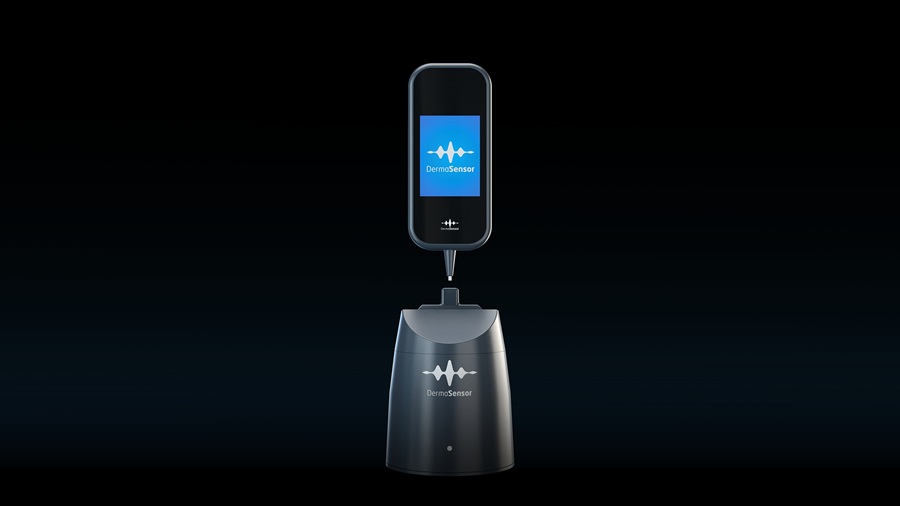
Handheld AI Device for Point-of-Care Skin Lesion Assessment Receives CE Mark
DermaSensor (Miami, FL, USA) has received a Class IIb CE Mark for its handheld DermaSensor device, marking the start of the company’s global expansion strategy. The certification demonstrates conformity... Read more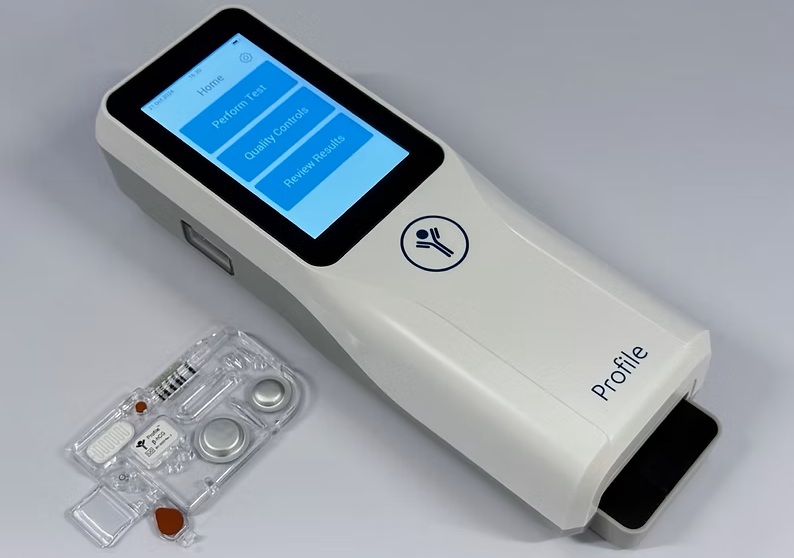
Portable Immunoassay System Advances Toward Point-of-Care Biomarker Testing
Proxim Diagnostics Corp. (Santa Clara, CA, USA) has announced that its Profile System, a handheld point-of-care immunoassay platform, has completed development. The milestone includes completion... Read more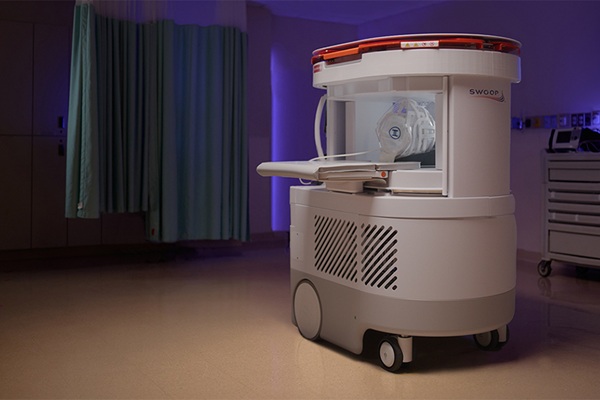
Portable MRI System Accelerates Emergency Brain Imaging and Triage
Emergency departments frequently face delays accessing conventional magnetic resonance imaging (MRI) for patients with suspected neurological emergencies. Such waits can slow triage, prolong boarding,... Read more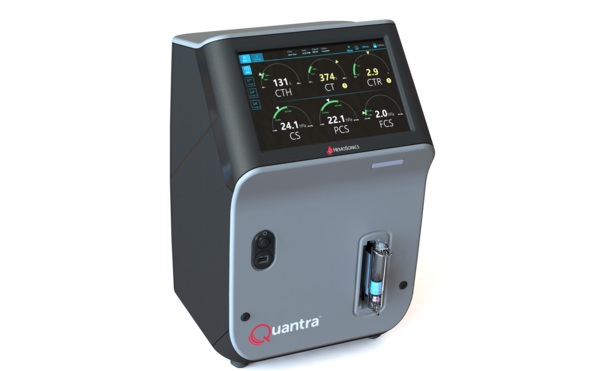
Point-of-Care Viscoelastic Testing System Supports Obstetric Bleeding Management
HemoSonics (Durham, NC, USA) announced on May 5, 2026 that the company's Quantra Hemostasis System for Obstetric Procedures won Silver in the 2026 Edison Awards in the Women’s Health and Reproductive Innovations... Read moreBusiness
view channel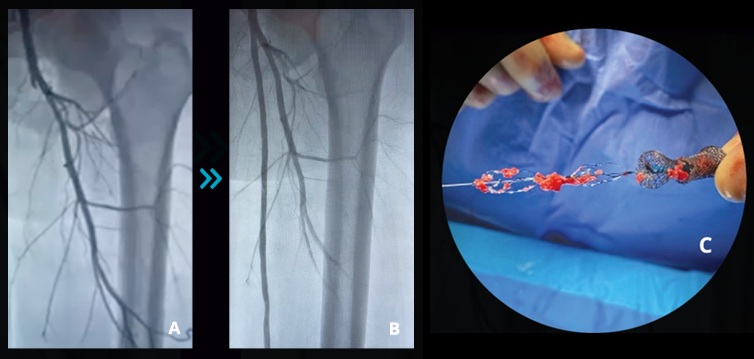
Endologix Adds FDA-Cleared Peripheral Thrombectomy System
Endologix (Santa Rosa, CA, USA) has acquired the Pounce Thrombectomy System from Surmodics, with the transaction closing on May 18, 2026. The FDA-cleared system is indicated for the non-surgical removal... Read more