






Implantable Nerve Stimulator Helps Alleviate OSA Symptoms
|
By HospiMedica International staff writers Posted on 21 Jun 2016 |


|
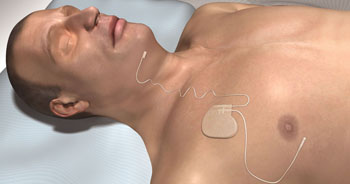
Image: The Inspire Upper Airway Stimulation device (Photo courtesy of Inspire Medical Systems).
Innovative hypoglossal nerve stimulation (HGNS) implants offers promise for patients with moderate to severe obstructive sleep apnea (OSA).
Researchers at the University of Pennsylvania (Penn; Philadelphia, USA) conducted a study involving 20 patients who were implanted with the Inspire Upper Airway Stimulation device, as they were unable to tolerate continuous positive airway pressure (CPAP) treatment for OSA. All patients had information from a baseline polysomnography (PSG) recording prior to HGNS implant and again approximately two months after HGNS in order to assess the severity of their apnea and any change after treatment. Those who received the implant were typically overweight, middle aged, and had severe OSA.
The results showed that total apnea-hypopnea index (AHI)--which measures severity of sleep apnea by counting the number of pauses in breathing during sleep--for all patients significantly decreased an average of 35 events per hour after the device was planted, which corresponds to an average reduction of 84%. Additionally, the lowest oxygen level measured in the blood during the night significantly increased by 11%, from 79% to 90%. The study was presented at the 30th annual meeting of the Associated Professional Sleep Societies (SLEEP), held during June 2016 in Denver (CO, USA).
“Considering that sleep apnea can lead to high blood pressure, heart attack, stroke, and other serious health problems, it is critically important that we study devices that may serve as another option instead of CPAP to treat patients with sleep apnea,” said lead author Richard Schwab, MD, co-medical director of the Penn Sleep Center. “There is no perfect treatment option for obstructive sleep apnea, but our preliminary data suggest that hypoglossal nerve stimulation can effectively treat patients with sleep apnea who are unable to tolerate CPAP.”
The Inspire Upper Airway Stimulation device, a product of Inspire Medical Systems (Maple Grove, MN, USA), is a pacemaker with a tiny generator and a sensing lead to stimulate the tongue. Patients use a remote control to turn on the device before going to sleep and turn it off upon waking up. A delay allows the user to fall asleep before the pulse generator begins stimulation. After detecting the user's breathing pattern, the machine stimulates the hypoglossal nerve, which controls tongue motion to enlarge the upper airway.
Related Links:
University of Pennsylvania
Inspire Medical Systems






Researchers at the University of Pennsylvania (Penn; Philadelphia, USA) conducted a study involving 20 patients who were implanted with the Inspire Upper Airway Stimulation device, as they were unable to tolerate continuous positive airway pressure (CPAP) treatment for OSA. All patients had information from a baseline polysomnography (PSG) recording prior to HGNS implant and again approximately two months after HGNS in order to assess the severity of their apnea and any change after treatment. Those who received the implant were typically overweight, middle aged, and had severe OSA.
The results showed that total apnea-hypopnea index (AHI)--which measures severity of sleep apnea by counting the number of pauses in breathing during sleep--for all patients significantly decreased an average of 35 events per hour after the device was planted, which corresponds to an average reduction of 84%. Additionally, the lowest oxygen level measured in the blood during the night significantly increased by 11%, from 79% to 90%. The study was presented at the 30th annual meeting of the Associated Professional Sleep Societies (SLEEP), held during June 2016 in Denver (CO, USA).
“Considering that sleep apnea can lead to high blood pressure, heart attack, stroke, and other serious health problems, it is critically important that we study devices that may serve as another option instead of CPAP to treat patients with sleep apnea,” said lead author Richard Schwab, MD, co-medical director of the Penn Sleep Center. “There is no perfect treatment option for obstructive sleep apnea, but our preliminary data suggest that hypoglossal nerve stimulation can effectively treat patients with sleep apnea who are unable to tolerate CPAP.”
The Inspire Upper Airway Stimulation device, a product of Inspire Medical Systems (Maple Grove, MN, USA), is a pacemaker with a tiny generator and a sensing lead to stimulate the tongue. Patients use a remote control to turn on the device before going to sleep and turn it off upon waking up. A delay allows the user to fall asleep before the pulse generator begins stimulation. After detecting the user's breathing pattern, the machine stimulates the hypoglossal nerve, which controls tongue motion to enlarge the upper airway.
Related Links:
University of Pennsylvania
Inspire Medical Systems

New
Gold Member
Neonatal Heel Incision Device
Tenderfoot
New
POC Respiratory/Sore Throat Test
BIOFIRE SPOTFIRE (R/ST) Panel
New
Medical Adhesive
MED 5570U
Latest Surgical Techniques News
- Ultrasound Technology Aims to Replace Invasive BPH Procedures
- Continuous Monitoring with Wearables Enhances Postoperative Patient Safety
- New Approach Enables Customized Muscle Tissue Without Biomaterial Scaffolds
- Robot-Assisted Brain Angiography Improves Procedural Outcomes
- Brain Mapping Technology Enhances Precision in Brain Tumor Resection
- Handheld Robotic System Expands Options for Total Knee Surgery
- VR Experience Reduces Patient Anxiety Before Kidney Stone Procedure
- Injectable Mini Livers Offer Hope for Patients Awaiting Transplant
- Pulsed Field Ablation Technology Cleared in Europe for Persistent AFib
- AI-Powered Imaging Brings Real-Time Margin Clarity to Breast Cancer Surgery
- Minimally Invasive Device Safely Treats Challenging Brain Aneurysms
- Surgical Robot Makes Complex Liver Tumor Surgery Safer and Less Invasive
- Neurostimulation Implant Reduces Seizure Burden in Drug-Resistant Epilepsy
- Minimally Invasive Procedure Effectively Treats Small Kidney Cancers
- Fluorescence Probe Paired with Engineered Enzymes Lights Up Tumors for Easier Surgical Removal
- Novel Hydrogel Could Become Bone Implant of the Future
Channels
Artificial Intelligence
view channel
AI Analysis of Pericardial Fat Refines Long-Term Heart Disease Risk
Accurately identifying long-term cardiovascular disease risk in asymptomatic adults remains challenging for clinicians. Missed or underestimated risk delays preventive therapy and increases the chance... Read more
Machine Learning Approach Enhances Liver Cancer Risk Stratification
Hepatocellular carcinoma, the most common form of primary liver cancer, is often detected late despite targeted surveillance programs. Current screening guidelines emphasize patients with known cirrhosis,... Read more

Critical Care
view channel
Noninvasive Monitoring Device Enables Earlier Intervention in Heart Failure
Hospitalizations for heart failure with preserved ejection fraction (HFpEF) remain common because lung congestion often worsens before symptoms prompt treatment changes. Missed early decompensation... Read more
Automated IV Labeling Solution Improves Infusion Safety and Efficiency
Medication administration in high-acuity settings is often complicated by multiple concurrent infusions, making accurate line identification essential. In a 10-hospital intensive care unit study, 60% of... Read more

Patient Care
view channel
Wearable Sleep Data Predict Adherence to Pulmonary Rehabilitation
Chronic obstructive pulmonary disease (COPD) is a long-term lung disorder that makes breathing difficult and often disturbs sleep, reducing energy for daily activities. Limited engagement in pulmonary... Read more
Revolutionary Automatic IV-Line Flushing Device to Enhance Infusion Care
More than 80% of in-hospital patients receive intravenous (IV) therapy. Every dose of IV medicine delivered in a small volume (<250 mL) infusion bag should be followed by subsequent flushing to ensure... Read more

Health IT
view channel
EMR-Based Tool Predicts Graft Failure After Kidney Transplant
Kidney transplantation offers patients with end-stage kidney disease longer survival and better quality of life than dialysis, yet graft failure remains a major challenge. Although a successful transplant... Read more
Printable Molecule-Selective Nanoparticles Enable Mass Production of Wearable Biosensors
The future of medicine is likely to focus on the personalization of healthcare—understanding exactly what an individual requires and delivering the appropriate combination of nutrients, metabolites, and... Read more


Business
view channel
GE HealthCare Leads Major European Initiative to Advance Cardio-Oncology Care
Cardiovascular complications are increasingly recognized among people undergoing or recovering from cancer treatment, driven by pre‑existing disease and the cardiotoxic effects of chemotherapy, radiotherapy,... Read more

