






CPAP Tracker App Increases Treatment Compliance Rates
|
By HospiMedica International staff writers Posted on 31 Aug 2016 |


|
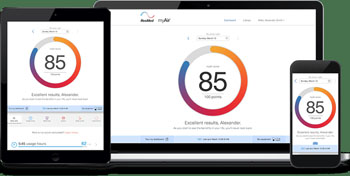
Image: Screenshots of the myAir application (Photo courtesy of ResMed).
A new, easy-to-use online app for sleep apnea patients helps them achieve optimum continuous positive airway pressure (CPAP) therapy.
The ResMed (San Diego, CA, USA) myAir application delivers a daily “myAir score” to users every morning, showing how long they slept on CPAP, how many apneas they had per hour, and how well their CPAP mask fit. The app also provides personalized tips for greater comfort and sleep, and badges when users reach milestones in their therapy. The data can also help doctors and care providers sort and prioritize support concerns, and also know who is doing well with their CPAP compliance.
Compliant CPAP is key for patients to effectively treat their obstructive sleep apnea (OSA), and according to a company statement, 84% of myAir users are compliant on CPAP within 90 days, compared to an average 50% compliant rate achieved by CPAP users without the app. The myAir web application, which is compatible with the ResMed Air10, AirSense, and AirCurve machines, is currently available only for iPhone or other Apple devices users. Roughly 900 patients a day are signing up for the service.
“We have seen increased rates of patient engagement and satisfaction by integrating myAir into their treatment plans,” said Raj Sodhi, president of healthcare informatics at ResMed. “Now it’s even easier for patients to engage with their therapy, thanks to the added convenience of an iPhone app.”
“myAir helps my patients be more engaged with their therapy and achieve better health outcomes,” said Jennifer Wilkymacky-Wormald, clinical and marketing manager for ATI CPAP Solutions (Crestview Hills, KY, USA). “Plus, it helps our office run more efficiently. The more patients who achieve CPAP compliance, the more time we have to focus on patients who still need extra support.”
Sleep apnea is a condition of chronic airway obstruction during sleep, potentially leading to high blood pressure, cardiovascular disease, memory problems, weight gain, impotency, and headaches. Major include obstructive sleep apnea (OSA), frequently found in obese and aged individuals with low muscle tone and excessive soft tissue around the airway; central apnea, an imbalance in the brain’s respiratory control center that leads to a delayed neurological response to carbon dioxide (CO2) blood levels; and mixed apnea, a combination of both. CPAP is the most commonly prescribed treatment, involving a mask worn during sleep that pumps air to help prevent the airway from closing.
Related Links:
ResMed




The ResMed (San Diego, CA, USA) myAir application delivers a daily “myAir score” to users every morning, showing how long they slept on CPAP, how many apneas they had per hour, and how well their CPAP mask fit. The app also provides personalized tips for greater comfort and sleep, and badges when users reach milestones in their therapy. The data can also help doctors and care providers sort and prioritize support concerns, and also know who is doing well with their CPAP compliance.
Compliant CPAP is key for patients to effectively treat their obstructive sleep apnea (OSA), and according to a company statement, 84% of myAir users are compliant on CPAP within 90 days, compared to an average 50% compliant rate achieved by CPAP users without the app. The myAir web application, which is compatible with the ResMed Air10, AirSense, and AirCurve machines, is currently available only for iPhone or other Apple devices users. Roughly 900 patients a day are signing up for the service.
“We have seen increased rates of patient engagement and satisfaction by integrating myAir into their treatment plans,” said Raj Sodhi, president of healthcare informatics at ResMed. “Now it’s even easier for patients to engage with their therapy, thanks to the added convenience of an iPhone app.”
“myAir helps my patients be more engaged with their therapy and achieve better health outcomes,” said Jennifer Wilkymacky-Wormald, clinical and marketing manager for ATI CPAP Solutions (Crestview Hills, KY, USA). “Plus, it helps our office run more efficiently. The more patients who achieve CPAP compliance, the more time we have to focus on patients who still need extra support.”
Sleep apnea is a condition of chronic airway obstruction during sleep, potentially leading to high blood pressure, cardiovascular disease, memory problems, weight gain, impotency, and headaches. Major include obstructive sleep apnea (OSA), frequently found in obese and aged individuals with low muscle tone and excessive soft tissue around the airway; central apnea, an imbalance in the brain’s respiratory control center that leads to a delayed neurological response to carbon dioxide (CO2) blood levels; and mixed apnea, a combination of both. CPAP is the most commonly prescribed treatment, involving a mask worn during sleep that pumps air to help prevent the airway from closing.
Related Links:
ResMed

Gold Member
SARS‑CoV‑2/Flu A/Flu B/RSV Sample-To-Answer Test
SARS‑CoV‑2/Flu A/Flu B/RSV Cartridge (CE-IVD)
New
Syringe Pump
SP50 Series
New
Medical-Grade Display
HL2316SHTB
Channels
Artificial Intelligence
view channel
AI Analysis of Pericardial Fat Refines Long-Term Heart Disease Risk
Accurately identifying long-term cardiovascular disease risk in asymptomatic adults remains challenging for clinicians. Missed or underestimated risk delays preventive therapy and increases the chance... Read more
Machine Learning Approach Enhances Liver Cancer Risk Stratification
Hepatocellular carcinoma, the most common form of primary liver cancer, is often detected late despite targeted surveillance programs. Current screening guidelines emphasize patients with known cirrhosis,... Read more

Critical Care
view channel
Noninvasive Monitoring Device Enables Earlier Intervention in Heart Failure
Hospitalizations for heart failure with preserved ejection fraction (HFpEF) remain common because lung congestion often worsens before symptoms prompt treatment changes. Missed early decompensation... Read more
Automated IV Labeling Solution Improves Infusion Safety and Efficiency
Medication administration in high-acuity settings is often complicated by multiple concurrent infusions, making accurate line identification essential. In a 10-hospital intensive care unit study, 60% of... Read more

Surgical Techniques
view channel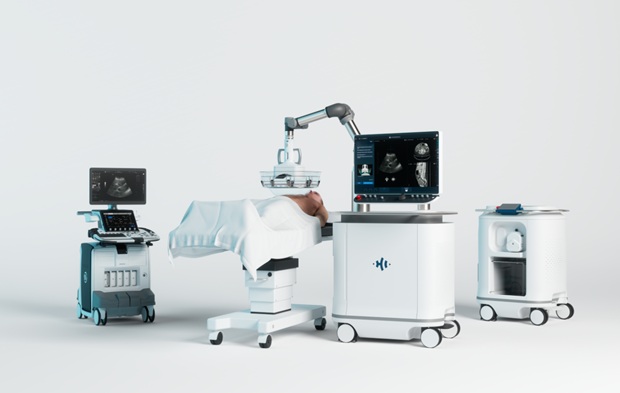
Ultrasound Technology Aims to Replace Invasive BPH Procedures
Benign prostatic hyperplasia (BPH) is a frequent cause of lower urinary tract symptoms in aging men and often requires invasive procedures or prolonged recovery. With prevalence expected to rise as populations... Read more
Continuous Monitoring with Wearables Enhances Postoperative Patient Safety
Postoperative hypoxemia on general surgical wards is common and often missed by intermittent vital sign checks. Undetected low oxygen levels can delay recovery and raise the risk of complications that... Read more

Patient Care
view channel
Wearable Sleep Data Predict Adherence to Pulmonary Rehabilitation
Chronic obstructive pulmonary disease (COPD) is a long-term lung disorder that makes breathing difficult and often disturbs sleep, reducing energy for daily activities. Limited engagement in pulmonary... Read more
Revolutionary Automatic IV-Line Flushing Device to Enhance Infusion Care
More than 80% of in-hospital patients receive intravenous (IV) therapy. Every dose of IV medicine delivered in a small volume (<250 mL) infusion bag should be followed by subsequent flushing to ensure... Read more


Business
view channel
GE HealthCare Leads Major European Initiative to Advance Cardio-Oncology Care
Cardiovascular complications are increasingly recognized among people undergoing or recovering from cancer treatment, driven by pre‑existing disease and the cardiotoxic effects of chemotherapy, radiotherapy,... Read more

