






New COVID-19 Diagnostic Test Detects SARS-CoV-2 Virus Even When It Mutates
|
By HospiMedica International staff writers Posted on 30 Mar 2021 |


|
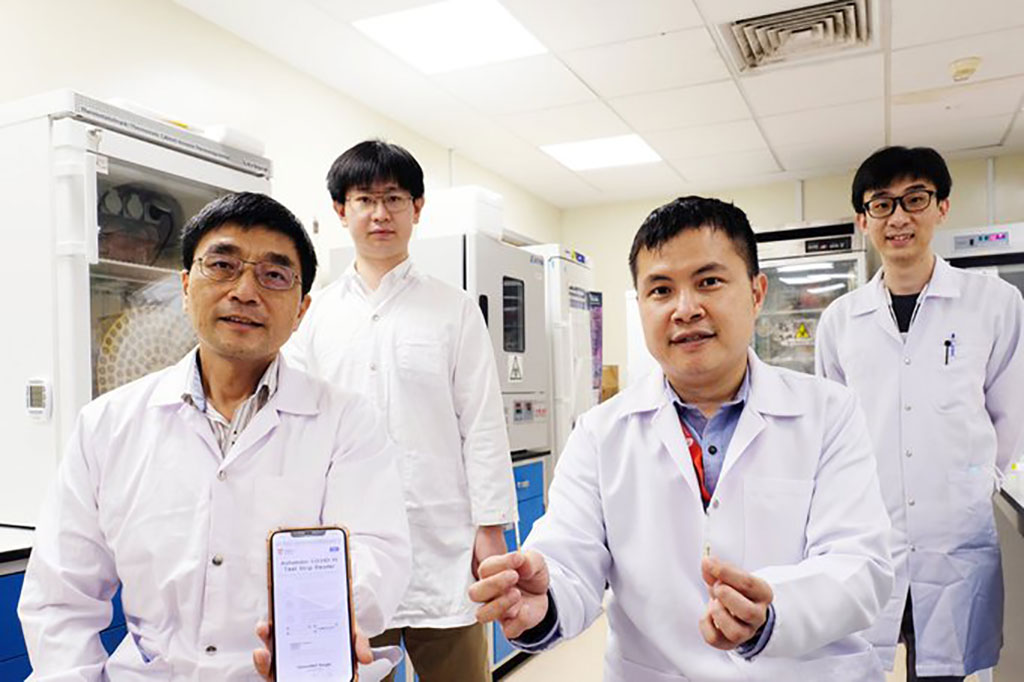
Image: Scientists have developed a COVID-19 diagnostic test that can detect the SARS-COV-2 virus even after it has gone through mutations (Photo courtesy of NTU)
Scientists have developed a COVID-19 diagnostic test that can detect the SARS-COV-2 virus even after it has gone through mutations.
The test called the VaNGuard (Variant Nucleotide Guard) test that has been developed by a team of scientists led by Nanyang Technological University (Singapore) makes use of a gene-editing tool known as CRISPR, which is used widely in scientific research to alter DNA sequences and modify gene function in human cells under lab conditions, and more recently, in diagnostic applications.
The VaNGuard test relies on a reaction mix containing enAsCas12a, a variant of the enzyme Cas12a that acts like a pair of "molecular scissors". The enzyme enAsCas12a is 'programmed' to target specific segments of the SARS-CoV-2 genetic material and to snip them off from the rest of its viral genome. Successfully snipping off segments is how the enzyme 'detects' the presence of the virus. The programming is done by two different molecules known as guide RNAs, which are designed to recognize specific sites on the SARS-CoV-2 genome.
The scientists decided to use two guide RNAs that recognize sequences that are extremely similar between variants of SARS-CoV-2 and that are also unique to the virus. Each guide RNA is computationally predicted to recognize over 99.5% of the thousands of SARS-CoV-2 isolates that have so far been sequenced around the world. So far, the made-in-NTU diagnostic platform can recognise up to two mutations within the target sites on the SARS-CoV-2 genome.
When the SARS-CoV-2 virus or one of its variants is detected in a sample, the engineered Cas12 enzyme variant enAsCas12a becomes hyper-activated and starts cutting other detectable genetic material in the sample as well, including a molecule tagged with a fluorescent dye that is added to the reaction mix. When the molecule is cut, it starts to glow. This glow is picked up by a microplate reader, a lab instrument that can detect and quantify the light photons emitted by the molecule.
In addition to its ability to detect SARS-CoV-2 even when it mutates, the VaNGuard test can be used on crude patient samples in a clinical setting without the need for RNA purification, and yields results in 30 minutes. This is a third of the time required for the gold standard polymerase chain reaction (PCR) test, which requires purification of RNA in a lab facility. The scientists hope that the VaNGuard test can be deployed in settings where quickly confirming COVID-19 status of individuals is paramount. Moving forward, they plan to perform further experiments to further refine their diagnostic kit, obtain regulatory approval from relevant authorities, and commercialize their test in partnership with diagnostic companies.
To make the test easier to use once it has been approved for roll out, the scientists integrated the test into a specially treated paper strip that looks similar to a pregnancy test. The paper strip is dipped into a tube containing the crude nasopharyngeal sample and the reaction mix. In the presence of a SARS-CoV-2 virus or its variant, two strong bands will appear on the paper strip. In the absence of the virus, only one band will appear. The scientists validated the VaNGuard test's ability to detect SARS-CoV-2 variants by synthesizing an RNA sample that has the same mutated sequence as a known SARS-CoV-2 variant. They added different amounts of the synthesized sample to their test and observed two strong bands when the paper strip was dipped into each reaction mix. This indicates that the VaNGuard test is robust against mutated viral sequences. The scientists also developed a mobile phone app to facilitate the interpretation of the paper strips.
"Viruses are very smart. They can mutate, edit, or shuffle their genetic material, meaning diagnostic tests may fail to catch them. Hence, we spent considerable effort developing a robust and sensitive test that can catch the viruses even when they change their genetic sequences," said NTU Associate Professor Tan Meng How, who led the study. "In addition, frequent testing is essential for helping to break the transmission of viruses within populations, so we have developed our tests to be rapid and affordable, making them deployable in resource-poor settings."
Related Links:
Nanyang Technological University




The test called the VaNGuard (Variant Nucleotide Guard) test that has been developed by a team of scientists led by Nanyang Technological University (Singapore) makes use of a gene-editing tool known as CRISPR, which is used widely in scientific research to alter DNA sequences and modify gene function in human cells under lab conditions, and more recently, in diagnostic applications.
The VaNGuard test relies on a reaction mix containing enAsCas12a, a variant of the enzyme Cas12a that acts like a pair of "molecular scissors". The enzyme enAsCas12a is 'programmed' to target specific segments of the SARS-CoV-2 genetic material and to snip them off from the rest of its viral genome. Successfully snipping off segments is how the enzyme 'detects' the presence of the virus. The programming is done by two different molecules known as guide RNAs, which are designed to recognize specific sites on the SARS-CoV-2 genome.
The scientists decided to use two guide RNAs that recognize sequences that are extremely similar between variants of SARS-CoV-2 and that are also unique to the virus. Each guide RNA is computationally predicted to recognize over 99.5% of the thousands of SARS-CoV-2 isolates that have so far been sequenced around the world. So far, the made-in-NTU diagnostic platform can recognise up to two mutations within the target sites on the SARS-CoV-2 genome.
When the SARS-CoV-2 virus or one of its variants is detected in a sample, the engineered Cas12 enzyme variant enAsCas12a becomes hyper-activated and starts cutting other detectable genetic material in the sample as well, including a molecule tagged with a fluorescent dye that is added to the reaction mix. When the molecule is cut, it starts to glow. This glow is picked up by a microplate reader, a lab instrument that can detect and quantify the light photons emitted by the molecule.
In addition to its ability to detect SARS-CoV-2 even when it mutates, the VaNGuard test can be used on crude patient samples in a clinical setting without the need for RNA purification, and yields results in 30 minutes. This is a third of the time required for the gold standard polymerase chain reaction (PCR) test, which requires purification of RNA in a lab facility. The scientists hope that the VaNGuard test can be deployed in settings where quickly confirming COVID-19 status of individuals is paramount. Moving forward, they plan to perform further experiments to further refine their diagnostic kit, obtain regulatory approval from relevant authorities, and commercialize their test in partnership with diagnostic companies.
To make the test easier to use once it has been approved for roll out, the scientists integrated the test into a specially treated paper strip that looks similar to a pregnancy test. The paper strip is dipped into a tube containing the crude nasopharyngeal sample and the reaction mix. In the presence of a SARS-CoV-2 virus or its variant, two strong bands will appear on the paper strip. In the absence of the virus, only one band will appear. The scientists validated the VaNGuard test's ability to detect SARS-CoV-2 variants by synthesizing an RNA sample that has the same mutated sequence as a known SARS-CoV-2 variant. They added different amounts of the synthesized sample to their test and observed two strong bands when the paper strip was dipped into each reaction mix. This indicates that the VaNGuard test is robust against mutated viral sequences. The scientists also developed a mobile phone app to facilitate the interpretation of the paper strips.
"Viruses are very smart. They can mutate, edit, or shuffle their genetic material, meaning diagnostic tests may fail to catch them. Hence, we spent considerable effort developing a robust and sensitive test that can catch the viruses even when they change their genetic sequences," said NTU Associate Professor Tan Meng How, who led the study. "In addition, frequent testing is essential for helping to break the transmission of viruses within populations, so we have developed our tests to be rapid and affordable, making them deployable in resource-poor settings."
Related Links:
Nanyang Technological University

New
Gold Member
Handheld Blood Glucose Analyzer
STAT-Site
New
Blood Pressure Monitor
Cuff Blood Pressure Monitor
New
Desk Aneroid Sphyg
Diagnostix 750D+
Latest COVID-19 News
- Low-Cost System Detects SARS-CoV-2 Virus in Hospital Air Using High-Tech Bubbles
- World's First Inhalable COVID-19 Vaccine Approved in China
- COVID-19 Vaccine Patch Fights SARS-CoV-2 Variants Better than Needles
- Blood Viscosity Testing Can Predict Risk of Death in Hospitalized COVID-19 Patients
- ‘Covid Computer’ Uses AI to Detect COVID-19 from Chest CT Scans
- MRI Lung-Imaging Technique Shows Cause of Long-COVID Symptoms
- Chest CT Scans of COVID-19 Patients Could Help Distinguish Between SARS-CoV-2 Variants
- Specialized MRI Detects Lung Abnormalities in Non-Hospitalized Long COVID Patients
- AI Algorithm Identifies Hospitalized Patients at Highest Risk of Dying From COVID-19
- Sweat Sensor Detects Key Biomarkers That Provide Early Warning of COVID-19 and Flu
- Study Assesses Impact of COVID-19 on Ventilation/Perfusion Scintigraphy
- CT Imaging Study Finds Vaccination Reduces Risk of COVID-19 Associated Pulmonary Embolism
- Third Day in Hospital a ‘Tipping Point’ in Severity of COVID-19 Pneumonia
- Longer Interval Between COVID-19 Vaccines Generates Up to Nine Times as Many Antibodies
- AI Model for Monitoring COVID-19 Predicts Mortality Within First 30 Days of Admission
- AI Predicts COVID Prognosis at Near-Expert Level Based Off CT Scans
Channels
Artificial Intelligence
view channel
Machine Learning Approach Enhances Liver Cancer Risk Stratification
Hepatocellular carcinoma, the most common form of primary liver cancer, is often detected late despite targeted surveillance programs. Current screening guidelines emphasize patients with known cirrhosis,... Read more
New AI Approach Monitors Brain Health Using Passive Wearable Data
Brain health spans cognitive and emotional functions and can fluctuate even in adults without diagnosed disease. Detecting early changes remains difficult in routine care and burdens specialty services... Read more
Critical Care
view channel
Automated IV Labeling Solution Improves Infusion Safety and Efficiency
Medication administration in high-acuity settings is often complicated by multiple concurrent infusions, making accurate line identification essential. In a 10-hospital intensive care unit study, 60% of... Read more
First-Of-Its-Kind AI Tool Detects Pulmonary Hypertension from Standard ECGs
Pulmonary hypertension is a progressive, life‑threatening disease that is frequently missed early because symptoms such as dyspnea are nonspecific and diagnostic delays can exceed two years.... Read more
Surgical Techniques
view channel
Continuous Monitoring with Wearables Enhances Postoperative Patient Safety
Postoperative hypoxemia on general surgical wards is common and often missed by intermittent vital sign checks. Undetected low oxygen levels can delay recovery and raise the risk of complications that... Read more
New Approach Enables Customized Muscle Tissue Without Biomaterial Scaffolds
Volumetric muscle loss is a traumatic loss of skeletal muscle that often leads to permanent functional impairment and limited reconstructive options. Current experimental strategies struggle to deliver... Read more
Patient Care
view channel
Wearable Sleep Data Predict Adherence to Pulmonary Rehabilitation
Chronic obstructive pulmonary disease (COPD) is a long-term lung disorder that makes breathing difficult and often disturbs sleep, reducing energy for daily activities. Limited engagement in pulmonary... Read more
Revolutionary Automatic IV-Line Flushing Device to Enhance Infusion Care
More than 80% of in-hospital patients receive intravenous (IV) therapy. Every dose of IV medicine delivered in a small volume (<250 mL) infusion bag should be followed by subsequent flushing to ensure... Read more

Health IT
view channel
EMR-Based Tool Predicts Graft Failure After Kidney Transplant
Kidney transplantation offers patients with end-stage kidney disease longer survival and better quality of life than dialysis, yet graft failure remains a major challenge. Although a successful transplant... Read more
Printable Molecule-Selective Nanoparticles Enable Mass Production of Wearable Biosensors
The future of medicine is likely to focus on the personalization of healthcare—understanding exactly what an individual requires and delivering the appropriate combination of nutrients, metabolites, and... Read more


Business
view channel
GE HealthCare Leads Major European Initiative to Advance Cardio-Oncology Care
Cardiovascular complications are increasingly recognized among people undergoing or recovering from cancer treatment, driven by pre‑existing disease and the cardiotoxic effects of chemotherapy, radiotherapy,... Read more

