Novel Ultrasound Scoring System Provides Accurate COVID-19 Diagnosis and Prognosis in Less Than 10 Minutes
|
By HospiMedica International staff writers Posted on 14 Sep 2021 |


|

Illustration
A new study has found that the Lung Ultrasound Severity Index (LUSI), a novel ultrasound score designed to measure the quality and extent of lung involvement, in relation to COVID-19, can be a useful tool in diagnosing COVID-19 in patients with a high pretest probability to have the disease.
The study by researchers from the University of Ferrara (Ferrara, Italy) also found that among the patients diagnosed with COVID-19 who had a high pretest probability to have the disease, the LUSI could also identify those with worse prognosis diagnosis and in-hospital mortality of patients with respiratory distress admitted for suspected COVID-19.
Lung ultrasound is increasingly employed in clinical practice but a standard approach and data about its accuracy still needed. Lung ultrasound having an acknowledged role in the diagnosis and staging of many lung diseases, has been repeatedly evoked as a potentially useful tool in the context of the current pandemic and has been included in many clinical diagnostic pathways of SARS-CoV-2 pneumonia. However, published studies are generally based on score systems that do not consider the patchy ultrasound appearance of SARS-CoV-2 pneumonia, due to the different patterns displayed in the same area.
To resolve this issue, the researchers built a lung ultrasound model that could semi-quantitatively represent the extent of lung involvement and could include the typical patchy appearance of SARS-CoV-2 pneumonia, reporting clearly all data regarding the technical aspect of the lung ultrasound examination, all data regarding the accuracy of the model, and testing it only in regard to the RT-PCR results, the only universally accepted standard reference for the diagnosis of COVID-19. In their study, the team decided to propose and validate the LUSI, a novel ultrasound score designed to measure the quality and extent of lung involvement, in relation to COVID-19 diagnosis and in-hospital mortality of patients with respiratory distress admitted for suspected COVID-19.
Patients with respiratory distress and suspected COVID-19 consecutively admitted in the emergency medicine unit were enrolled for the study. Lung ultrasound examinations were performed blindly to clinical data. The outcomes were diagnosis of COVID-19 pneumonia and in-hospital mortality. The study involved 159 patients, out of which 66% were males and 63.5% had a final diagnosis of COVID-19. The researchers found that COVID-19 patients had a higher mortality rate (18.8% vs. 6.9%) and LUSI (16.14 [8.71] vs. 10.08 [8.92] as compared to non-COVID-19 ones. This model proved able to distinguish between positive cases from negative ones with an Area Under the Receiver Operating Characteristic (AUROC) equal to 0.72 (95% CI 0.64-0.78) and to predict in-hospital mortality with an AUROC equal to 0.81 (95% CI 0.74-0.86), in the whole population, and an AUROC equal to 0.76 (95% CI 0.66-0.84) in COVID-19 patients. The findings indicate that LUSI can be a useful tool in diagnosing COVID-19 in patients with a high pretest probability to have the disease and - among them - identify those with worse prognosis.
Related Links:
University of Ferrara





The study by researchers from the University of Ferrara (Ferrara, Italy) also found that among the patients diagnosed with COVID-19 who had a high pretest probability to have the disease, the LUSI could also identify those with worse prognosis diagnosis and in-hospital mortality of patients with respiratory distress admitted for suspected COVID-19.
Lung ultrasound is increasingly employed in clinical practice but a standard approach and data about its accuracy still needed. Lung ultrasound having an acknowledged role in the diagnosis and staging of many lung diseases, has been repeatedly evoked as a potentially useful tool in the context of the current pandemic and has been included in many clinical diagnostic pathways of SARS-CoV-2 pneumonia. However, published studies are generally based on score systems that do not consider the patchy ultrasound appearance of SARS-CoV-2 pneumonia, due to the different patterns displayed in the same area.
To resolve this issue, the researchers built a lung ultrasound model that could semi-quantitatively represent the extent of lung involvement and could include the typical patchy appearance of SARS-CoV-2 pneumonia, reporting clearly all data regarding the technical aspect of the lung ultrasound examination, all data regarding the accuracy of the model, and testing it only in regard to the RT-PCR results, the only universally accepted standard reference for the diagnosis of COVID-19. In their study, the team decided to propose and validate the LUSI, a novel ultrasound score designed to measure the quality and extent of lung involvement, in relation to COVID-19 diagnosis and in-hospital mortality of patients with respiratory distress admitted for suspected COVID-19.
Patients with respiratory distress and suspected COVID-19 consecutively admitted in the emergency medicine unit were enrolled for the study. Lung ultrasound examinations were performed blindly to clinical data. The outcomes were diagnosis of COVID-19 pneumonia and in-hospital mortality. The study involved 159 patients, out of which 66% were males and 63.5% had a final diagnosis of COVID-19. The researchers found that COVID-19 patients had a higher mortality rate (18.8% vs. 6.9%) and LUSI (16.14 [8.71] vs. 10.08 [8.92] as compared to non-COVID-19 ones. This model proved able to distinguish between positive cases from negative ones with an Area Under the Receiver Operating Characteristic (AUROC) equal to 0.72 (95% CI 0.64-0.78) and to predict in-hospital mortality with an AUROC equal to 0.81 (95% CI 0.74-0.86), in the whole population, and an AUROC equal to 0.76 (95% CI 0.66-0.84) in COVID-19 patients. The findings indicate that LUSI can be a useful tool in diagnosing COVID-19 in patients with a high pretest probability to have the disease and - among them - identify those with worse prognosis.
Related Links:
University of Ferrara

Gold Member
12-Channel ECG
CM1200B
Absorbable Monofilament Mesh
Phasix Mesh
Ultrasound Needle Guidance System
SonoSite L25
Latest COVID-19 News
- Low-Cost System Detects SARS-CoV-2 Virus in Hospital Air Using High-Tech Bubbles
- World's First Inhalable COVID-19 Vaccine Approved in China
- COVID-19 Vaccine Patch Fights SARS-CoV-2 Variants Better than Needles
- Blood Viscosity Testing Can Predict Risk of Death in Hospitalized COVID-19 Patients
- ‘Covid Computer’ Uses AI to Detect COVID-19 from Chest CT Scans
- MRI Lung-Imaging Technique Shows Cause of Long-COVID Symptoms
- Chest CT Scans of COVID-19 Patients Could Help Distinguish Between SARS-CoV-2 Variants
- Specialized MRI Detects Lung Abnormalities in Non-Hospitalized Long COVID Patients
- AI Algorithm Identifies Hospitalized Patients at Highest Risk of Dying From COVID-19
- Sweat Sensor Detects Key Biomarkers That Provide Early Warning of COVID-19 and Flu
- Study Assesses Impact of COVID-19 on Ventilation/Perfusion Scintigraphy
- CT Imaging Study Finds Vaccination Reduces Risk of COVID-19 Associated Pulmonary Embolism
- Third Day in Hospital a ‘Tipping Point’ in Severity of COVID-19 Pneumonia
- Longer Interval Between COVID-19 Vaccines Generates Up to Nine Times as Many Antibodies
- AI Model for Monitoring COVID-19 Predicts Mortality Within First 30 Days of Admission
- AI Predicts COVID Prognosis at Near-Expert Level Based Off CT Scans
Channels

Critical Care
view channel
Magnetically Guided Microrobots to Enable Targeted Drug Delivery
Stroke affects 12 million people globally each year, often causing death or lasting disability. Current treatment relies on systemic administration of clot-dissolving drugs, which circulate throughout... Read more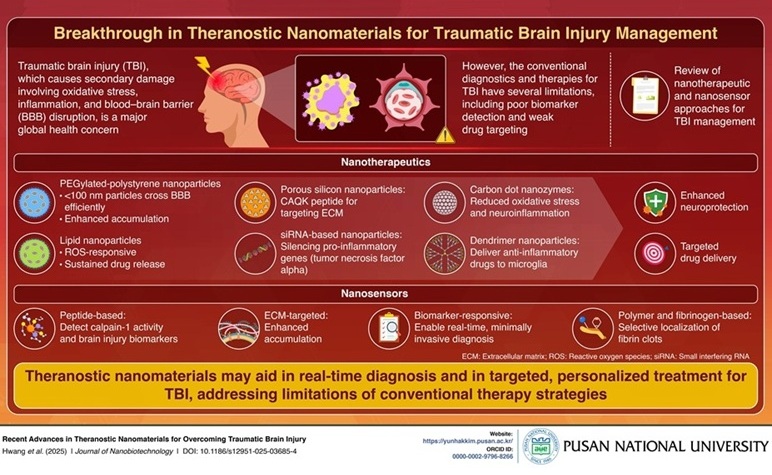
Smart Nanomaterials Detect and Treat Traumatic Brain Injuries Simultaneously
Traumatic brain injury (TBI) continues to leave millions with long-term disabilities every year. After a sudden impact from a fall, collision, or accident, the brain undergoes inflammation, oxidative stress,... Read more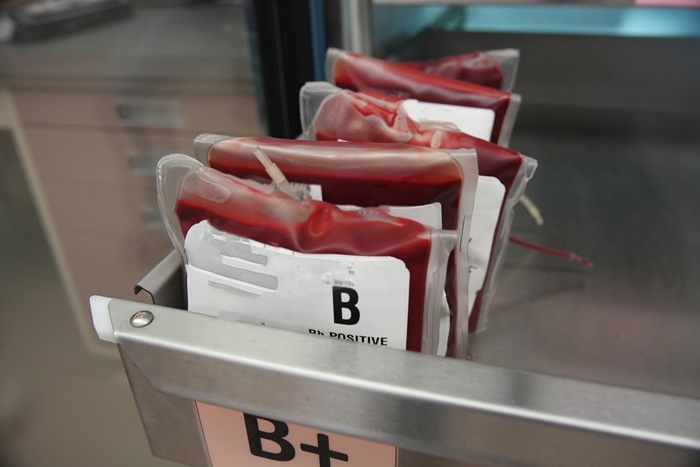
Earlier Blood Transfusion Could Reduce Heart Failure and Arrhythmia in Heart Disease Patients
Blood loss during or after surgery can place significant stress on people with heart disease, increasing the risk of dangerous complications. Transfusions are often delayed until hemoglobin levels fall... Read more
Surgical Techniques
view channel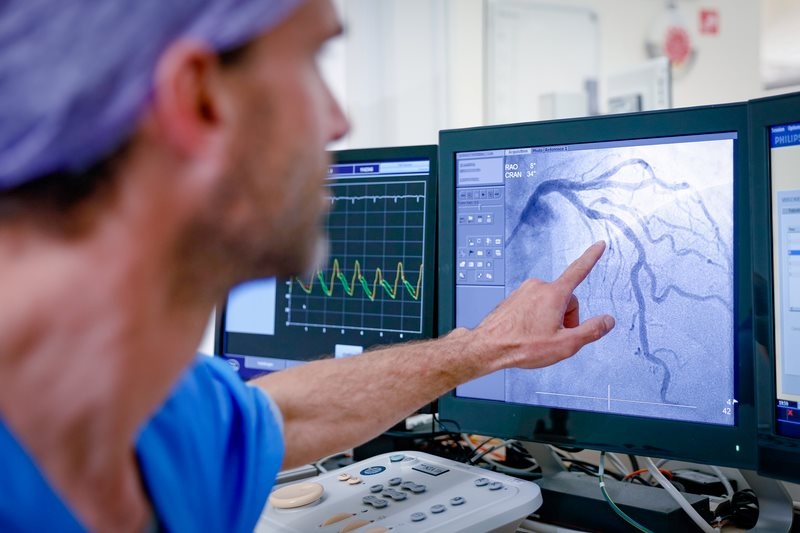
New Study Findings Could Halve Number of Stent Procedures
When a coronary artery becomes acutely blocked during a heart attack, opening it immediately is essential to prevent irreversible damage. However, many patients also have other narrowed vessels that appear... Read more
Breakthrough Surgical Device Redefines Hip Arthroscopy
Hip arthroscopy has surged in popularity, yet surgeons still face major mechanical constraints when navigating deep joint spaces through traditional cannulas. Limited tool mobility and the need for an... Read more
Patient Care
view channel
Revolutionary Automatic IV-Line Flushing Device to Enhance Infusion Care
More than 80% of in-hospital patients receive intravenous (IV) therapy. Every dose of IV medicine delivered in a small volume (<250 mL) infusion bag should be followed by subsequent flushing to ensure... Read more
VR Training Tool Combats Contamination of Portable Medical Equipment
Healthcare-associated infections (HAIs) impact one in every 31 patients, cause nearly 100,000 deaths each year, and cost USD 28.4 billion in direct medical expenses. Notably, up to 75% of these infections... Read more
Portable Biosensor Platform to Reduce Hospital-Acquired Infections
Approximately 4 million patients in the European Union acquire healthcare-associated infections (HAIs) or nosocomial infections each year, with around 37,000 deaths directly resulting from these infections,... Read more
First-Of-Its-Kind Portable Germicidal Light Technology Disinfects High-Touch Clinical Surfaces in Seconds
Reducing healthcare-acquired infections (HAIs) remains a pressing issue within global healthcare systems. In the United States alone, 1.7 million patients contract HAIs annually, leading to approximately... Read moreHealth IT
view channel
Printable Molecule-Selective Nanoparticles Enable Mass Production of Wearable Biosensors
The future of medicine is likely to focus on the personalization of healthcare—understanding exactly what an individual requires and delivering the appropriate combination of nutrients, metabolites, and... Read more

Business
view channel
Philips and Masimo Partner to Advance Patient Monitoring Measurement Technologies
Royal Philips (Amsterdam, Netherlands) and Masimo (Irvine, California, USA) have renewed their multi-year strategic collaboration, combining Philips’ expertise in patient monitoring with Masimo’s noninvasive... Read more
B. Braun Acquires Digital Microsurgery Company True Digital Surgery
The high-end microsurgery market in neurosurgery, spine, and ENT is undergoing a significant transformation. Traditional analog microscopes are giving way to digital exoscopes, which provide improved visualization,... Read more
CMEF 2025 to Promote Holistic and High-Quality Development of Medical and Health Industry
The 92nd China International Medical Equipment Fair (CMEF 2025) Autumn Exhibition is scheduled to be held from September 26 to 29 at the China Import and Export Fair Complex (Canton Fair Complex) in Guangzhou.... Read more