






BBQ Lighter, Combined with Microneedles, Sparks Breakthrough in COVID-19 Vaccine Delivery
|
By HospiMedica International staff writers Posted on 25 Oct 2021 |


|
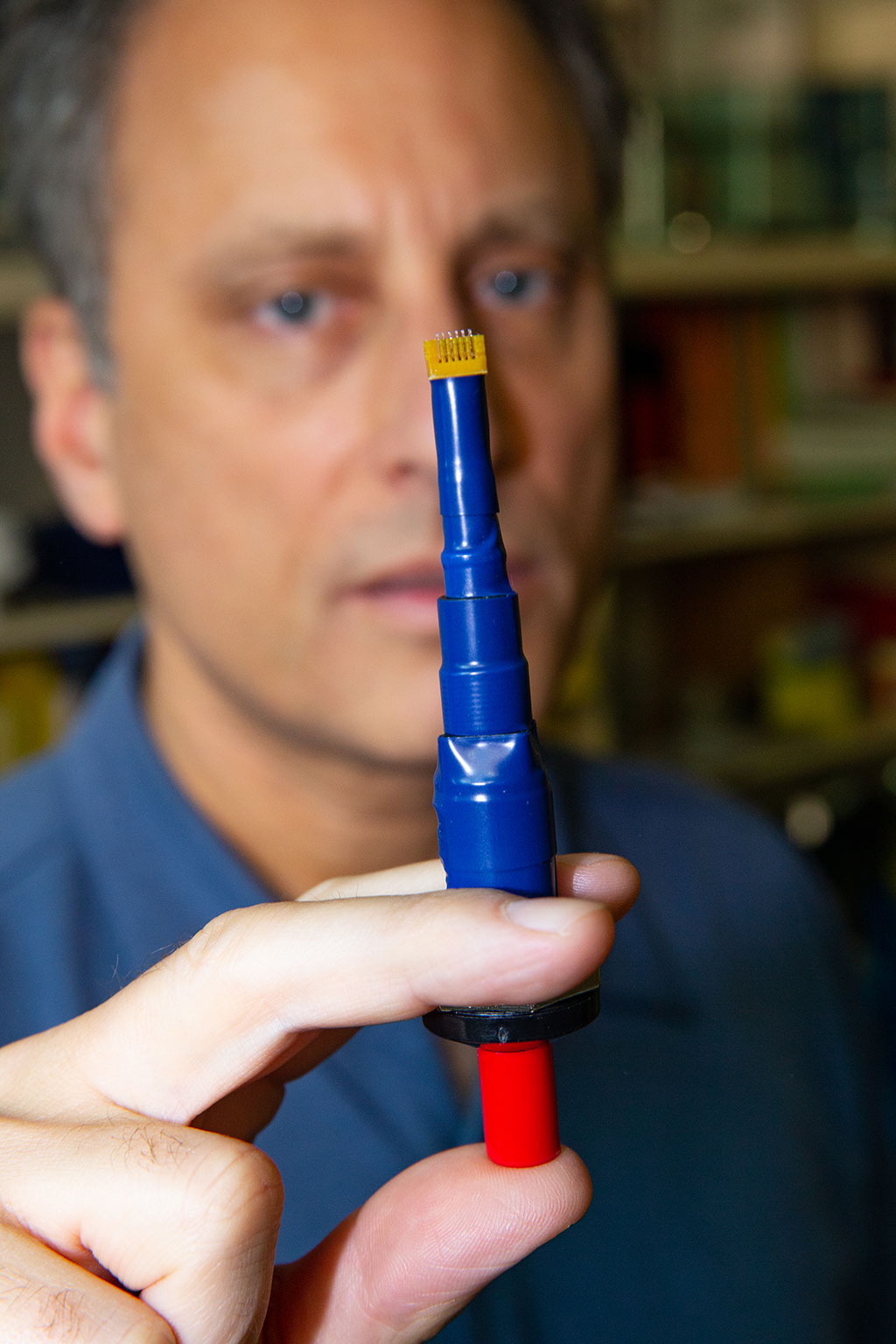
Future vaccine delivery may rely on everyday items like BBQ lighters and microneedles, thanks to the ingenuity of a team of researchers.
Researchers at the Georgia Institute of Technology (Atlanta, GA, USA) and Emory University (Atlanta, GA, USA) have developed and tested an innovative method that may simplify the complexity of delivering COVID-19 and other vaccines through a handheld electroporator. While electroporation is commonly employed in the research lab using short electric pulses to drive molecules into cells, the technique currently requires large, complex, and costly equipment, severely limiting its use for vaccine delivery. The new approach does the job using a novel pen-size device that requires no batteries and can be mass produced at low cost.
The inspiration for the research team’s breakthrough came from an everyday device that people use to start a grill: the electronic barbecue lighter. The team took the innards of a lighter and reengineered them into a tiny spring-latch mechanism. The device creates the same electric field in the skin as the large bulky electroporation machines already in use, but using widely available, low-cost components that require no battery to operate. Pairing the reimagined lighter device with microneedle technology from Georgia Tech’s Laboratory for Drug Delivery has resulted in a new ultra-low-cost electroporation system, or “ePatch.”
Besides the lighter, a key innovation involved tightly spacing the electrodes and using extremely short microneedles. While commonly used in cosmetics to rejuvenate skin and for potential medical applications, microneedles are not generally used as electrodes. Coupling the tiny electroporation pulser with microneedle electrodes made an effective electrical interface with the skin and further reduced the ePatch’s cost and complexity. The microneedle-based system uses voltages similar to conventional electroporation but with pulses that are 10,000 times shorter and using electrodes that penetrate just .01 inch into the skin surface.
To find out if their system could be used with a vaccine to generate an immune response, the researchers tested the delivery system first using a florescent protein to ensure it worked, and to deliver an actual COVID-19 vaccine. They selected an experimental DNA vaccine for COVID-19 as their model. Using this method with the same amount of vaccine, the ePatch induced an almost tenfold improved immune response over intramuscular immunization or intradermal injection without electroporation. It also showed no lasting effects to the mice’s skin, indicating that it is easier to achieve protection. The researchers say the ePatch should also work for mRNA vaccination, which they are currently studying.
Today’s genetic vaccines, whether mRNA or DNA, remain expensive as a global solution because they either require a complicated cold chain and costly manufacturing due to the formulation of lipid nanoparticles for mRNA delivery or they need a sophisticated electroporation device for DNA vaccine delivery. But devising a simpler, cost-effective electroporator that works with the DNA vaccine could dramatically reduce the cost and complexity of vaccinations since it does not require deep-freeze storage of mRNA vaccines, which need frigid temperatures because they contain lipid nanoparticles. The researchers are already looking at ways to refine their system, examining how to optimize the immune response on the skin site and integrating the device into one unit.
“Our goal was to design a method for COVID-19 vaccination that uses a device that is simple, low-cost and manufacturable,” said Dengning Xia, lead author on the study while working as a research scientist at Georgia Tech and currently an associate professor at Sun Yat-sen University in China. “The ePatch is a handheld device the size of a pen, weighing less than two ounces, and requiring no battery or power sources. It operates by simply pushing a button, which makes it very simple to use.”
“We know that COVID-19 won’t be the last pandemic,” said Saad Bhamla, assistant professor in the School of Chemical and Biomolecular Engineering. “We need to think from a cost as well as design perspective about how to simplify and scale up our hardware so these modern interventions can be more equitably dispersed - to reach more underserved and more under-resourced areas of the world.”
Related Links:
Georgia Institute of Technology
Emory University





Latest COVID-19 News
- Low-Cost System Detects SARS-CoV-2 Virus in Hospital Air Using High-Tech Bubbles
- World's First Inhalable COVID-19 Vaccine Approved in China
- COVID-19 Vaccine Patch Fights SARS-CoV-2 Variants Better than Needles
- Blood Viscosity Testing Can Predict Risk of Death in Hospitalized COVID-19 Patients
- ‘Covid Computer’ Uses AI to Detect COVID-19 from Chest CT Scans
- MRI Lung-Imaging Technique Shows Cause of Long-COVID Symptoms
- Chest CT Scans of COVID-19 Patients Could Help Distinguish Between SARS-CoV-2 Variants
- Specialized MRI Detects Lung Abnormalities in Non-Hospitalized Long COVID Patients
- AI Algorithm Identifies Hospitalized Patients at Highest Risk of Dying From COVID-19
- Sweat Sensor Detects Key Biomarkers That Provide Early Warning of COVID-19 and Flu
- Study Assesses Impact of COVID-19 on Ventilation/Perfusion Scintigraphy
- CT Imaging Study Finds Vaccination Reduces Risk of COVID-19 Associated Pulmonary Embolism
- Third Day in Hospital a ‘Tipping Point’ in Severity of COVID-19 Pneumonia
- Longer Interval Between COVID-19 Vaccines Generates Up to Nine Times as Many Antibodies
- AI Model for Monitoring COVID-19 Predicts Mortality Within First 30 Days of Admission
- AI Predicts COVID Prognosis at Near-Expert Level Based Off CT Scans
Channels
Artificial Intelligence
view channel
Machine Learning Approach Enhances Liver Cancer Risk Stratification
Hepatocellular carcinoma, the most common form of primary liver cancer, is often detected late despite targeted surveillance programs. Current screening guidelines emphasize patients with known cirrhosis,... Read more
New AI Approach Monitors Brain Health Using Passive Wearable Data
Brain health spans cognitive and emotional functions and can fluctuate even in adults without diagnosed disease. Detecting early changes remains difficult in routine care and burdens specialty services... Read more
Critical Care
view channel
Automated IV Labeling Solution Improves Infusion Safety and Efficiency
Medication administration in high-acuity settings is often complicated by multiple concurrent infusions, making accurate line identification essential. In a 10-hospital intensive care unit study, 60% of... Read more
First-Of-Its-Kind AI Tool Detects Pulmonary Hypertension from Standard ECGs
Pulmonary hypertension is a progressive, life‑threatening disease that is frequently missed early because symptoms such as dyspnea are nonspecific and diagnostic delays can exceed two years.... Read more
Surgical Techniques
view channel
Continuous Monitoring with Wearables Enhances Postoperative Patient Safety
Postoperative hypoxemia on general surgical wards is common and often missed by intermittent vital sign checks. Undetected low oxygen levels can delay recovery and raise the risk of complications that... Read more
New Approach Enables Customized Muscle Tissue Without Biomaterial Scaffolds
Volumetric muscle loss is a traumatic loss of skeletal muscle that often leads to permanent functional impairment and limited reconstructive options. Current experimental strategies struggle to deliver... Read more
Patient Care
view channel
Wearable Sleep Data Predict Adherence to Pulmonary Rehabilitation
Chronic obstructive pulmonary disease (COPD) is a long-term lung disorder that makes breathing difficult and often disturbs sleep, reducing energy for daily activities. Limited engagement in pulmonary... Read more
Revolutionary Automatic IV-Line Flushing Device to Enhance Infusion Care
More than 80% of in-hospital patients receive intravenous (IV) therapy. Every dose of IV medicine delivered in a small volume (<250 mL) infusion bag should be followed by subsequent flushing to ensure... Read more

Health IT
view channel
EMR-Based Tool Predicts Graft Failure After Kidney Transplant
Kidney transplantation offers patients with end-stage kidney disease longer survival and better quality of life than dialysis, yet graft failure remains a major challenge. Although a successful transplant... Read more
Printable Molecule-Selective Nanoparticles Enable Mass Production of Wearable Biosensors
The future of medicine is likely to focus on the personalization of healthcare—understanding exactly what an individual requires and delivering the appropriate combination of nutrients, metabolites, and... Read more


Business
view channel
GE HealthCare Leads Major European Initiative to Advance Cardio-Oncology Care
Cardiovascular complications are increasingly recognized among people undergoing or recovering from cancer treatment, driven by pre‑existing disease and the cardiotoxic effects of chemotherapy, radiotherapy,... Read more

