






Innovative X-Ray Imaging Showing COVID-19 Vascular Damage Could Support Routine Lab Diagnostics
|
By HospiMedica International staff writers Posted on 23 Dec 2021 |


|
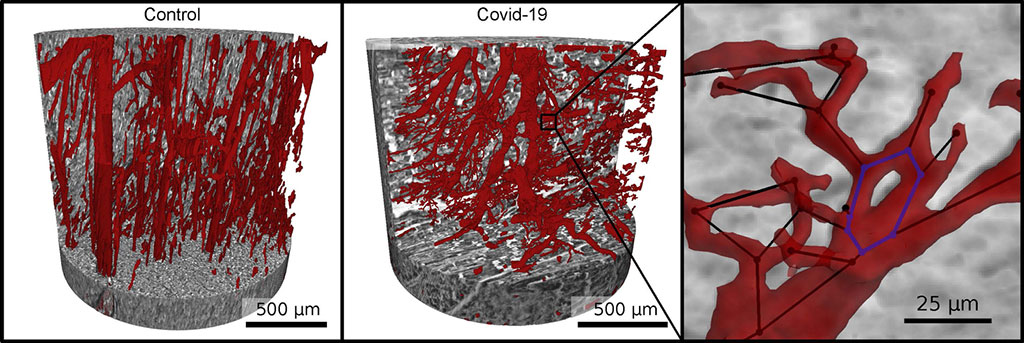
An innovative X-ray imaging technique that shows COVID-19 can cause vascular damage to the heart could support pathologists with routine diagnostics.
An interdisciplinary research team from the Göttingen University (Göttingen, Germany) and Hannover Medical School (Hannover, Germany) has detected significant changes in the heart muscle tissue of people who died from COVID-19. Damage to lung tissue has been the research focus in this area for some time and has now been thoroughly investigated. The current study underpins the involvement of the heart in COVID-19 at the microscopic level for the first time by imaging and analyzing the affected tissue in the three dimensions.
The scientists imaged the tissue architecture to a high resolution using synchrotron radiation – a particularly bright X-ray radiation – and displayed it three-dimensionally. To do this, they used a special X-ray microscope set up and operated by the University of Göttingen at the German Electron Synchrotron DESY. They observed clear changes at the level of the capillaries (the tiny blood vessels) in the heart muscle tissue when they examined the effects there of the severe form of COVID-19 disease.
In comparison with a healthy heart, X-ray imaging of tissues affected by severe disease, revealed a network full of splits, branches and loops which had been chaotically remodeled by the formation and splitting of new vessels. These changes are the first direct visual evidence of one of the main drivers of lung damage in COVID-19: a special kind of “intussusceptive angiogenes” (meaning new vessel formation) in the tissue. In order to visualize the capillary network, the vessels in the three-dimensional volume first had to be identified using machine learning methods. This initially required researchers to painstakingly, manually label the image data.
There is a very special feature of this study: in contrast to the vascular architecture, the required data quality could be achieved using a small X-ray source in the laboratory of the University of Göttingen. In principle, this means it could also be done in any clinic to support pathologists with routine diagnostics. In the future, the researchers want to further expand the approach of converting the characteristic tissue patterns into abstract mathematical values in order to develop automated tools for diagnostics, again by further developing laboratory X-ray imaging and validating it with data from synchrotron radiation.
"To speed up image processing, we therefore also automatically broke the tissue architecture down into its local symmetrical features and then compared them," explained Marius Reichardt, at the University of Göttingen.
"The parameters obtained from this then showed a completely different quality compared to healthy tissue, or even to diseases such as severe influenza or common myocarditis," added the leaders of the study, Professor Tim Salditt from the University of Göttingen and Professor Danny Jonigk from the Hannover Medical School.
Related Links:
Göttingen University
Hannover Medical School






Latest COVID-19 News
- Low-Cost System Detects SARS-CoV-2 Virus in Hospital Air Using High-Tech Bubbles
- World's First Inhalable COVID-19 Vaccine Approved in China
- COVID-19 Vaccine Patch Fights SARS-CoV-2 Variants Better than Needles
- Blood Viscosity Testing Can Predict Risk of Death in Hospitalized COVID-19 Patients
- ‘Covid Computer’ Uses AI to Detect COVID-19 from Chest CT Scans
- MRI Lung-Imaging Technique Shows Cause of Long-COVID Symptoms
- Chest CT Scans of COVID-19 Patients Could Help Distinguish Between SARS-CoV-2 Variants
- Specialized MRI Detects Lung Abnormalities in Non-Hospitalized Long COVID Patients
- AI Algorithm Identifies Hospitalized Patients at Highest Risk of Dying From COVID-19
- Sweat Sensor Detects Key Biomarkers That Provide Early Warning of COVID-19 and Flu
- Study Assesses Impact of COVID-19 on Ventilation/Perfusion Scintigraphy
- CT Imaging Study Finds Vaccination Reduces Risk of COVID-19 Associated Pulmonary Embolism
- Third Day in Hospital a ‘Tipping Point’ in Severity of COVID-19 Pneumonia
- Longer Interval Between COVID-19 Vaccines Generates Up to Nine Times as Many Antibodies
- AI Model for Monitoring COVID-19 Predicts Mortality Within First 30 Days of Admission
- AI Predicts COVID Prognosis at Near-Expert Level Based Off CT Scans
Channels
Artificial Intelligence
view channel
AI Analysis of Pericardial Fat Refines Long-Term Heart Disease Risk
Accurately identifying long-term cardiovascular disease risk in asymptomatic adults remains challenging for clinicians. Missed or underestimated risk delays preventive therapy and increases the chance... Read more
Machine Learning Approach Enhances Liver Cancer Risk Stratification
Hepatocellular carcinoma, the most common form of primary liver cancer, is often detected late despite targeted surveillance programs. Current screening guidelines emphasize patients with known cirrhosis,... Read more

Critical Care
view channel
Noninvasive Monitoring Device Enables Earlier Intervention in Heart Failure
Hospitalizations for heart failure with preserved ejection fraction (HFpEF) remain common because lung congestion often worsens before symptoms prompt treatment changes. Missed early decompensation... Read more
Automated IV Labeling Solution Improves Infusion Safety and Efficiency
Medication administration in high-acuity settings is often complicated by multiple concurrent infusions, making accurate line identification essential. In a 10-hospital intensive care unit study, 60% of... Read more
Surgical Techniques
view channel
Ultrasound Technology Aims to Replace Invasive BPH Procedures
Benign prostatic hyperplasia (BPH) is a frequent cause of lower urinary tract symptoms in aging men and often requires invasive procedures or prolonged recovery. With prevalence expected to rise as populations... Read more
Continuous Monitoring with Wearables Enhances Postoperative Patient Safety
Postoperative hypoxemia on general surgical wards is common and often missed by intermittent vital sign checks. Undetected low oxygen levels can delay recovery and raise the risk of complications that... Read more
Patient Care
view channel
Wearable Sleep Data Predict Adherence to Pulmonary Rehabilitation
Chronic obstructive pulmonary disease (COPD) is a long-term lung disorder that makes breathing difficult and often disturbs sleep, reducing energy for daily activities. Limited engagement in pulmonary... Read more
Revolutionary Automatic IV-Line Flushing Device to Enhance Infusion Care
More than 80% of in-hospital patients receive intravenous (IV) therapy. Every dose of IV medicine delivered in a small volume (<250 mL) infusion bag should be followed by subsequent flushing to ensure... Read more

Health IT
view channel
EMR-Based Tool Predicts Graft Failure After Kidney Transplant
Kidney transplantation offers patients with end-stage kidney disease longer survival and better quality of life than dialysis, yet graft failure remains a major challenge. Although a successful transplant... Read more
Printable Molecule-Selective Nanoparticles Enable Mass Production of Wearable Biosensors
The future of medicine is likely to focus on the personalization of healthcare—understanding exactly what an individual requires and delivering the appropriate combination of nutrients, metabolites, and... Read more


Business
view channel
GE HealthCare Leads Major European Initiative to Advance Cardio-Oncology Care
Cardiovascular complications are increasingly recognized among people undergoing or recovering from cancer treatment, driven by pre‑existing disease and the cardiotoxic effects of chemotherapy, radiotherapy,... Read more

