






US Emergency Departments Face Serious Drug Shortages
|
By HospiMedica International staff writers Posted on 19 Jan 2016 |


|
A new study reveals that drug shortages affecting emergency medicine (EM) practice in the United States have skyrocketed during recent years.
Researchers at George Washington University (Washington DC, USA), the University of Utah (Salt Lake City, USA), and other institutions conducted a study of longitudinal trends in US drug shortages within the scope of EM from 2001 to 2014. Two emergency physicians classified drug shortages based on whether they were within the scope of EM practice, whether they are used for lifesaving interventions or high-acuity conditions, and whether a substitute for the drug exists for its routine use in EM.
The results showed that of the 1,798 drug shortages recorded over the 13-year period, 33.9% were classified as within the scope of EM practice. Of those, 52.6% were for drugs used as lifesaving interventions or for high-acuity conditions, and of those, 100% were for drugs with no available substitute. The researchers also found that although the prevalence of EM drug shortages fell from 2002 to 2007, the number of EM drug shortages sharply increased by 435% from January 2008 to March 2014.
During the same period, shortages in drugs used as a direct lifesaving intervention or for high-acuity conditions increased by 393%, and shortages for drugs with no available substitute grew by 125% (from four to nine). Almost half of all EM drug shortages were caused by unknown reasons, with infectious disease drug shortages being the most common among EM drugs. The study was published on December 31, 2015, in Academic Emergency Medicine.
“Many of those medications are for life-threatening conditions, and for some drugs no substitute is available,” said senior author Jesse Pines MD, MBA, MSCE, of the University of Utah. “This means that in some cases, emergency department physicians may not have the medications they need to help people who are in serious need of them.”
According to the US Food and Drug Administration (FDA), a wide range of medications used both in EM and in pre-hospital settings, such as antidotes, heparin, and nitroglycerin have been affected by national drug shortages. Quality control problems, such as bacterial contamination or the presence of glass or metal particles in drug vials that result in supply disruptions are the most frequently cited causes for drug shortages. But another, non-measurable factor that affects drug shortages is the underlying economics of the pharmaceutical market.
Related Links:
George Washington University
University of Utah






Researchers at George Washington University (Washington DC, USA), the University of Utah (Salt Lake City, USA), and other institutions conducted a study of longitudinal trends in US drug shortages within the scope of EM from 2001 to 2014. Two emergency physicians classified drug shortages based on whether they were within the scope of EM practice, whether they are used for lifesaving interventions or high-acuity conditions, and whether a substitute for the drug exists for its routine use in EM.
The results showed that of the 1,798 drug shortages recorded over the 13-year period, 33.9% were classified as within the scope of EM practice. Of those, 52.6% were for drugs used as lifesaving interventions or for high-acuity conditions, and of those, 100% were for drugs with no available substitute. The researchers also found that although the prevalence of EM drug shortages fell from 2002 to 2007, the number of EM drug shortages sharply increased by 435% from January 2008 to March 2014.
During the same period, shortages in drugs used as a direct lifesaving intervention or for high-acuity conditions increased by 393%, and shortages for drugs with no available substitute grew by 125% (from four to nine). Almost half of all EM drug shortages were caused by unknown reasons, with infectious disease drug shortages being the most common among EM drugs. The study was published on December 31, 2015, in Academic Emergency Medicine.
“Many of those medications are for life-threatening conditions, and for some drugs no substitute is available,” said senior author Jesse Pines MD, MBA, MSCE, of the University of Utah. “This means that in some cases, emergency department physicians may not have the medications they need to help people who are in serious need of them.”
According to the US Food and Drug Administration (FDA), a wide range of medications used both in EM and in pre-hospital settings, such as antidotes, heparin, and nitroglycerin have been affected by national drug shortages. Quality control problems, such as bacterial contamination or the presence of glass or metal particles in drug vials that result in supply disruptions are the most frequently cited causes for drug shortages. But another, non-measurable factor that affects drug shortages is the underlying economics of the pharmaceutical market.
Related Links:
George Washington University
University of Utah

New
Gold Member
Handheld Blood Glucose Analyzer
STAT-Site
New
POC Respiratory/Sore Throat Test
BIOFIRE SPOTFIRE (R/ST) Panel
New
Patient Preoperative Skin Preparation
BD ChloraPrep
Latest Hospital News News
- Nurse Tracking System Improves Hospital Workflow
- New Children’s Hospital Transforms California Healthcare
- Noisy Hospitals Face Threat of Decreased Federal Compensation
- Orthopedics Centre of Excellence Planned for Guy’s Hospital
- Research Suggests Avoidance of Low-Value Surgical Procedures
- U.S. Federal Readmission Fines Linked to Higher Mortality
- Columbia China to Build New Hospital in Jiaxing
- Dubai Debuts Second Robotic Pharmacy Service
- Seattle Hospital Network Shifts Away from Overlapping Surgeries
- ACC to Launch Valvular Heart Disease Program in China
- Mortality Rates Lower at Major Teaching Hospitals
- South Australia to Inaugurate Upscale Hospital
- Raffles to Launch Second Hospital Project in China
- Research Center Tackles Antimicrobial Drugs Challenge
- Miami Cardiac & Vascular Institute Completes Expansion Project
- Hospital Antibiotic Policies Improve Prescription Practices
Channels
Artificial Intelligence
view channel
AI Analysis of Pericardial Fat Refines Long-Term Heart Disease Risk
Accurately identifying long-term cardiovascular disease risk in asymptomatic adults remains challenging for clinicians. Missed or underestimated risk delays preventive therapy and increases the chance... Read more
Machine Learning Approach Enhances Liver Cancer Risk Stratification
Hepatocellular carcinoma, the most common form of primary liver cancer, is often detected late despite targeted surveillance programs. Current screening guidelines emphasize patients with known cirrhosis,... Read more

Critical Care
view channel
Noninvasive Monitoring Device Enables Earlier Intervention in Heart Failure
Hospitalizations for heart failure with preserved ejection fraction (HFpEF) remain common because lung congestion often worsens before symptoms prompt treatment changes. Missed early decompensation... Read more
Automated IV Labeling Solution Improves Infusion Safety and Efficiency
Medication administration in high-acuity settings is often complicated by multiple concurrent infusions, making accurate line identification essential. In a 10-hospital intensive care unit study, 60% of... Read more

Surgical Techniques
view channel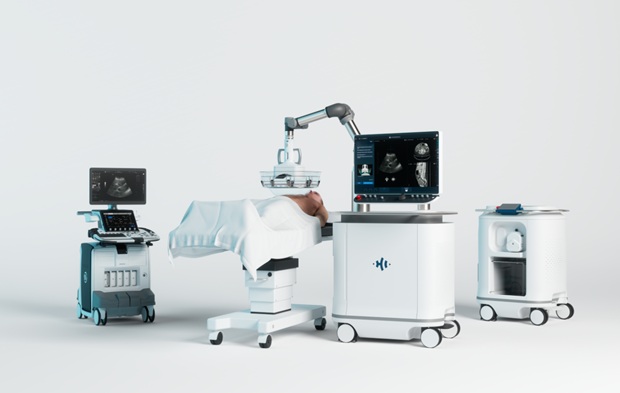
Ultrasound Technology Aims to Replace Invasive BPH Procedures
Benign prostatic hyperplasia (BPH) is a frequent cause of lower urinary tract symptoms in aging men and often requires invasive procedures or prolonged recovery. With prevalence expected to rise as populations... Read more
Continuous Monitoring with Wearables Enhances Postoperative Patient Safety
Postoperative hypoxemia on general surgical wards is common and often missed by intermittent vital sign checks. Undetected low oxygen levels can delay recovery and raise the risk of complications that... Read more
Patient Care
view channel
Wearable Sleep Data Predict Adherence to Pulmonary Rehabilitation
Chronic obstructive pulmonary disease (COPD) is a long-term lung disorder that makes breathing difficult and often disturbs sleep, reducing energy for daily activities. Limited engagement in pulmonary... Read more
Revolutionary Automatic IV-Line Flushing Device to Enhance Infusion Care
More than 80% of in-hospital patients receive intravenous (IV) therapy. Every dose of IV medicine delivered in a small volume (<250 mL) infusion bag should be followed by subsequent flushing to ensure... Read more

Health IT
view channel
EMR-Based Tool Predicts Graft Failure After Kidney Transplant
Kidney transplantation offers patients with end-stage kidney disease longer survival and better quality of life than dialysis, yet graft failure remains a major challenge. Although a successful transplant... Read more
Printable Molecule-Selective Nanoparticles Enable Mass Production of Wearable Biosensors
The future of medicine is likely to focus on the personalization of healthcare—understanding exactly what an individual requires and delivering the appropriate combination of nutrients, metabolites, and... Read more


Business
view channel
GE HealthCare Leads Major European Initiative to Advance Cardio-Oncology Care
Cardiovascular complications are increasingly recognized among people undergoing or recovering from cancer treatment, driven by pre‑existing disease and the cardiotoxic effects of chemotherapy, radiotherapy,... Read more

