






Hollywood Presbyterian Launches USD 200 Million Expansion
|
By HospiMedica International staff writers Posted on 16 May 2016 |


|

Image: Hollywood Presbyterian Medical Center (Photo courtesy of HPMC).
The 100-year-old Hollywood Presbyterian Medical Center (HPMC; Los Angeles, CA, USA) is about to kick off its USD 200 million expansion and modernization of the facility.
Phase one of the expansion will be anchored around a new emergency department (ED), which will more than double the physical space of the department and will expand patient beds from 20 to 26. The master plane will also include a new 650-spot parking structure for patients, employees, and visitors, as well as internal and external beautification of the hospital campus. The new parking structure will be completed by November 2017. Immediately upon its completion, work will begin on the new ED, with an anticipated completion date of fall 2019.
The new ED is being expressly designed to provide an enhanced patient experience around the clock, and will be staffed by a specially trained, multi-lingual team of physicians, nurses, and ancillary staff, making it a unique, culturally sensitive resource for the community. In addition to the ED and the parking lot, the hospital will rebuild and relocate its kitchen and dietary department, which serves patients, visitors, and employees. HPMC is part of CHA Health Systems (Seoul, Korea).
“The upgraded facilities will provide the environment and easy access to care that the community deserves while furnishing our medical staff and other clinicians with the tools they need to deliver top-notch medical care,” said Jerry Clute, CEO of HPMC. “We are anxious to start on these enhancements and begin the transformational process of our campus.”
“The renovation will usher in a new era of healthcare in the community, while also fulfilling the state’s seismic safety mandate that all hospitals must meet by 2020,” said Kwang Yul Cha, MD, founder of CHA Health Systems, which bought the hospital in 2004.
Related Links:
Hollywood Presbyterian Medical Center
CHA Health Systems







Phase one of the expansion will be anchored around a new emergency department (ED), which will more than double the physical space of the department and will expand patient beds from 20 to 26. The master plane will also include a new 650-spot parking structure for patients, employees, and visitors, as well as internal and external beautification of the hospital campus. The new parking structure will be completed by November 2017. Immediately upon its completion, work will begin on the new ED, with an anticipated completion date of fall 2019.
The new ED is being expressly designed to provide an enhanced patient experience around the clock, and will be staffed by a specially trained, multi-lingual team of physicians, nurses, and ancillary staff, making it a unique, culturally sensitive resource for the community. In addition to the ED and the parking lot, the hospital will rebuild and relocate its kitchen and dietary department, which serves patients, visitors, and employees. HPMC is part of CHA Health Systems (Seoul, Korea).
“The upgraded facilities will provide the environment and easy access to care that the community deserves while furnishing our medical staff and other clinicians with the tools they need to deliver top-notch medical care,” said Jerry Clute, CEO of HPMC. “We are anxious to start on these enhancements and begin the transformational process of our campus.”
“The renovation will usher in a new era of healthcare in the community, while also fulfilling the state’s seismic safety mandate that all hospitals must meet by 2020,” said Kwang Yul Cha, MD, founder of CHA Health Systems, which bought the hospital in 2004.
Related Links:
Hollywood Presbyterian Medical Center
CHA Health Systems

Gold Member
SARS‑CoV‑2/Flu A/Flu B/RSV Sample-To-Answer Test
SARS‑CoV‑2/Flu A/Flu B/RSV Cartridge (CE-IVD)
New
Medical Adhesive
MED 5570U
New
Rapid Sepsis Test
SeptiCyte RAPID
Latest Hospital News News
- Nurse Tracking System Improves Hospital Workflow
- New Children’s Hospital Transforms California Healthcare
- Noisy Hospitals Face Threat of Decreased Federal Compensation
- Orthopedics Centre of Excellence Planned for Guy’s Hospital
- Research Suggests Avoidance of Low-Value Surgical Procedures
- U.S. Federal Readmission Fines Linked to Higher Mortality
- Columbia China to Build New Hospital in Jiaxing
- Dubai Debuts Second Robotic Pharmacy Service
- Seattle Hospital Network Shifts Away from Overlapping Surgeries
- ACC to Launch Valvular Heart Disease Program in China
- Mortality Rates Lower at Major Teaching Hospitals
- South Australia to Inaugurate Upscale Hospital
- Raffles to Launch Second Hospital Project in China
- Research Center Tackles Antimicrobial Drugs Challenge
- Miami Cardiac & Vascular Institute Completes Expansion Project
- Hospital Antibiotic Policies Improve Prescription Practices
Channels
Artificial Intelligence
view channel
Machine Learning Approach Enhances Liver Cancer Risk Stratification
Hepatocellular carcinoma, the most common form of primary liver cancer, is often detected late despite targeted surveillance programs. Current screening guidelines emphasize patients with known cirrhosis,... Read more
New AI Approach Monitors Brain Health Using Passive Wearable Data
Brain health spans cognitive and emotional functions and can fluctuate even in adults without diagnosed disease. Detecting early changes remains difficult in routine care and burdens specialty services... Read more

Critical Care
view channel
Automated IV Labeling Solution Improves Infusion Safety and Efficiency
Medication administration in high-acuity settings is often complicated by multiple concurrent infusions, making accurate line identification essential. In a 10-hospital intensive care unit study, 60% of... Read more
First-Of-Its-Kind AI Tool Detects Pulmonary Hypertension from Standard ECGs
Pulmonary hypertension is a progressive, life‑threatening disease that is frequently missed early because symptoms such as dyspnea are nonspecific and diagnostic delays can exceed two years.... Read more

Surgical Techniques
view channel
Continuous Monitoring with Wearables Enhances Postoperative Patient Safety
Postoperative hypoxemia on general surgical wards is common and often missed by intermittent vital sign checks. Undetected low oxygen levels can delay recovery and raise the risk of complications that... Read more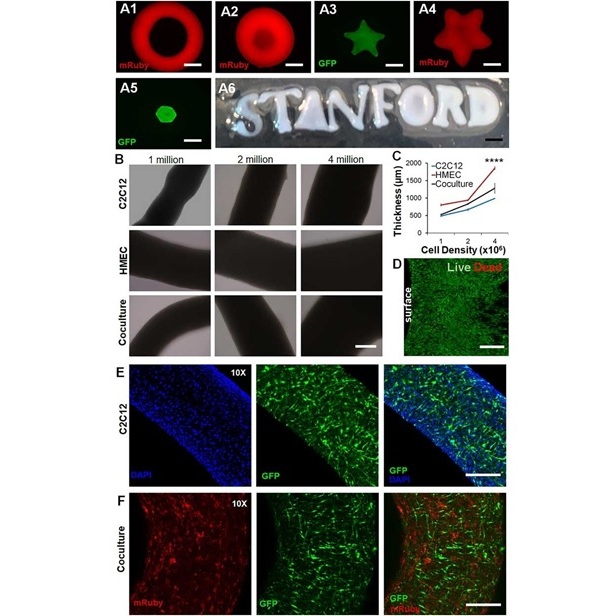
New Approach Enables Customized Muscle Tissue Without Biomaterial Scaffolds
Volumetric muscle loss is a traumatic loss of skeletal muscle that often leads to permanent functional impairment and limited reconstructive options. Current experimental strategies struggle to deliver... Read more
Patient Care
view channel
Wearable Sleep Data Predict Adherence to Pulmonary Rehabilitation
Chronic obstructive pulmonary disease (COPD) is a long-term lung disorder that makes breathing difficult and often disturbs sleep, reducing energy for daily activities. Limited engagement in pulmonary... Read more
Revolutionary Automatic IV-Line Flushing Device to Enhance Infusion Care
More than 80% of in-hospital patients receive intravenous (IV) therapy. Every dose of IV medicine delivered in a small volume (<250 mL) infusion bag should be followed by subsequent flushing to ensure... Read more

Health IT
view channel
EMR-Based Tool Predicts Graft Failure After Kidney Transplant
Kidney transplantation offers patients with end-stage kidney disease longer survival and better quality of life than dialysis, yet graft failure remains a major challenge. Although a successful transplant... Read more
Printable Molecule-Selective Nanoparticles Enable Mass Production of Wearable Biosensors
The future of medicine is likely to focus on the personalization of healthcare—understanding exactly what an individual requires and delivering the appropriate combination of nutrients, metabolites, and... Read more


Business
view channel
GE HealthCare Leads Major European Initiative to Advance Cardio-Oncology Care
Cardiovascular complications are increasingly recognized among people undergoing or recovering from cancer treatment, driven by pre‑existing disease and the cardiotoxic effects of chemotherapy, radiotherapy,... Read more

