






Pioneering Biofabrication Institute Advances 3D-Printed Tissues
|
By Daniel Beris Posted on 13 Dec 2016 |


|
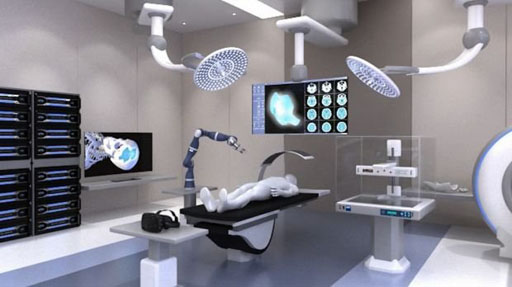
Image: A computer simulation of the Biofabrication Institute (Photo courtesy of QUT).
The Herston Health Precinct, a health, aged care, residential, and retail precinct under construction in Brisbane (Australia) at a cost of USD 860 million, has announced a new biofabrication institute that will occupy two floors and will be dedicated to imaging, modeling, and manufacturing of three dimensional (3D) printed patient-specific tissues.
The new Herst biofabrication institute will be realized in partnership with the Queensland University of Technology (QUT, Brisbane, Australia) and the Metro North Hospital and Health Service (Brisbane, Australia). The institute, which is scheduled to open in 2017, will be equipped with all necessary tools for tissue engineering, clinical scanning and visualization, 3D modeling and 3D printing, and will also feature educational spaces and innovation hubs.
The focus of the institute, which marks the very first time that a bioprinting lab is co-located with a high-level hospital in Australia, will be to create patient-specific tissues that can be implanted for a number of different treatments, with the ultimate goal of using autologous cells taken from the patient himself, integrated with composite biodegradable and biocompatible materials for implant purposes in order to 3D print the tissues. All materials used are approved by the U.S. Food and Drug Administration (FDA, Silver Spring, MD, USA).
“A lot of the implants we are developing, we can implant into a patient and as the tissue grows back, it is not rejected, the scaffold will resorb over time and the tissue will grow even more and eventually the implant is gone,” said associate professor Mia Woodruff, PhD, of the QUT biofabrication and tissue morphology group. “We don't always have to use metallic implants any more, we can develop really high-spec composite materials that dissolve as the tissue heals. Organ transplant lists are endless at the moment, and we want to be able to help these people.”
“Researchers, scientists, nurses, and doctors will all be working together to deliver the best outcome for patients. Our vision of healthcare is that the biofabrication institute will pave the way for 3D printers to sit in operating theatres, ready to print tissue as needed, in our hospitals of the future,” said Australian Minister for Health Cameron Dick. “This institute, opening in 2017, will catapult Queensland onto the global stage as a leader in medical innovation and technology that will change the face of healthcare.”
Related Links:
Queensland University of Technology
Metro North Hospital and Health Service
U.S. Food and Drug Administration




The new Herst biofabrication institute will be realized in partnership with the Queensland University of Technology (QUT, Brisbane, Australia) and the Metro North Hospital and Health Service (Brisbane, Australia). The institute, which is scheduled to open in 2017, will be equipped with all necessary tools for tissue engineering, clinical scanning and visualization, 3D modeling and 3D printing, and will also feature educational spaces and innovation hubs.
The focus of the institute, which marks the very first time that a bioprinting lab is co-located with a high-level hospital in Australia, will be to create patient-specific tissues that can be implanted for a number of different treatments, with the ultimate goal of using autologous cells taken from the patient himself, integrated with composite biodegradable and biocompatible materials for implant purposes in order to 3D print the tissues. All materials used are approved by the U.S. Food and Drug Administration (FDA, Silver Spring, MD, USA).
“A lot of the implants we are developing, we can implant into a patient and as the tissue grows back, it is not rejected, the scaffold will resorb over time and the tissue will grow even more and eventually the implant is gone,” said associate professor Mia Woodruff, PhD, of the QUT biofabrication and tissue morphology group. “We don't always have to use metallic implants any more, we can develop really high-spec composite materials that dissolve as the tissue heals. Organ transplant lists are endless at the moment, and we want to be able to help these people.”
“Researchers, scientists, nurses, and doctors will all be working together to deliver the best outcome for patients. Our vision of healthcare is that the biofabrication institute will pave the way for 3D printers to sit in operating theatres, ready to print tissue as needed, in our hospitals of the future,” said Australian Minister for Health Cameron Dick. “This institute, opening in 2017, will catapult Queensland onto the global stage as a leader in medical innovation and technology that will change the face of healthcare.”
Related Links:
Queensland University of Technology
Metro North Hospital and Health Service
U.S. Food and Drug Administration

New
Gold Member
Neonatal Heel Incision Device
Tenderfoot
New
Creatinine/eGFR Meter
StatSensor® Creatinine/eGFR Meter
New
Blood Gas Analyzer
i-Check200
Latest Hospital News News
- Nurse Tracking System Improves Hospital Workflow
- New Children’s Hospital Transforms California Healthcare
- Noisy Hospitals Face Threat of Decreased Federal Compensation
- Orthopedics Centre of Excellence Planned for Guy’s Hospital
- Research Suggests Avoidance of Low-Value Surgical Procedures
- U.S. Federal Readmission Fines Linked to Higher Mortality
- Columbia China to Build New Hospital in Jiaxing
- Dubai Debuts Second Robotic Pharmacy Service
- Seattle Hospital Network Shifts Away from Overlapping Surgeries
- ACC to Launch Valvular Heart Disease Program in China
- Mortality Rates Lower at Major Teaching Hospitals
- South Australia to Inaugurate Upscale Hospital
- Raffles to Launch Second Hospital Project in China
- Research Center Tackles Antimicrobial Drugs Challenge
- Miami Cardiac & Vascular Institute Completes Expansion Project
- Hospital Antibiotic Policies Improve Prescription Practices
Channels
Artificial Intelligence
view channel
AI Analysis of Pericardial Fat Refines Long-Term Heart Disease Risk
Accurately identifying long-term cardiovascular disease risk in asymptomatic adults remains challenging for clinicians. Missed or underestimated risk delays preventive therapy and increases the chance... Read more
Machine Learning Approach Enhances Liver Cancer Risk Stratification
Hepatocellular carcinoma, the most common form of primary liver cancer, is often detected late despite targeted surveillance programs. Current screening guidelines emphasize patients with known cirrhosis,... Read more

Critical Care
view channel
Noninvasive Monitoring Device Enables Earlier Intervention in Heart Failure
Hospitalizations for heart failure with preserved ejection fraction (HFpEF) remain common because lung congestion often worsens before symptoms prompt treatment changes. Missed early decompensation... Read more
Automated IV Labeling Solution Improves Infusion Safety and Efficiency
Medication administration in high-acuity settings is often complicated by multiple concurrent infusions, making accurate line identification essential. In a 10-hospital intensive care unit study, 60% of... Read more

Surgical Techniques
view channel
Ultrasound Technology Aims to Replace Invasive BPH Procedures
Benign prostatic hyperplasia (BPH) is a frequent cause of lower urinary tract symptoms in aging men and often requires invasive procedures or prolonged recovery. With prevalence expected to rise as populations... Read more
Continuous Monitoring with Wearables Enhances Postoperative Patient Safety
Postoperative hypoxemia on general surgical wards is common and often missed by intermittent vital sign checks. Undetected low oxygen levels can delay recovery and raise the risk of complications that... Read more
Patient Care
view channel
Wearable Sleep Data Predict Adherence to Pulmonary Rehabilitation
Chronic obstructive pulmonary disease (COPD) is a long-term lung disorder that makes breathing difficult and often disturbs sleep, reducing energy for daily activities. Limited engagement in pulmonary... Read more
Revolutionary Automatic IV-Line Flushing Device to Enhance Infusion Care
More than 80% of in-hospital patients receive intravenous (IV) therapy. Every dose of IV medicine delivered in a small volume (<250 mL) infusion bag should be followed by subsequent flushing to ensure... Read more

Health IT
view channel
EMR-Based Tool Predicts Graft Failure After Kidney Transplant
Kidney transplantation offers patients with end-stage kidney disease longer survival and better quality of life than dialysis, yet graft failure remains a major challenge. Although a successful transplant... Read more
Printable Molecule-Selective Nanoparticles Enable Mass Production of Wearable Biosensors
The future of medicine is likely to focus on the personalization of healthcare—understanding exactly what an individual requires and delivering the appropriate combination of nutrients, metabolites, and... Read more


Business
view channel
GE HealthCare Leads Major European Initiative to Advance Cardio-Oncology Care
Cardiovascular complications are increasingly recognized among people undergoing or recovering from cancer treatment, driven by pre‑existing disease and the cardiotoxic effects of chemotherapy, radiotherapy,... Read more

