






Vibration Pad Helps Restless Legs Syndrome Patients Sleep Better
|
By HospiMedica International staff writers Posted on 18 Jun 2014 |


|
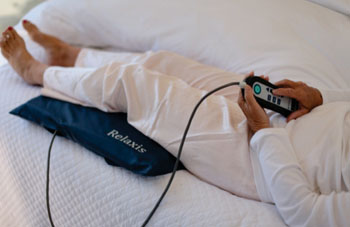
Image: The Relaxis restless legs syndrome device (Photo courtesy of Sensory Medical).
A novel nonpharmacological approach to restless legs syndrome (RLS) provides physical relief while enabling patients to remain in bed.
The Relaxis device is based on a low-profile pad that the patients place at the site of their discomfort during a nighttime RLS attack, usually under the calf or thigh. The patient then activates the pad, which is engineering for automatic shut off with a ramp-down feature that completes the cycle after approximately 30 minutes. The vibration from the pad is essentially a form of counter-stimulation that gradually decreases in intensity so that the patient is not awakened when it stops.
The Relaxis Pad is only intended for use on patients with primary RLS. It is not intended to be used by people with skin disorders such as eczema, psoriasis, cellulitis, nonhealing wounds, or those who have secondary RLS. The device should also not be used on patients who have been diagnosed with deep venous thrombosis (DVT) in either leg during the previous six months due to a known potential to dislodge or fragment the clot and cause a pulmonary embolism. The Relaxis Pad is a product of Sensory Medical (San Clemente, CA, USA) and has been approved by the US Food and Drug Administration (FDA).
"Relaxis represents the first prescription, noninvasive, nonmedication alternative for improving quality of sleep in patients with primary restless legs syndrome, a significant health problem that affects millions of people each year,” said Fred Burbank, MD, CEO of Sensory Medical and a RLS sufferer. “Until now, patients' only options were to suffer unaided through their condition, or face the potential side effects of long-term medication therapy.”
RLS, also known as Willis-Ekbom disease (WED) is a neurological disorder characterized by an irresistible urge to move one's body to stop uncomfortable or odd sensations. It most commonly affects the legs, but can affect the arms, torso, head, and even phantom limbs. In the most severe cases, RLS attacks may occur several times per night, repeatedly causing interrupted sleep and impaired daytime functioning. Moving the affected body part modulates the sensations, providing temporary relief.
The sensations typically begin or intensify during quiet wakefulness, such as when relaxing, reading, studying, or trying to sleep. Among the most impacted are the middle-aged or older, as symptoms tend to increase in both frequency and duration with age; it is twice as prevalent in women. To alleviate RLS symptoms, medication therapy is often prescribed, including dopaminergic agents used to treat Parkinson's disease, anticonvulsants, narcotic opioids, muscle relaxants, and benzodiazepines.
Related Links:
Sensory Medical




The Relaxis device is based on a low-profile pad that the patients place at the site of their discomfort during a nighttime RLS attack, usually under the calf or thigh. The patient then activates the pad, which is engineering for automatic shut off with a ramp-down feature that completes the cycle after approximately 30 minutes. The vibration from the pad is essentially a form of counter-stimulation that gradually decreases in intensity so that the patient is not awakened when it stops.
The Relaxis Pad is only intended for use on patients with primary RLS. It is not intended to be used by people with skin disorders such as eczema, psoriasis, cellulitis, nonhealing wounds, or those who have secondary RLS. The device should also not be used on patients who have been diagnosed with deep venous thrombosis (DVT) in either leg during the previous six months due to a known potential to dislodge or fragment the clot and cause a pulmonary embolism. The Relaxis Pad is a product of Sensory Medical (San Clemente, CA, USA) and has been approved by the US Food and Drug Administration (FDA).
"Relaxis represents the first prescription, noninvasive, nonmedication alternative for improving quality of sleep in patients with primary restless legs syndrome, a significant health problem that affects millions of people each year,” said Fred Burbank, MD, CEO of Sensory Medical and a RLS sufferer. “Until now, patients' only options were to suffer unaided through their condition, or face the potential side effects of long-term medication therapy.”
RLS, also known as Willis-Ekbom disease (WED) is a neurological disorder characterized by an irresistible urge to move one's body to stop uncomfortable or odd sensations. It most commonly affects the legs, but can affect the arms, torso, head, and even phantom limbs. In the most severe cases, RLS attacks may occur several times per night, repeatedly causing interrupted sleep and impaired daytime functioning. Moving the affected body part modulates the sensations, providing temporary relief.
The sensations typically begin or intensify during quiet wakefulness, such as when relaxing, reading, studying, or trying to sleep. Among the most impacted are the middle-aged or older, as symptoms tend to increase in both frequency and duration with age; it is twice as prevalent in women. To alleviate RLS symptoms, medication therapy is often prescribed, including dopaminergic agents used to treat Parkinson's disease, anticonvulsants, narcotic opioids, muscle relaxants, and benzodiazepines.
Related Links:
Sensory Medical

Gold Member
STI Test
Vivalytic Sexually Transmitted Infection (STI) Array
New
Surgical Dressing
ALLEVYN Ag+ SURGICAL
New
Blood Pressure Monitor
Cuff Blood Pressure Monitor
Latest Patient Care News
- Wearable Sleep Data Predict Adherence to Pulmonary Rehabilitation
- Revolutionary Automatic IV-Line Flushing Device to Enhance Infusion Care
- VR Training Tool Combats Contamination of Portable Medical Equipment
- Portable Biosensor Platform to Reduce Hospital-Acquired Infections
- First-Of-Its-Kind Portable Germicidal Light Technology Disinfects High-Touch Clinical Surfaces in Seconds
- Surgical Capacity Optimization Solution Helps Hospitals Boost OR Utilization

- Game-Changing Innovation in Surgical Instrument Sterilization Significantly Improves OR Throughput
- Next Gen ICU Bed to Help Address Complex Critical Care Needs
- Groundbreaking AI-Powered UV-C Disinfection Technology Redefines Infection Control Landscape
- Clean Hospitals Can Reduce Antibiotic Resistance, Save Lives
- Smart Hospital Beds Improve Accuracy of Medical Diagnosis
- New Fast Endoscope Drying System Improves Productivity and Traceability
- World’s First Automated Endoscope Cleaner Fights Antimicrobial Resistance
- Portable High-Capacity Digital Stretcher Scales Provide Precision Weighing for Patients in ER
- Portable Clinical Scale with Remote Indicator Allows for Flexible Patient Weighing Use
- Innovative and Highly Customizable Medical Carts Offer Unlimited Configuration Possibilities
Channels
Artificial Intelligence
view channel
AI Analysis of Pericardial Fat Refines Long-Term Heart Disease Risk
Accurately identifying long-term cardiovascular disease risk in asymptomatic adults remains challenging for clinicians. Missed or underestimated risk delays preventive therapy and increases the chance... Read more
Machine Learning Approach Enhances Liver Cancer Risk Stratification
Hepatocellular carcinoma, the most common form of primary liver cancer, is often detected late despite targeted surveillance programs. Current screening guidelines emphasize patients with known cirrhosis,... Read more

Critical Care
view channel
Noninvasive Monitoring Device Enables Earlier Intervention in Heart Failure
Hospitalizations for heart failure with preserved ejection fraction (HFpEF) remain common because lung congestion often worsens before symptoms prompt treatment changes. Missed early decompensation... Read more
Automated IV Labeling Solution Improves Infusion Safety and Efficiency
Medication administration in high-acuity settings is often complicated by multiple concurrent infusions, making accurate line identification essential. In a 10-hospital intensive care unit study, 60% of... Read more

Surgical Techniques
view channel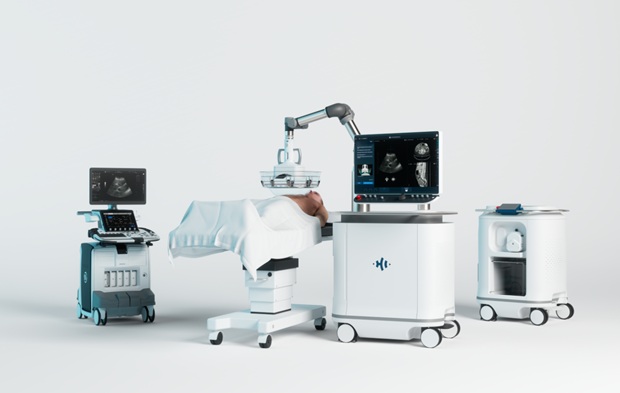
Ultrasound Technology Aims to Replace Invasive BPH Procedures
Benign prostatic hyperplasia (BPH) is a frequent cause of lower urinary tract symptoms in aging men and often requires invasive procedures or prolonged recovery. With prevalence expected to rise as populations... Read more
Continuous Monitoring with Wearables Enhances Postoperative Patient Safety
Postoperative hypoxemia on general surgical wards is common and often missed by intermittent vital sign checks. Undetected low oxygen levels can delay recovery and raise the risk of complications that... Read more

Health IT
view channel
EMR-Based Tool Predicts Graft Failure After Kidney Transplant
Kidney transplantation offers patients with end-stage kidney disease longer survival and better quality of life than dialysis, yet graft failure remains a major challenge. Although a successful transplant... Read more
Printable Molecule-Selective Nanoparticles Enable Mass Production of Wearable Biosensors
The future of medicine is likely to focus on the personalization of healthcare—understanding exactly what an individual requires and delivering the appropriate combination of nutrients, metabolites, and... Read more


Business
view channel
GE HealthCare Leads Major European Initiative to Advance Cardio-Oncology Care
Cardiovascular complications are increasingly recognized among people undergoing or recovering from cancer treatment, driven by pre‑existing disease and the cardiotoxic effects of chemotherapy, radiotherapy,... Read more

