






Silicone Gel Breast Implant Safety Remains Unclear
|
By HospiMedica International staff writers Posted on 15 Nov 2015 |


|
A new review of literature that examined health outcomes of silicone gel breast implants failed to provide clear evidence either for safety or harm.
Researchers at the University of Texas Southwestern Medical Center (Dallas, TX, USA) and Brown University (Providence, RI, USA) reviewed studies published through June 2015 to examine specific long-term health outcomes in women with silicone gel breast implants, including cancer development; connective tissue, rheumatologic, and autoimmune diseases; neurologic diseases; reproductive issues, including lactation; offspring issues; and mental health issues, included depression and suicide. In all, 32 longitudinal studies (in 58 publications) met eligibility criteria.
The researchers then extracted data on participant and implant characteristics that compared women with and without breast implants and reported long-term health outcomes of interest. The researchers found possible associations with decreased risk for primary breast and endometrial cancers and increased risks for lung cancer, rheumatoid arthritis, Sjögren syndrome, and Raynaud syndrome, but the evidence was frequently not specific to silicone gel implants, and studies were rarely adequately adjusted for potential confounders. The report was published on November 10, 2015, in Annals of Internal Medicine.
“Despite numerous studies reporting on the risk for many diseases and conditions, evidence was insufficient of an association between breast implants and any health outcome,” concluded lead author Ethan Balk, PhD, of the department of health services, policy, and practice at Brown University, and colleagues. “No outcome had at least two adequately adjusted studies that yielded consistent estimates of associations. There was a general lack of adequate accounting for possible confounders.”
“This project was conducted to provide background information for advice to be provided to the FDA regarding development of a silicone gel breast implant registry. While some databases may not have captured enough information, other studies might be worth reanalyzing to include more available confounders than before and with new methods,” added Dr. Balk. “We are hopeful that this study will serve as a guide to future researchers to improve analyses of currently available studies and of future studies.”
Silicone gel breast implants were removed from the US market for cosmetic use in 1992 owing to safety concerns. They were reintroduced in 2006, with a call for improved surveillance of clinical outcomes.
Related Links:
University of Texas Southwestern Medical Center
Brown University






Researchers at the University of Texas Southwestern Medical Center (Dallas, TX, USA) and Brown University (Providence, RI, USA) reviewed studies published through June 2015 to examine specific long-term health outcomes in women with silicone gel breast implants, including cancer development; connective tissue, rheumatologic, and autoimmune diseases; neurologic diseases; reproductive issues, including lactation; offspring issues; and mental health issues, included depression and suicide. In all, 32 longitudinal studies (in 58 publications) met eligibility criteria.
The researchers then extracted data on participant and implant characteristics that compared women with and without breast implants and reported long-term health outcomes of interest. The researchers found possible associations with decreased risk for primary breast and endometrial cancers and increased risks for lung cancer, rheumatoid arthritis, Sjögren syndrome, and Raynaud syndrome, but the evidence was frequently not specific to silicone gel implants, and studies were rarely adequately adjusted for potential confounders. The report was published on November 10, 2015, in Annals of Internal Medicine.
“Despite numerous studies reporting on the risk for many diseases and conditions, evidence was insufficient of an association between breast implants and any health outcome,” concluded lead author Ethan Balk, PhD, of the department of health services, policy, and practice at Brown University, and colleagues. “No outcome had at least two adequately adjusted studies that yielded consistent estimates of associations. There was a general lack of adequate accounting for possible confounders.”
“This project was conducted to provide background information for advice to be provided to the FDA regarding development of a silicone gel breast implant registry. While some databases may not have captured enough information, other studies might be worth reanalyzing to include more available confounders than before and with new methods,” added Dr. Balk. “We are hopeful that this study will serve as a guide to future researchers to improve analyses of currently available studies and of future studies.”
Silicone gel breast implants were removed from the US market for cosmetic use in 1992 owing to safety concerns. They were reintroduced in 2006, with a call for improved surveillance of clinical outcomes.
Related Links:
University of Texas Southwestern Medical Center
Brown University

New
Gold Member
Neonatal Heel Incision Device
Tenderfoot
New
Monitor/Defibrillator
Zenix
New
Vessel Sealing Instrument
ERGOseal
Latest Patient Care News
- Wearable Sleep Data Predict Adherence to Pulmonary Rehabilitation
- Revolutionary Automatic IV-Line Flushing Device to Enhance Infusion Care
- VR Training Tool Combats Contamination of Portable Medical Equipment
- Portable Biosensor Platform to Reduce Hospital-Acquired Infections
- First-Of-Its-Kind Portable Germicidal Light Technology Disinfects High-Touch Clinical Surfaces in Seconds
- Surgical Capacity Optimization Solution Helps Hospitals Boost OR Utilization

- Game-Changing Innovation in Surgical Instrument Sterilization Significantly Improves OR Throughput
- Next Gen ICU Bed to Help Address Complex Critical Care Needs
- Groundbreaking AI-Powered UV-C Disinfection Technology Redefines Infection Control Landscape
- Clean Hospitals Can Reduce Antibiotic Resistance, Save Lives
- Smart Hospital Beds Improve Accuracy of Medical Diagnosis
- New Fast Endoscope Drying System Improves Productivity and Traceability
- World’s First Automated Endoscope Cleaner Fights Antimicrobial Resistance
- Portable High-Capacity Digital Stretcher Scales Provide Precision Weighing for Patients in ER
- Portable Clinical Scale with Remote Indicator Allows for Flexible Patient Weighing Use
- Innovative and Highly Customizable Medical Carts Offer Unlimited Configuration Possibilities
Channels
Artificial Intelligence
view channel
AI Analysis of Pericardial Fat Refines Long-Term Heart Disease Risk
Accurately identifying long-term cardiovascular disease risk in asymptomatic adults remains challenging for clinicians. Missed or underestimated risk delays preventive therapy and increases the chance... Read more
Machine Learning Approach Enhances Liver Cancer Risk Stratification
Hepatocellular carcinoma, the most common form of primary liver cancer, is often detected late despite targeted surveillance programs. Current screening guidelines emphasize patients with known cirrhosis,... Read more

Critical Care
view channel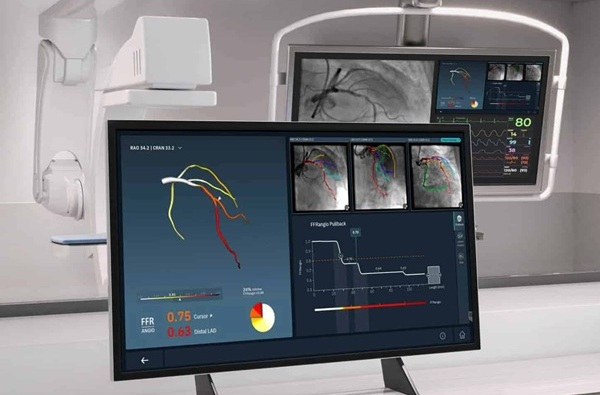
Angiography-Based FFR Approach Matches Gold Standard Results Without Wires
Accurately determining whether a coronary stenosis limits blood flow is essential to guide percutaneous coronary intervention, yet wire-based physiologic testing remains underused due to added procedural... Read more
Eye Imaging AI Identifies Elevated Cardiovascular Risk
Many adults at risk for atherosclerotic cardiovascular disease are not identified until they undergo formal primary care assessment. Delayed risk recognition can postpone initiation of statins and lifestyle... Read more

Surgical Techniques
view channel
Fiber-Form Bone Graft Expands Intraoperative Options for Spinal Fusion
Spinal and orthopedic fusion procedures often require bone graft materials that handle predictably and support bone formation. Surgeons face added complexity in difficult anatomy and challenging fusion environments.... Read more
Ultrasound‑Aided Catheter Treatment Cuts Early Collapse in Pulmonary Embolism
Acute pulmonary embolism can cause rapid hemodynamic deterioration and early death in hospitalized and emergency patients. Systemic thrombolysis can dissolve clots but is limited by a high risk of major... Read more

Health IT
view channel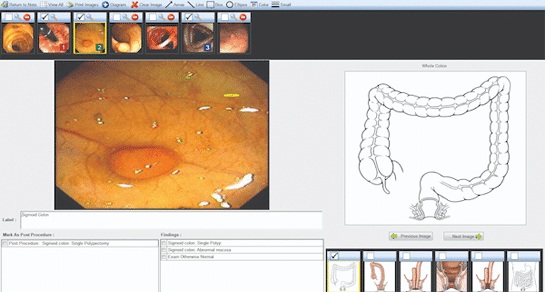
Voice-Driven AI System Enables Structured GI Procedure Documentation
Documentation during gastrointestinal (GI) procedures often competes with real-time clinical decision-making and imposes a significant cognitive burden on physicians. Manual data entry and post-procedure... Read more
EMR-Based Tool Predicts Graft Failure After Kidney Transplant
Kidney transplantation offers patients with end-stage kidney disease longer survival and better quality of life than dialysis, yet graft failure remains a major challenge. Although a successful transplant... Read more
Printable Molecule-Selective Nanoparticles Enable Mass Production of Wearable Biosensors
The future of medicine is likely to focus on the personalization of healthcare—understanding exactly what an individual requires and delivering the appropriate combination of nutrients, metabolites, and... Read more

Business
view channel
GE HealthCare Leads Major European Initiative to Advance Cardio-Oncology Care
Cardiovascular complications are increasingly recognized among people undergoing or recovering from cancer treatment, driven by pre‑existing disease and the cardiotoxic effects of chemotherapy, radiotherapy,... Read more

