






Defensive Barrier Halves Hospital-Acquired Infections 
|
By HospiMedica International staff writers Posted on 01 Mar 2016 |


|
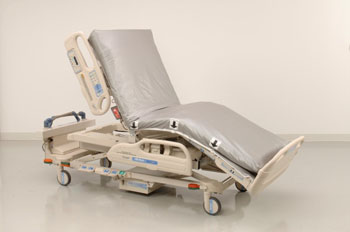
Image: The Trinity Bed Protection System mattress cover (Photo courtesy of Trinity Guardion).
An innovative bed protection system insulates the mattress and bed deck from bacteria that cause hospital-acquired infections (HAIs).
The Trinity Bed Protection System includes a reusable bed cover and a matching pillowcase specifically engineered to eliminate bacteria from the hospital bed deck and mattress. The system offers two layers of protection, with the first being launderability. The bed protection system can be cleansed using mechanical action, dilution, high heat, and chlorine to eliminate 99.99% of microorganisms, with high-heat drying helping to kill off residual bacteria and spores. The barrier can withstand up to more than 100 washing cycles and still maintain its protection rate.
The second layer of protection is an antimicrobial effect resulting from silver ions encapsulated in ceramic carriers that are built into a polymer matrix on the face of the fabric. Unlike other applications that become ineffective after laundering, the silver ions remain intact and effective throughout regular washing cycles in commercial laundries. In a clinical trial at St. Vincent Seton Specialty Hospitals in Indianapolis (IN, USA) and Lafayette (LA, USA) over a period of 14 months, the Trinity Bed Protection System reduced HAIs such as Clostridium difficile by 50%.
“We compared infection rates before and after these two hospitals began using the bed cover system and discovered that by following the handling and washing instructions, the infection rates were cut in half,” said study author Edmond Hooker, MD, an associate professor in Health Services Administration at Xavier University (Cincinnati, OH, USA).
The Trinity Bed Protection System, a product of Trinity Guardion (Batesville, IN, USA), is manufactured using Smith & Nephew (London, United Kingdom) polyurethane extruded films, and is designed to fit specific brands and models of hospital beds. The custom sizing helps protect the mattress and deck while still allowing the bed to fully articulate without hindering the underlying mattress. The system also includes a pillowcase.
“By laundering the cover after each patient discharge there is a significant reduction in bacteria on the mattress and bed deck surfaces, a new level of clean for hospital beds,” said Bruce Rippe, co-founder and COO of Trinity Guardion. “When laundered according to directions, a cover delivers a patient bed surface that is at a level of clean more difficult to achieve with current cleaning protocols. This system should eliminate virtually all bacteria and viruses from the mattress cover. Hospitals now have another tool in the battle to provide consistently clean beds.”
Related Links:
Trinity Guardion
Xavier University
Smith & Nephew




The Trinity Bed Protection System includes a reusable bed cover and a matching pillowcase specifically engineered to eliminate bacteria from the hospital bed deck and mattress. The system offers two layers of protection, with the first being launderability. The bed protection system can be cleansed using mechanical action, dilution, high heat, and chlorine to eliminate 99.99% of microorganisms, with high-heat drying helping to kill off residual bacteria and spores. The barrier can withstand up to more than 100 washing cycles and still maintain its protection rate.
The second layer of protection is an antimicrobial effect resulting from silver ions encapsulated in ceramic carriers that are built into a polymer matrix on the face of the fabric. Unlike other applications that become ineffective after laundering, the silver ions remain intact and effective throughout regular washing cycles in commercial laundries. In a clinical trial at St. Vincent Seton Specialty Hospitals in Indianapolis (IN, USA) and Lafayette (LA, USA) over a period of 14 months, the Trinity Bed Protection System reduced HAIs such as Clostridium difficile by 50%.
“We compared infection rates before and after these two hospitals began using the bed cover system and discovered that by following the handling and washing instructions, the infection rates were cut in half,” said study author Edmond Hooker, MD, an associate professor in Health Services Administration at Xavier University (Cincinnati, OH, USA).
The Trinity Bed Protection System, a product of Trinity Guardion (Batesville, IN, USA), is manufactured using Smith & Nephew (London, United Kingdom) polyurethane extruded films, and is designed to fit specific brands and models of hospital beds. The custom sizing helps protect the mattress and deck while still allowing the bed to fully articulate without hindering the underlying mattress. The system also includes a pillowcase.
“By laundering the cover after each patient discharge there is a significant reduction in bacteria on the mattress and bed deck surfaces, a new level of clean for hospital beds,” said Bruce Rippe, co-founder and COO of Trinity Guardion. “When laundered according to directions, a cover delivers a patient bed surface that is at a level of clean more difficult to achieve with current cleaning protocols. This system should eliminate virtually all bacteria and viruses from the mattress cover. Hospitals now have another tool in the battle to provide consistently clean beds.”
Related Links:
Trinity Guardion
Xavier University
Smith & Nephew

New
Gold Member
Neonatal Heel Incision Device
Tenderfoot
New
Medical Examination & Procedure Light
Vega 80
New
Medical-Grade Display
HL2316SHTB
Latest Patient Care News
- Wearable Sleep Data Predict Adherence to Pulmonary Rehabilitation
- Revolutionary Automatic IV-Line Flushing Device to Enhance Infusion Care
- VR Training Tool Combats Contamination of Portable Medical Equipment
- Portable Biosensor Platform to Reduce Hospital-Acquired Infections
- First-Of-Its-Kind Portable Germicidal Light Technology Disinfects High-Touch Clinical Surfaces in Seconds
- Surgical Capacity Optimization Solution Helps Hospitals Boost OR Utilization
- Game-Changing Innovation in Surgical Instrument Sterilization Significantly Improves OR Throughput
- Next Gen ICU Bed to Help Address Complex Critical Care Needs
- Groundbreaking AI-Powered UV-C Disinfection Technology Redefines Infection Control Landscape
- Clean Hospitals Can Reduce Antibiotic Resistance, Save Lives
- Smart Hospital Beds Improve Accuracy of Medical Diagnosis
- New Fast Endoscope Drying System Improves Productivity and Traceability
- World’s First Automated Endoscope Cleaner Fights Antimicrobial Resistance
- Portable High-Capacity Digital Stretcher Scales Provide Precision Weighing for Patients in ER
- Portable Clinical Scale with Remote Indicator Allows for Flexible Patient Weighing Use
- Innovative and Highly Customizable Medical Carts Offer Unlimited Configuration Possibilities
Channels
Artificial Intelligence
view channel
Machine Learning Approach Enhances Liver Cancer Risk Stratification
Hepatocellular carcinoma, the most common form of primary liver cancer, is often detected late despite targeted surveillance programs. Current screening guidelines emphasize patients with known cirrhosis,... Read more
New AI Approach Monitors Brain Health Using Passive Wearable Data
Brain health spans cognitive and emotional functions and can fluctuate even in adults without diagnosed disease. Detecting early changes remains difficult in routine care and burdens specialty services... Read more

Critical Care
view channel
Noninvasive Monitoring Device Enables Earlier Intervention in Heart Failure
Hospitalizations for heart failure with preserved ejection fraction (HFpEF) remain common because lung congestion often worsens before symptoms prompt treatment changes. Missed early decompensation... Read more
Automated IV Labeling Solution Improves Infusion Safety and Efficiency
Medication administration in high-acuity settings is often complicated by multiple concurrent infusions, making accurate line identification essential. In a 10-hospital intensive care unit study, 60% of... Read more

Surgical Techniques
view channel
Continuous Monitoring with Wearables Enhances Postoperative Patient Safety
Postoperative hypoxemia on general surgical wards is common and often missed by intermittent vital sign checks. Undetected low oxygen levels can delay recovery and raise the risk of complications that... Read more
New Approach Enables Customized Muscle Tissue Without Biomaterial Scaffolds
Volumetric muscle loss is a traumatic loss of skeletal muscle that often leads to permanent functional impairment and limited reconstructive options. Current experimental strategies struggle to deliver... Read more
Health IT
view channel
EMR-Based Tool Predicts Graft Failure After Kidney Transplant
Kidney transplantation offers patients with end-stage kidney disease longer survival and better quality of life than dialysis, yet graft failure remains a major challenge. Although a successful transplant... Read more
Printable Molecule-Selective Nanoparticles Enable Mass Production of Wearable Biosensors
The future of medicine is likely to focus on the personalization of healthcare—understanding exactly what an individual requires and delivering the appropriate combination of nutrients, metabolites, and... Read more


Business
view channel
GE HealthCare Leads Major European Initiative to Advance Cardio-Oncology Care
Cardiovascular complications are increasingly recognized among people undergoing or recovering from cancer treatment, driven by pre‑existing disease and the cardiotoxic effects of chemotherapy, radiotherapy,... Read more

