Neuroplasticity Device Helps Recover Muscle Control
|
By HospiMedica International staff writers Posted on 15 Feb 2018 |


|
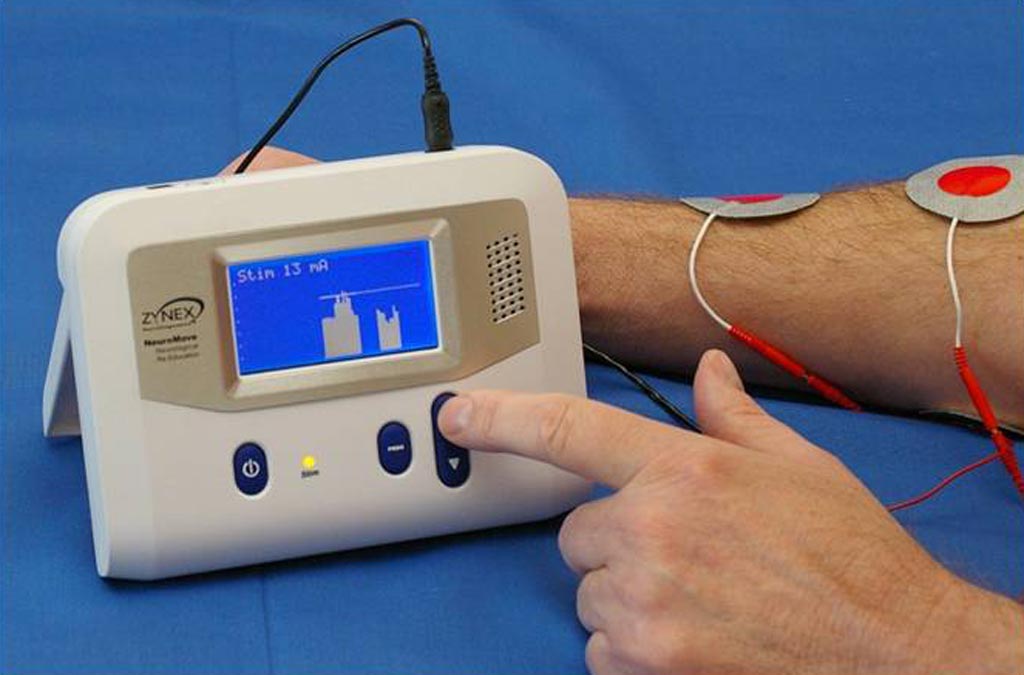
Image: An EMG feedback device helps stroke patients recover muscle control (Photo courtesy of Zynex).
A novel device helps stroke and spinal cord injury patients regain movement by using the brain's ability to rewire itself.
The Zynex (Lone Tree, CO, USA) NeuroMove 900 device is designed to detect signals sent by the patient’s brain to a certain muscle group by analysis of electromyography (EMG) readings using two adhesive electrodes. A built-in microprocessor distinguishes when an EMG signal represents regular muscle activity, muscle tone, noise, or a real attempt to move a muscle. When such a real attempt is detected, the unit “rewards” the patient with a few seconds of muscle contraction, with additional visual and sensory feedback serving as an important element in relearning the movement.
NeuroMove can detect attempts even when the trace movements are below visible levels, thus assisting healthy parts of the brain assume lost functionality. NeuroMove also prompts the patient to relax just as often (a significant element in learning to control a muscle group), as better relaxation of a muscle group can sometimes be noticed just ten minutes into a treatment session. The system adjusts automatically to the levels produced by each patient and to each new session, making it effective both for patients with spasticity/muscle tone, as well as for patients with flaccid extremities.
“Stroke is the leading cause of serious, long-term disability in the United States and the NeuroMove 900 is uniquely positioned to enhance the patient's recovery,” said Thomas Sandgaard, founder and CEO of Zynex. “Under a newly designed marketing strategy, healthcare practitioners will be able to use the NeuroMove 900 on patients clinically and then easily transition the patient's rehabilitation to the patient's home once discharged from the clinic.”
EMG is an electrodiagnostic technique for evaluating and recording the electrical activity produced by skeletal muscles when electrically or neurologically activated in order to detect neurological and neuromuscular problems. It is used diagnostically to study biomechanics, motor control, neuromuscular physiology, movement disorders, postural control, and for physical therapy.
Related Links:
Zynex




The Zynex (Lone Tree, CO, USA) NeuroMove 900 device is designed to detect signals sent by the patient’s brain to a certain muscle group by analysis of electromyography (EMG) readings using two adhesive electrodes. A built-in microprocessor distinguishes when an EMG signal represents regular muscle activity, muscle tone, noise, or a real attempt to move a muscle. When such a real attempt is detected, the unit “rewards” the patient with a few seconds of muscle contraction, with additional visual and sensory feedback serving as an important element in relearning the movement.
NeuroMove can detect attempts even when the trace movements are below visible levels, thus assisting healthy parts of the brain assume lost functionality. NeuroMove also prompts the patient to relax just as often (a significant element in learning to control a muscle group), as better relaxation of a muscle group can sometimes be noticed just ten minutes into a treatment session. The system adjusts automatically to the levels produced by each patient and to each new session, making it effective both for patients with spasticity/muscle tone, as well as for patients with flaccid extremities.
“Stroke is the leading cause of serious, long-term disability in the United States and the NeuroMove 900 is uniquely positioned to enhance the patient's recovery,” said Thomas Sandgaard, founder and CEO of Zynex. “Under a newly designed marketing strategy, healthcare practitioners will be able to use the NeuroMove 900 on patients clinically and then easily transition the patient's rehabilitation to the patient's home once discharged from the clinic.”
EMG is an electrodiagnostic technique for evaluating and recording the electrical activity produced by skeletal muscles when electrically or neurologically activated in order to detect neurological and neuromuscular problems. It is used diagnostically to study biomechanics, motor control, neuromuscular physiology, movement disorders, postural control, and for physical therapy.
Related Links:
Zynex

Gold Member
12-Channel ECG
CM1200B
Ultrasound Needle Guidance System
SonoSite L25
Gas Consumption Analyzer
Anesthetic Gas Consumption Analyzer
Latest Patient Care News
- Revolutionary Automatic IV-Line Flushing Device to Enhance Infusion Care
- VR Training Tool Combats Contamination of Portable Medical Equipment
- Portable Biosensor Platform to Reduce Hospital-Acquired Infections
- First-Of-Its-Kind Portable Germicidal Light Technology Disinfects High-Touch Clinical Surfaces in Seconds
- Surgical Capacity Optimization Solution Helps Hospitals Boost OR Utilization
- Game-Changing Innovation in Surgical Instrument Sterilization Significantly Improves OR Throughput
- Next Gen ICU Bed to Help Address Complex Critical Care Needs
- Groundbreaking AI-Powered UV-C Disinfection Technology Redefines Infection Control Landscape
- Clean Hospitals Can Reduce Antibiotic Resistance, Save Lives
- Smart Hospital Beds Improve Accuracy of Medical Diagnosis
- New Fast Endoscope Drying System Improves Productivity and Traceability
- World’s First Automated Endoscope Cleaner Fights Antimicrobial Resistance
- Portable High-Capacity Digital Stretcher Scales Provide Precision Weighing for Patients in ER
- Portable Clinical Scale with Remote Indicator Allows for Flexible Patient Weighing Use
- Innovative and Highly Customizable Medical Carts Offer Unlimited Configuration Possibilities
- Biomolecular Wound Healing Film Adheres to Sensitive Tissue and Releases Active Ingredients
Channels

Critical Care
view channel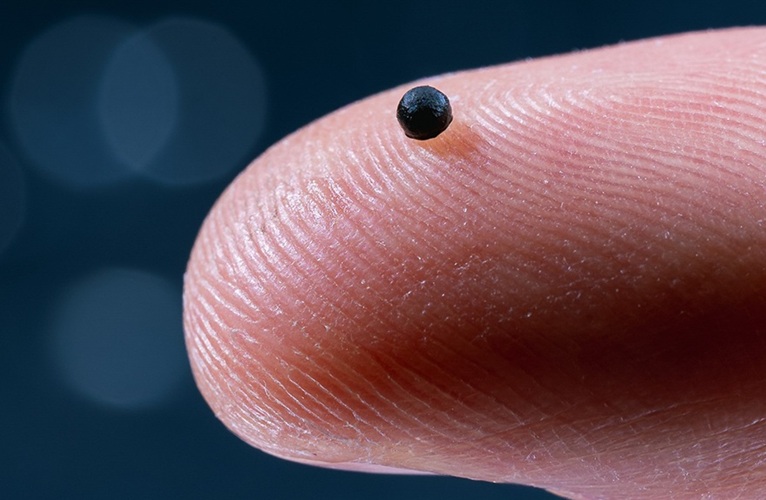
Magnetically Guided Microrobots to Enable Targeted Drug Delivery
Stroke affects 12 million people globally each year, often causing death or lasting disability. Current treatment relies on systemic administration of clot-dissolving drugs, which circulate throughout... Read more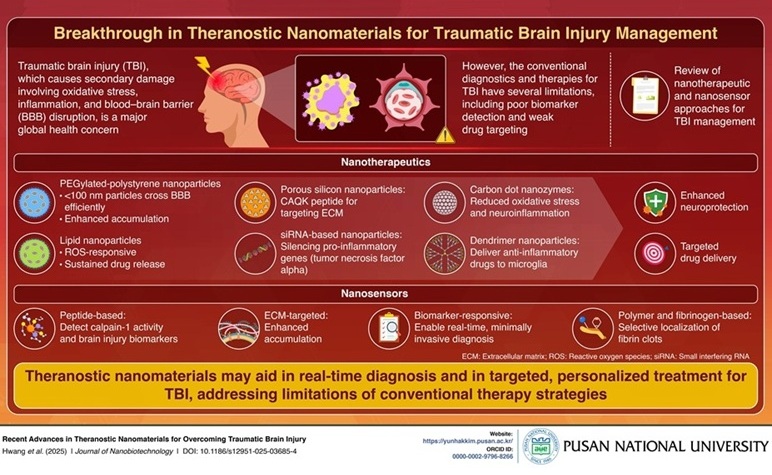
Smart Nanomaterials Detect and Treat Traumatic Brain Injuries Simultaneously
Traumatic brain injury (TBI) continues to leave millions with long-term disabilities every year. After a sudden impact from a fall, collision, or accident, the brain undergoes inflammation, oxidative stress,... Read more
Earlier Blood Transfusion Could Reduce Heart Failure and Arrhythmia in Heart Disease Patients
Blood loss during or after surgery can place significant stress on people with heart disease, increasing the risk of dangerous complications. Transfusions are often delayed until hemoglobin levels fall... Read more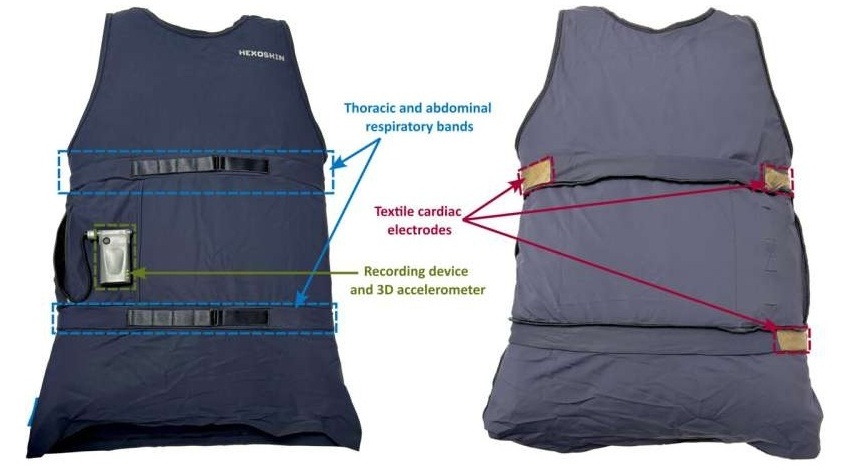
Surgical Techniques
view channel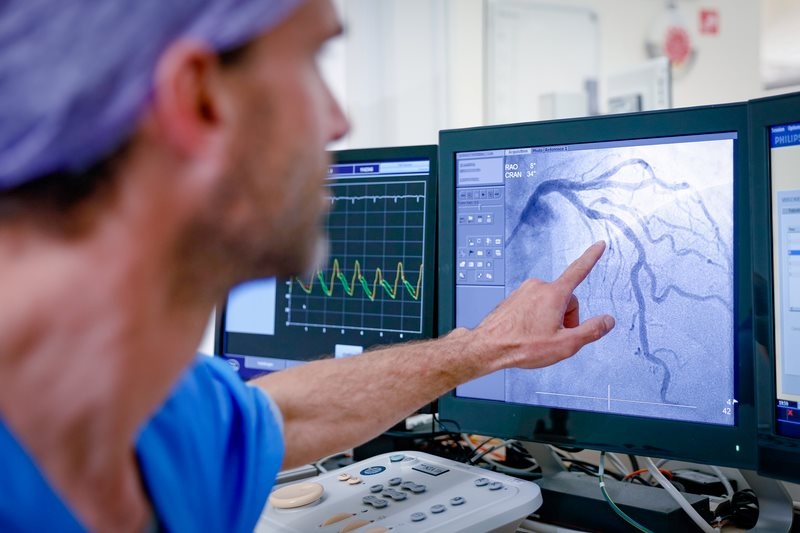
New Study Findings Could Halve Number of Stent Procedures
When a coronary artery becomes acutely blocked during a heart attack, opening it immediately is essential to prevent irreversible damage. However, many patients also have other narrowed vessels that appear... Read more
Breakthrough Surgical Device Redefines Hip Arthroscopy
Hip arthroscopy has surged in popularity, yet surgeons still face major mechanical constraints when navigating deep joint spaces through traditional cannulas. Limited tool mobility and the need for an... Read more
Health IT
view channel
Printable Molecule-Selective Nanoparticles Enable Mass Production of Wearable Biosensors
The future of medicine is likely to focus on the personalization of healthcare—understanding exactly what an individual requires and delivering the appropriate combination of nutrients, metabolites, and... Read more

Business
view channel
Philips and Masimo Partner to Advance Patient Monitoring Measurement Technologies
Royal Philips (Amsterdam, Netherlands) and Masimo (Irvine, California, USA) have renewed their multi-year strategic collaboration, combining Philips’ expertise in patient monitoring with Masimo’s noninvasive... Read more
B. Braun Acquires Digital Microsurgery Company True Digital Surgery
The high-end microsurgery market in neurosurgery, spine, and ENT is undergoing a significant transformation. Traditional analog microscopes are giving way to digital exoscopes, which provide improved visualization,... Read more
CMEF 2025 to Promote Holistic and High-Quality Development of Medical and Health Industry
The 92nd China International Medical Equipment Fair (CMEF 2025) Autumn Exhibition is scheduled to be held from September 26 to 29 at the China Import and Export Fair Complex (Canton Fair Complex) in Guangzhou.... Read more