






Early Onset Diabetes Shortens Lifespan by Years
|
By HospiMedica International staff writers Posted on 23 Aug 2018 |


|
A new study reveals that women who develop type 1 diabetes (T1D) before the age of 10 years die an average of nearly 18 years earlier than women who do not have diabetes.
Researchers at Sahlgrenska Academy (SA; Göteborg, Sweden), the University of Gothenburg (Sweden), the Swedish National Diabetes Register, and other institutions conducted a Swedish nationwide, register-based cohort study involving 27,195 people with T1D and 135,178 matched controls in order to stratify age of onset as a risk factor. Study participants were categorized into five groups, according to age at diagnosis: 0–10 years, 11–15 years, 16–20 years, 21–25 years and 26–30 years. During the median follow-up period of 10 years, 959 T1D participants and 1,501 controls died.
The researcher analyzed the data in order to estimate excess risk of all-cause mortality, cardiovascular mortality, non-cardiovascular mortality, acute myocardial infarction (MI), stroke, cardiovascular disease (a composite of acute myocardial infarction and stroke), coronary heart disease, heart failure (HF) and atrial fibrillation (AF). The results revealed that age at onset of T1D is an important determinant of survival and cardiovascular outcomes, with highest excess risk observed in women.
The probability of severe cardiovascular disease proved to be 30 times higher for those who developed T1D before the age of 10 years than for controls. The highest increase in mortality risk involved heart attacks in women who developed T1D before the age of ten, 90 times higher than that of the controls, shortening their life by an average of 17.7 years. Men with T1D in the corresponding situation lost 14.2 years of life. Diagnosis of T1D at 26-30 years resulted in a corresponding risk increase by a factor of six, or 10 years of life. The study was published on August 11, 2018, in The Lancet.
“These are disappointing and previously unknown figures. The study suggests that we must make an even greater effort to aggressively treat patients diagnosed at an early age to reduce the risk of complications and premature death,” said lead author Araz Rawshani, PhD, of Sahlgrenska Academy. “At the same time, the study must also be viewed in the light of the tremendous progress that has been made in the past few decades. Those who live with diabetes today, and those who will acquire the disease, will enjoy longer and healthier lives in the years to come.”
T1D is an autoimmune disease in which a person's pancreas stops producing insulin. It can impact both children and adults at any age, causing dependence on multiple daily injections of insulin or an insulin pump. Serious short and long term complications stemming from high blood sugar levels can lead to kidney failure, blindness, nerve damage, heart attack, and stroke. Low levels can be life-threatening, particularly at night when they are most difficult to manage.
Related Links:
Sahlgrenska Academy
University of Gothenburg





Researchers at Sahlgrenska Academy (SA; Göteborg, Sweden), the University of Gothenburg (Sweden), the Swedish National Diabetes Register, and other institutions conducted a Swedish nationwide, register-based cohort study involving 27,195 people with T1D and 135,178 matched controls in order to stratify age of onset as a risk factor. Study participants were categorized into five groups, according to age at diagnosis: 0–10 years, 11–15 years, 16–20 years, 21–25 years and 26–30 years. During the median follow-up period of 10 years, 959 T1D participants and 1,501 controls died.
The researcher analyzed the data in order to estimate excess risk of all-cause mortality, cardiovascular mortality, non-cardiovascular mortality, acute myocardial infarction (MI), stroke, cardiovascular disease (a composite of acute myocardial infarction and stroke), coronary heart disease, heart failure (HF) and atrial fibrillation (AF). The results revealed that age at onset of T1D is an important determinant of survival and cardiovascular outcomes, with highest excess risk observed in women.
The probability of severe cardiovascular disease proved to be 30 times higher for those who developed T1D before the age of 10 years than for controls. The highest increase in mortality risk involved heart attacks in women who developed T1D before the age of ten, 90 times higher than that of the controls, shortening their life by an average of 17.7 years. Men with T1D in the corresponding situation lost 14.2 years of life. Diagnosis of T1D at 26-30 years resulted in a corresponding risk increase by a factor of six, or 10 years of life. The study was published on August 11, 2018, in The Lancet.
“These are disappointing and previously unknown figures. The study suggests that we must make an even greater effort to aggressively treat patients diagnosed at an early age to reduce the risk of complications and premature death,” said lead author Araz Rawshani, PhD, of Sahlgrenska Academy. “At the same time, the study must also be viewed in the light of the tremendous progress that has been made in the past few decades. Those who live with diabetes today, and those who will acquire the disease, will enjoy longer and healthier lives in the years to come.”
T1D is an autoimmune disease in which a person's pancreas stops producing insulin. It can impact both children and adults at any age, causing dependence on multiple daily injections of insulin or an insulin pump. Serious short and long term complications stemming from high blood sugar levels can lead to kidney failure, blindness, nerve damage, heart attack, and stroke. Low levels can be life-threatening, particularly at night when they are most difficult to manage.
Related Links:
Sahlgrenska Academy
University of Gothenburg

New
Gold Member
Neonatal Heel Incision Device
Tenderfoot
New
Glucose Meter
StatStrip®
New
Patient Preoperative Skin Preparation
BD ChloraPrep
Latest Patient Care News
- Wearable Sleep Data Predict Adherence to Pulmonary Rehabilitation
- Revolutionary Automatic IV-Line Flushing Device to Enhance Infusion Care
- VR Training Tool Combats Contamination of Portable Medical Equipment
- Portable Biosensor Platform to Reduce Hospital-Acquired Infections
- First-Of-Its-Kind Portable Germicidal Light Technology Disinfects High-Touch Clinical Surfaces in Seconds
- Surgical Capacity Optimization Solution Helps Hospitals Boost OR Utilization

- Game-Changing Innovation in Surgical Instrument Sterilization Significantly Improves OR Throughput
- Next Gen ICU Bed to Help Address Complex Critical Care Needs
- Groundbreaking AI-Powered UV-C Disinfection Technology Redefines Infection Control Landscape
- Clean Hospitals Can Reduce Antibiotic Resistance, Save Lives
- Smart Hospital Beds Improve Accuracy of Medical Diagnosis
- New Fast Endoscope Drying System Improves Productivity and Traceability
- World’s First Automated Endoscope Cleaner Fights Antimicrobial Resistance
- Portable High-Capacity Digital Stretcher Scales Provide Precision Weighing for Patients in ER
- Portable Clinical Scale with Remote Indicator Allows for Flexible Patient Weighing Use
- Innovative and Highly Customizable Medical Carts Offer Unlimited Configuration Possibilities
Channels
Artificial Intelligence
view channel
Machine Learning Approach Enhances Liver Cancer Risk Stratification
Hepatocellular carcinoma, the most common form of primary liver cancer, is often detected late despite targeted surveillance programs. Current screening guidelines emphasize patients with known cirrhosis,... Read more
New AI Approach Monitors Brain Health Using Passive Wearable Data
Brain health spans cognitive and emotional functions and can fluctuate even in adults without diagnosed disease. Detecting early changes remains difficult in routine care and burdens specialty services... Read more

Critical Care
view channel
Automated IV Labeling Solution Improves Infusion Safety and Efficiency
Medication administration in high-acuity settings is often complicated by multiple concurrent infusions, making accurate line identification essential. In a 10-hospital intensive care unit study, 60% of... Read more
First-Of-Its-Kind AI Tool Detects Pulmonary Hypertension from Standard ECGs
Pulmonary hypertension is a progressive, life‑threatening disease that is frequently missed early because symptoms such as dyspnea are nonspecific and diagnostic delays can exceed two years.... Read more
Surgical Techniques
view channel
Continuous Monitoring with Wearables Enhances Postoperative Patient Safety
Postoperative hypoxemia on general surgical wards is common and often missed by intermittent vital sign checks. Undetected low oxygen levels can delay recovery and raise the risk of complications that... Read more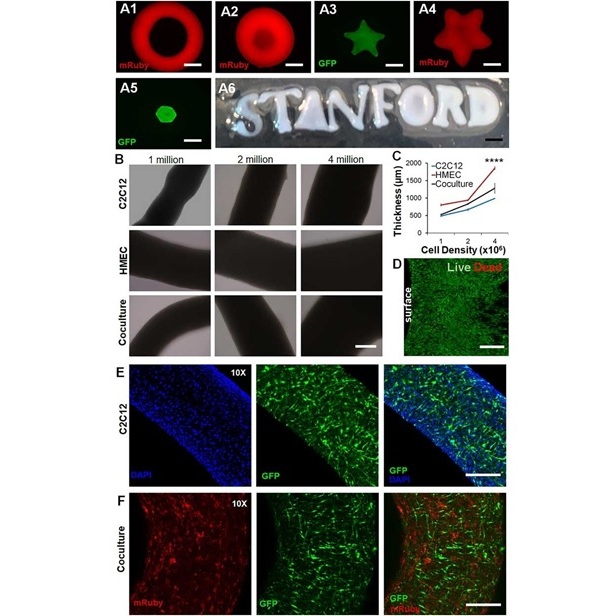
New Approach Enables Customized Muscle Tissue Without Biomaterial Scaffolds
Volumetric muscle loss is a traumatic loss of skeletal muscle that often leads to permanent functional impairment and limited reconstructive options. Current experimental strategies struggle to deliver... Read more

Health IT
view channel
EMR-Based Tool Predicts Graft Failure After Kidney Transplant
Kidney transplantation offers patients with end-stage kidney disease longer survival and better quality of life than dialysis, yet graft failure remains a major challenge. Although a successful transplant... Read more
Printable Molecule-Selective Nanoparticles Enable Mass Production of Wearable Biosensors
The future of medicine is likely to focus on the personalization of healthcare—understanding exactly what an individual requires and delivering the appropriate combination of nutrients, metabolites, and... Read more


Business
view channel
GE HealthCare Leads Major European Initiative to Advance Cardio-Oncology Care
Cardiovascular complications are increasingly recognized among people undergoing or recovering from cancer treatment, driven by pre‑existing disease and the cardiotoxic effects of chemotherapy, radiotherapy,... Read more

