






Adhesive Neurostimulation Device Helps Treat ADHD
|
By HospiMedica International staff writers Posted on 02 May 2019 |


|
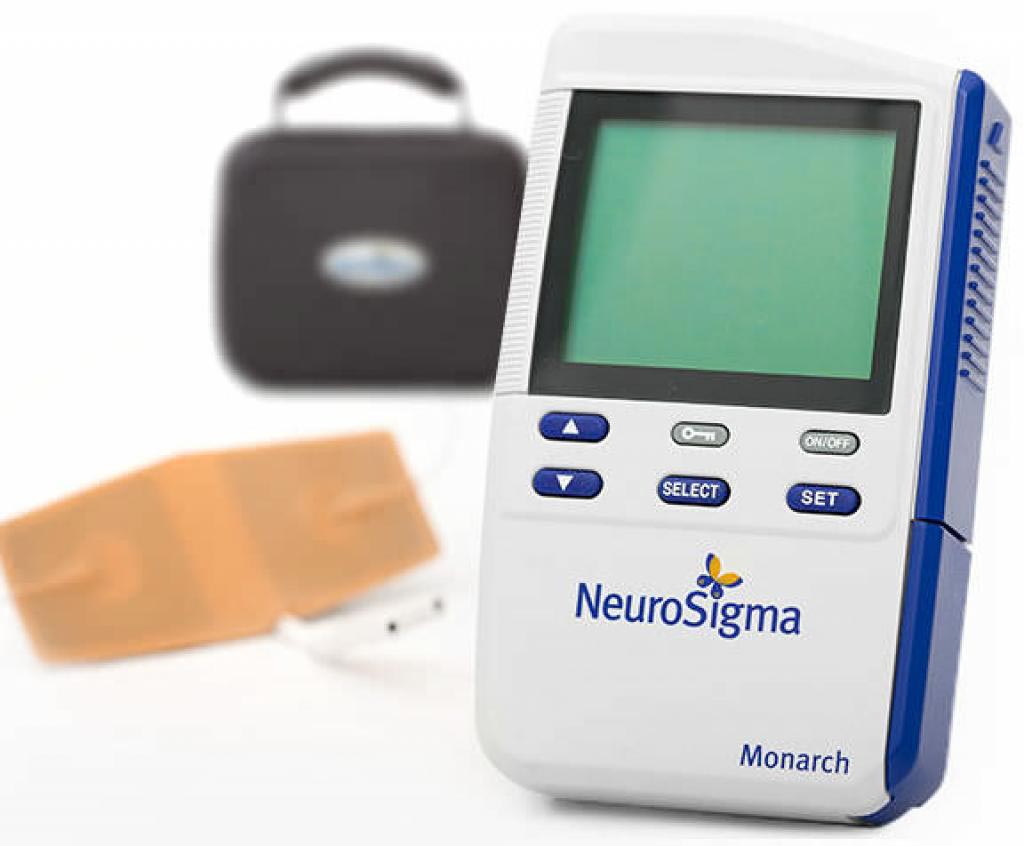
Image: Providing electrical stimulation to the forehead can reduce ADHD symptoms (Photo courtesy of NeuroSigma).
A novel external trigeminal nerve stimulation (eTNS) system offers a non-pharmacological option for pediatric attention deficit hyperactivity disorder (ADHD patients.
The NeuroSigma (Los Angeles, CA, USA) Monarch eTNS System is intended for home treatment of children 7-12 years of age who are not taking prescription ADHD medication, under the supervision of a caregiver. The cell-phone sized device generates a low-level electrical pulse to a small patch placed on the patient's forehead, which stimulates branches of the trigeminal nerve. While the exact mechanism of eTNS is not yet known, neuroanatomical projections of the trigeminal system suggest that eTNS alters activity in structures regulating mood, anxiety, and sleep.
The system's efficacy and safety when treating ADHD was demonstrated in a clinical trial involving 62 children with moderate to severe ADHD who used either the eTNS therapy or a placebo device nightly for four weeks. Results showed that those using the eTNS device had a significant improvement in their ADHD symptoms compared with the placebo group; at the end of week four, the average ADHD Rating Scale (ADHD-RS) score in the active group decreased from 34.1 points at baseline to 23.4 points, versus a decrease from 33.7 to 27.5 points in the placebo group.
“In research conducted at UCLA, eTNS was well accepted by children and their parents, and produced significant improvements in the behavioral symptoms of ADHD, as well as in cognition,” said Ian Cook, MD, Chief Medical Officer of NeuroSigma. “eTNS is non-invasive, can be administered at home, and has none of the serious side effects of the stimulant medications that are currently being used to treat ADHD. As a result, we believe that eTNS will become a preferred, drug-free treatment for many children and adults.”
ADHD is a common disorder that begins in childhood. Symptoms include difficulty staying focused and paying attention, difficulty controlling behavior and very high levels of activity. The diagnosis of ADHD requires a comprehensive evaluation by a health care professional. For a person to receive a diagnosis of ADHD, the symptoms of inattention and/or hyperactivity-impulsivity must be chronic or long-lasting, impair the person's functioning, and cause the person to fall behind normal development for his or her age.
Related Links:
NeuroSigma




The NeuroSigma (Los Angeles, CA, USA) Monarch eTNS System is intended for home treatment of children 7-12 years of age who are not taking prescription ADHD medication, under the supervision of a caregiver. The cell-phone sized device generates a low-level electrical pulse to a small patch placed on the patient's forehead, which stimulates branches of the trigeminal nerve. While the exact mechanism of eTNS is not yet known, neuroanatomical projections of the trigeminal system suggest that eTNS alters activity in structures regulating mood, anxiety, and sleep.
The system's efficacy and safety when treating ADHD was demonstrated in a clinical trial involving 62 children with moderate to severe ADHD who used either the eTNS therapy or a placebo device nightly for four weeks. Results showed that those using the eTNS device had a significant improvement in their ADHD symptoms compared with the placebo group; at the end of week four, the average ADHD Rating Scale (ADHD-RS) score in the active group decreased from 34.1 points at baseline to 23.4 points, versus a decrease from 33.7 to 27.5 points in the placebo group.
“In research conducted at UCLA, eTNS was well accepted by children and their parents, and produced significant improvements in the behavioral symptoms of ADHD, as well as in cognition,” said Ian Cook, MD, Chief Medical Officer of NeuroSigma. “eTNS is non-invasive, can be administered at home, and has none of the serious side effects of the stimulant medications that are currently being used to treat ADHD. As a result, we believe that eTNS will become a preferred, drug-free treatment for many children and adults.”
ADHD is a common disorder that begins in childhood. Symptoms include difficulty staying focused and paying attention, difficulty controlling behavior and very high levels of activity. The diagnosis of ADHD requires a comprehensive evaluation by a health care professional. For a person to receive a diagnosis of ADHD, the symptoms of inattention and/or hyperactivity-impulsivity must be chronic or long-lasting, impair the person's functioning, and cause the person to fall behind normal development for his or her age.
Related Links:
NeuroSigma

Gold Member
STI Test
Vivalytic Sexually Transmitted Infection (STI) Array
New
Blood Gas Analyzer
i-Check200
New
Radiofrequency Generator
GX1
Latest Patient Care News
- Wearable Sleep Data Predict Adherence to Pulmonary Rehabilitation
- Revolutionary Automatic IV-Line Flushing Device to Enhance Infusion Care
- VR Training Tool Combats Contamination of Portable Medical Equipment
- Portable Biosensor Platform to Reduce Hospital-Acquired Infections
- First-Of-Its-Kind Portable Germicidal Light Technology Disinfects High-Touch Clinical Surfaces in Seconds
- Surgical Capacity Optimization Solution Helps Hospitals Boost OR Utilization

- Game-Changing Innovation in Surgical Instrument Sterilization Significantly Improves OR Throughput
- Next Gen ICU Bed to Help Address Complex Critical Care Needs
- Groundbreaking AI-Powered UV-C Disinfection Technology Redefines Infection Control Landscape
- Clean Hospitals Can Reduce Antibiotic Resistance, Save Lives
- Smart Hospital Beds Improve Accuracy of Medical Diagnosis
- New Fast Endoscope Drying System Improves Productivity and Traceability
- World’s First Automated Endoscope Cleaner Fights Antimicrobial Resistance
- Portable High-Capacity Digital Stretcher Scales Provide Precision Weighing for Patients in ER
- Portable Clinical Scale with Remote Indicator Allows for Flexible Patient Weighing Use
- Innovative and Highly Customizable Medical Carts Offer Unlimited Configuration Possibilities
Channels
Artificial Intelligence
view channel
Machine Learning Approach Enhances Liver Cancer Risk Stratification
Hepatocellular carcinoma, the most common form of primary liver cancer, is often detected late despite targeted surveillance programs. Current screening guidelines emphasize patients with known cirrhosis,... Read more
New AI Approach Monitors Brain Health Using Passive Wearable Data
Brain health spans cognitive and emotional functions and can fluctuate even in adults without diagnosed disease. Detecting early changes remains difficult in routine care and burdens specialty services... Read more

Critical Care
view channel
Automated IV Labeling Solution Improves Infusion Safety and Efficiency
Medication administration in high-acuity settings is often complicated by multiple concurrent infusions, making accurate line identification essential. In a 10-hospital intensive care unit study, 60% of... Read more
First-Of-Its-Kind AI Tool Detects Pulmonary Hypertension from Standard ECGs
Pulmonary hypertension is a progressive, life‑threatening disease that is frequently missed early because symptoms such as dyspnea are nonspecific and diagnostic delays can exceed two years.... Read more
Surgical Techniques
view channel
Continuous Monitoring with Wearables Enhances Postoperative Patient Safety
Postoperative hypoxemia on general surgical wards is common and often missed by intermittent vital sign checks. Undetected low oxygen levels can delay recovery and raise the risk of complications that... Read more
New Approach Enables Customized Muscle Tissue Without Biomaterial Scaffolds
Volumetric muscle loss is a traumatic loss of skeletal muscle that often leads to permanent functional impairment and limited reconstructive options. Current experimental strategies struggle to deliver... Read more
Health IT
view channel
EMR-Based Tool Predicts Graft Failure After Kidney Transplant
Kidney transplantation offers patients with end-stage kidney disease longer survival and better quality of life than dialysis, yet graft failure remains a major challenge. Although a successful transplant... Read more
Printable Molecule-Selective Nanoparticles Enable Mass Production of Wearable Biosensors
The future of medicine is likely to focus on the personalization of healthcare—understanding exactly what an individual requires and delivering the appropriate combination of nutrients, metabolites, and... Read more


Business
view channel
GE HealthCare Leads Major European Initiative to Advance Cardio-Oncology Care
Cardiovascular complications are increasingly recognized among people undergoing or recovering from cancer treatment, driven by pre‑existing disease and the cardiotoxic effects of chemotherapy, radiotherapy,... Read more

