






Microsphere Embolization Technology Treats Knee Osteoarthritis
|
By HospiMedica International staff writers Posted on 26 Oct 2021 |


|
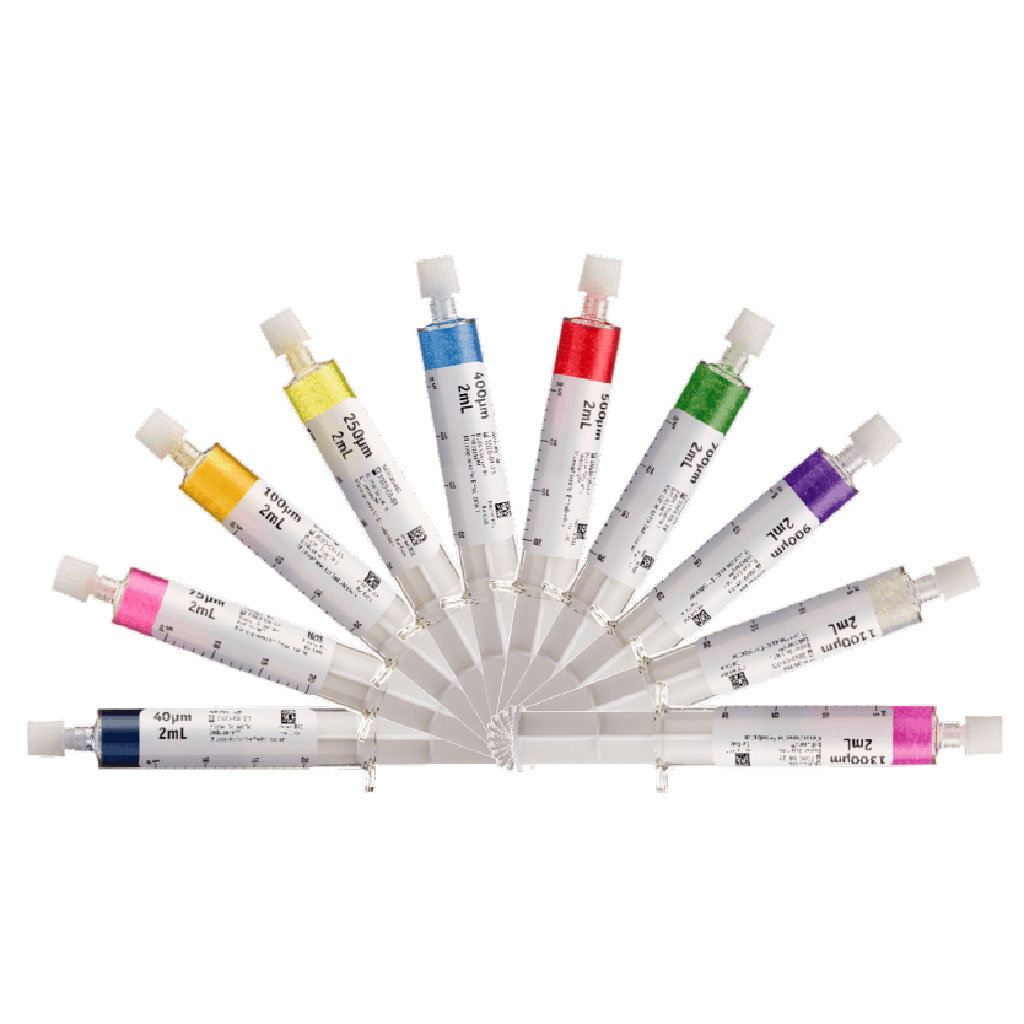
Image: Embozene microspheres are color-coded by size (Photo courtesy of Varian)
Novel microspheres can alleviate symptomatic knee osteoarthritis (OA) by reducing blood flow to the periarticular tissue of the joints, limiting the inflammatory process.
The Varian Medical Systems (Varian; Palo Alto, CA, USA) Embozene spheres are biocompatible hydrogel microspheres coated with a proprietary polymer (Polyzene-F). The minute spheres are color-coded by size to allow for easy identification, and are delivered pre-compressed to enable smooth delivery via catheter. Embozene microspheres are intended for embolization of arteriovenous malformations and hypervascular tumors, such as uterine fibroids and hepatoma, benign prostatic hyperplasia (BPH), and now for genicular artery embolization (GAE).
GAE is performed under moderate sedation as an outpatient procedure, generally taking one to two hours. The delivery catheter is inserted in a percutaneous procedure under fluoroscopic guidance, with the microspheres conveyed to arteries supplying the inflamed synovium (lining of the knee). By blocking the genicular arteries, there is a reduction in the amount of inflammation associated with OA, which can diminish or eliminate the associated knee pain. Embozene microspheres are packaged in 20 ml syringes, with an approximate 7 ml fill volume across the range.
“GAE holds great promise in providing clinicians with a new, non-invasive treatment option, which may not only ameliorate pain, but reduce the economic burden of this common disease,” said Frank Facchini, MD, president of Varian Interventional Solutions. “Varian's investigational program for GAE exemplifies our commitment to investing in our core technologies to determine their potential to treat the world's most debilitating diseases.”
“GAE is the first minimally invasive procedure that has demonstrated significant symptom improvement for a prolonged duration,” said Siddharth Padia, MD, director of interventional radiology at UCLA Santa Monica (CA, USA). “In a 40-patient, prospective study, the procedure resulted in a marked improvement in pain and function, and adverse events were uncommon and mild. I remain excited about the possibilities of this technology and its benefit to patients.”
OA is a group of abnormalities involving degradation of joints, including articular cartilage and subchondral bone. Symptoms may include joint pain, tenderness, stiffness, locking, and sometimes an effusion. A variety of causes--hereditary, developmental, metabolic, and mechanical deficits--may initiate processes leading to loss of cartilage. As a result of decreased movement secondary to pain, regional muscles may atrophy, and ligaments may become more lax. OA of the knee affects about 250 million people worldwide (3.6% of the population).
Related Links:
Varian Medical Systems




The Varian Medical Systems (Varian; Palo Alto, CA, USA) Embozene spheres are biocompatible hydrogel microspheres coated with a proprietary polymer (Polyzene-F). The minute spheres are color-coded by size to allow for easy identification, and are delivered pre-compressed to enable smooth delivery via catheter. Embozene microspheres are intended for embolization of arteriovenous malformations and hypervascular tumors, such as uterine fibroids and hepatoma, benign prostatic hyperplasia (BPH), and now for genicular artery embolization (GAE).
GAE is performed under moderate sedation as an outpatient procedure, generally taking one to two hours. The delivery catheter is inserted in a percutaneous procedure under fluoroscopic guidance, with the microspheres conveyed to arteries supplying the inflamed synovium (lining of the knee). By blocking the genicular arteries, there is a reduction in the amount of inflammation associated with OA, which can diminish or eliminate the associated knee pain. Embozene microspheres are packaged in 20 ml syringes, with an approximate 7 ml fill volume across the range.
“GAE holds great promise in providing clinicians with a new, non-invasive treatment option, which may not only ameliorate pain, but reduce the economic burden of this common disease,” said Frank Facchini, MD, president of Varian Interventional Solutions. “Varian's investigational program for GAE exemplifies our commitment to investing in our core technologies to determine their potential to treat the world's most debilitating diseases.”
“GAE is the first minimally invasive procedure that has demonstrated significant symptom improvement for a prolonged duration,” said Siddharth Padia, MD, director of interventional radiology at UCLA Santa Monica (CA, USA). “In a 40-patient, prospective study, the procedure resulted in a marked improvement in pain and function, and adverse events were uncommon and mild. I remain excited about the possibilities of this technology and its benefit to patients.”
OA is a group of abnormalities involving degradation of joints, including articular cartilage and subchondral bone. Symptoms may include joint pain, tenderness, stiffness, locking, and sometimes an effusion. A variety of causes--hereditary, developmental, metabolic, and mechanical deficits--may initiate processes leading to loss of cartilage. As a result of decreased movement secondary to pain, regional muscles may atrophy, and ligaments may become more lax. OA of the knee affects about 250 million people worldwide (3.6% of the population).
Related Links:
Varian Medical Systems

Gold Member
12-Channel ECG
CM1200B
New
Tourniquet System
heidi– mein Tourniquet
New
Syringe Pump
SP50 Series
Latest Patient Care News
- Wearable Sleep Data Predict Adherence to Pulmonary Rehabilitation
- Revolutionary Automatic IV-Line Flushing Device to Enhance Infusion Care
- VR Training Tool Combats Contamination of Portable Medical Equipment
- Portable Biosensor Platform to Reduce Hospital-Acquired Infections
- First-Of-Its-Kind Portable Germicidal Light Technology Disinfects High-Touch Clinical Surfaces in Seconds
- Surgical Capacity Optimization Solution Helps Hospitals Boost OR Utilization

- Game-Changing Innovation in Surgical Instrument Sterilization Significantly Improves OR Throughput
- Next Gen ICU Bed to Help Address Complex Critical Care Needs
- Groundbreaking AI-Powered UV-C Disinfection Technology Redefines Infection Control Landscape
- Clean Hospitals Can Reduce Antibiotic Resistance, Save Lives
- Smart Hospital Beds Improve Accuracy of Medical Diagnosis
- New Fast Endoscope Drying System Improves Productivity and Traceability
- World’s First Automated Endoscope Cleaner Fights Antimicrobial Resistance
- Portable High-Capacity Digital Stretcher Scales Provide Precision Weighing for Patients in ER
- Portable Clinical Scale with Remote Indicator Allows for Flexible Patient Weighing Use
- Innovative and Highly Customizable Medical Carts Offer Unlimited Configuration Possibilities
Channels
Artificial Intelligence
view channel
Machine Learning Approach Enhances Liver Cancer Risk Stratification
Hepatocellular carcinoma, the most common form of primary liver cancer, is often detected late despite targeted surveillance programs. Current screening guidelines emphasize patients with known cirrhosis,... Read more
New AI Approach Monitors Brain Health Using Passive Wearable Data
Brain health spans cognitive and emotional functions and can fluctuate even in adults without diagnosed disease. Detecting early changes remains difficult in routine care and burdens specialty services... Read more

Critical Care
view channel
Automated IV Labeling Solution Improves Infusion Safety and Efficiency
Medication administration in high-acuity settings is often complicated by multiple concurrent infusions, making accurate line identification essential. In a 10-hospital intensive care unit study, 60% of... Read more
First-Of-Its-Kind AI Tool Detects Pulmonary Hypertension from Standard ECGs
Pulmonary hypertension is a progressive, life‑threatening disease that is frequently missed early because symptoms such as dyspnea are nonspecific and diagnostic delays can exceed two years.... Read more
Surgical Techniques
view channel
Continuous Monitoring with Wearables Enhances Postoperative Patient Safety
Postoperative hypoxemia on general surgical wards is common and often missed by intermittent vital sign checks. Undetected low oxygen levels can delay recovery and raise the risk of complications that... Read more
New Approach Enables Customized Muscle Tissue Without Biomaterial Scaffolds
Volumetric muscle loss is a traumatic loss of skeletal muscle that often leads to permanent functional impairment and limited reconstructive options. Current experimental strategies struggle to deliver... Read more
Health IT
view channel
EMR-Based Tool Predicts Graft Failure After Kidney Transplant
Kidney transplantation offers patients with end-stage kidney disease longer survival and better quality of life than dialysis, yet graft failure remains a major challenge. Although a successful transplant... Read more
Printable Molecule-Selective Nanoparticles Enable Mass Production of Wearable Biosensors
The future of medicine is likely to focus on the personalization of healthcare—understanding exactly what an individual requires and delivering the appropriate combination of nutrients, metabolites, and... Read more


Business
view channel
GE HealthCare Leads Major European Initiative to Advance Cardio-Oncology Care
Cardiovascular complications are increasingly recognized among people undergoing or recovering from cancer treatment, driven by pre‑existing disease and the cardiotoxic effects of chemotherapy, radiotherapy,... Read more

